

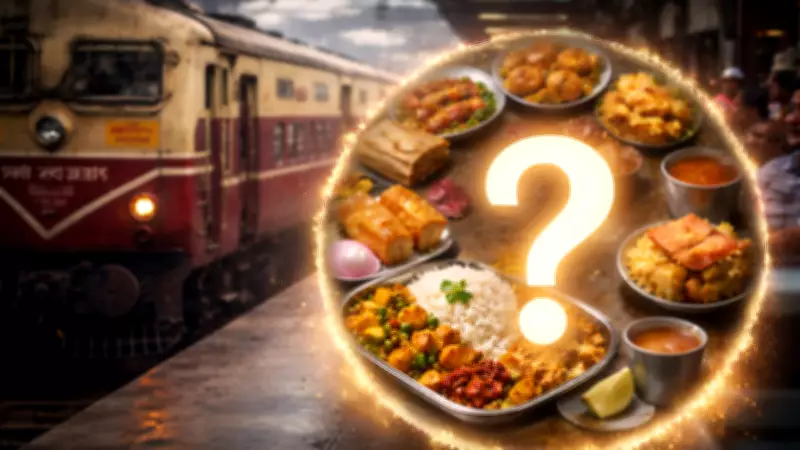
A Culinary Journey Back in Time: The Indian Railways Menu of the 1990s
Long before the era of app-based ordering, QR code menus, and sealed Rail Neer bottles became the norm, dining on Indian trains during the 1990s was a distinctly tactile and memorable experience. Meals were served on sturdy steel trays or melamine plates, chai was poured into thick glass tumblers that often sloshed with the train's motion, and the enticing aroma of frying cutlets wafted from station platforms. This period predated the establishment of the Indian Railway Catering and Tourism Corporation, with catering managed in a decentralized manner by zonal railways, pantry cars, refreshment rooms, and private contractors. The result was a menu that was both regional in flavor and practical in design, featuring dishes engineered to withstand reheating on a moving locomotive. For countless passengers, these meals became an integral part of the travel experience, as evocative as the scenery passing by barred windows or the distant whistle signaling another nocturnal stop. Food was not merely an accessory but a rhythmic component of long-distance journeys, marking intervals between stations and brief naps. So, what exactly did travelers encounter when the pantry car door swung open or a vendor's call echoed from the platform? Let's delve into the typical offerings of the Indian Railways' 1990s menu.
Vegetarian Fare: The Heart of Onboard Dining
Vegetarian cuisine formed the most consistent and widely accessible segment of railway catering. Across long-distance Mail and Express trains, the staples were reliably simple and filling.
- Standard Veg Thali: This typically included steamed rice or chapatis, plain yellow dal, one or two vegetable curries such as aloo-gobi, mixed vegetables, cabbage, or beans, accompanied by pickle and occasionally sliced onions.
- Rice-Based Comfort Dishes: Vegetable pulao and khichdi, particularly on overnight routes, were favored for their ability to reheat effectively.
- Breakfast Items: Varied by route, featuring aloo paratha with curd and pickle, upma, idli or pongal on southern lines, and bread-butter or toast from pantry cars.
- Snacks Between Meals: Samosas, kachoris, vegetable cutlets, grilled sandwiches, and pakoras at major stations provided quick bites.
Premium services like the Rajdhani or Shatabdi trains offered a slightly more curated vegetarian selection, but the essence remained rooted in simplicity, familiarity, and satiety.

Non-Vegetarian Options: Limited Yet Cherished
Non-vegetarian dishes were available but were more carefully regulated due to storage and preparation limitations. Variety heavily depended on the route, pantry-car facilities, and contractor capabilities.
- Egg-Based Dishes: Omelettes for breakfast and egg curry served with rice or rotis were common.
- Chicken Preparations: Simple chicken curry and chicken biryani on select routes provided occasional variety.
- Occasional Mutton Dishes: More frequently found at station refreshment rooms than in ordinary coaches.
In lower classes or on trains with limited pantry services, many passengers turned to platform vendors at large junctions for freshly cooked non-vegetarian snacks rather than relying on onboard orders.
Extras and Desserts: Practical and Shelf-Stable
Desserts in the 1990s were not elaborate plated affairs but leaned towards items that traveled well and maintained freshness over hours.
- Indian Mithai: Soan papdi, gulab jamun in syrup tubs, and panjiri or besan laddoos were sweet staples.
- Packaged Treats: Cream biscuits, fruitcake slices, glucose biscuits, and fruits like bananas or oranges sold by hawkers during halts.
At major stations, refreshment rooms sometimes stocked regional sweets, offering passengers a quick sugar boost before departure whistles.
Beverages and Water: The Reign of Chai
If one flavor epitomized railway travel in the 1990s, it was undoubtedly tea.

- Hot Drinks: Milky chai served in glass tumblers or steel cups, filter coffee on southern routes, and occasional soups on long hauls.
- Cold Drinks: Bottled sodas from station kiosks, and lassi or flavored milk on a few routes.
- Drinking Water: Bottled water was available at large junctions, primarily from private brands, as a nationwide standard railway brand had not yet been introduced. Many passengers carried their own flasks or refilled bottles at stations.
The Catering System Behind the Menu
To fully appreciate the 1990s menu, one must understand the operational framework that supported it.
- Catering was managed by individual railway zones, pantry cars, station refreshment rooms, and contractors, leading to significant regional variations.
- Coverage was inconsistent: some long-distance trains prepared meals onboard, while others relied heavily on station stops for food supply.
- Menus were shaped by the constraints of cooking in compact galleys, ensuring safe reheating, and facilitating quick service as trains paused at numerous halts.
This decentralized structure is precisely why contemporary railway journeys feel more standardized, branded, and digitally integrated, marking a distinct evolution from the nostalgic, hands-on dining experiences of the 1990s.
