

8 Historic Irani Cafés in Mumbai and Pune: Time Capsules of Urban India
Irani cafés stand as living time capsules of India's vibrant urban past, spaces where mornings still unfold over the gentle clinking of saucers, marble-topped tables, buttery brun maska, and newspapers folded into neat squares. Born from Persian and Zoroastrian migrations in the late nineteenth and early twentieth centuries, these cafés evolved into democratic meeting grounds for clerks and artists, students and lawyers, dreamers and daily regulars. Some remain gloriously unchanged, while others survive in fragments, their spirit intact even as cities race forward around them. Together, they chart how everyday eating shaped civic culture, conversation, and community. Here is an in-depth look at eight of the oldest Irani cafés in Mumbai and Pune that continue to anchor their neighbourhoods today.
Kyani & Co.
If you seek a genuine time capsule, step into Kyani & Co., which was founded in 1904. What began as a modest bakery-restaurant has weathered decades of change in South Mumbai with remarkable poise. Inside, the rhythms feel entirely unchanged, with buns sliced fresh, brun maska melting into crusty bread, thick Irani chai poured without fuss, and servers moving with the quiet efficiency of people who have repeated the same choreography for generations. The atmosphere is one of timeless continuity, offering a direct link to Bombay's colonial-era past.
Cafe Excelsior
Opened around 1919, Cafe Excelsior wears its age with quiet pride. Vintage clocks tick above worn counters, sepia photographs line the walls, and the menu reads like a shorthand history of Bombay's everyday tastes. Its staying power rests less on reinvention than on constancy: kheema pav arriving hot, mutton cutlets fried crisp, and tea poured strong and sweet. It feels like the sort of place where routines outlive trends, and neighbourhood loyalties quietly sustain a century-old rhythm of daily life.

Britannia & Co.
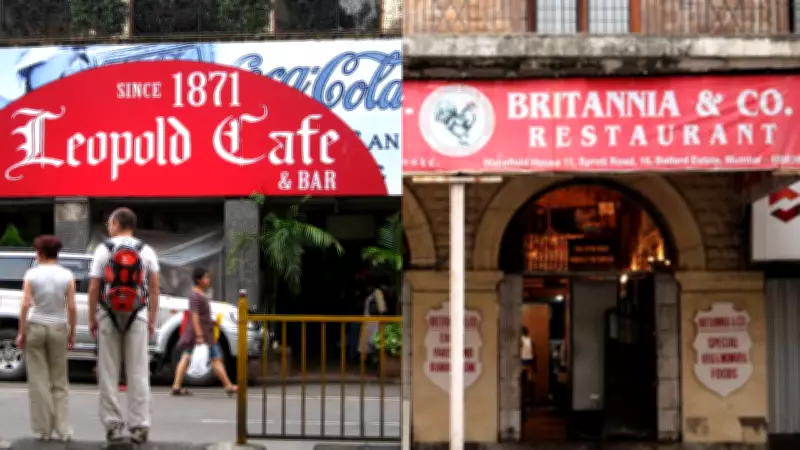
Britannia & Co. dates back to the early 1920s and has long been synonymous with berry pulao, buttery brun maska, and gently spiced home-style cooking. The café's walls carry decades of photographs of owners posing with royalty, politicians, and film stars, while the dining room retains the fragrant aroma of slow-simmered stews and polished wooden furniture. Eating here feels less like a meal and more like stepping into a vivid chapter of Bombay's rich social history, where every corner tells a story.
Cafe Goodluck
Pune's Cafe Goodluck has long been shorthand for student mornings and unhurried conversations. Bun maska is torn open at the table, egg bhurji scooped up with soft bread, and chai refilled almost automatically. While official records date its founding to 1935, family lore hints at earlier beginnings. What endures in the city's collective memory is its role as a daily ritual spot on FC Road, where generations have paused between lectures, offices, and errands to refuel and linger, creating a legacy of community bonding.
Yazdani Bakery
Yazdani Bakery & Restaurant is the baker's answer to Irani nostalgia, with diesel ovens working behind the counter, loaves shaped by hand, and brun maska that has anchored countless early mornings. Founded in the mid-twentieth century by an Irani baker, the place built its reputation on crusty pav, fruit cake, and unshowy consistency. Over the years, it has shifted with the times, leaning strongly into its bakery roots while preserving the pared-back charm that keeps regulars returning for familiar flavours and comforting routines.
Kayani Bakery
A post-independence arrival that quickly became indispensable, Kayani Bakery was founded in 1955 by three brothers from Iran and is located in Pune's East Street area. It built its reputation on dense mawa cakes, crumbly Shrewsbury biscuits, and a straightforward, time-tested approach to baking. Still run by the family's descendants, the shop's steady production rhythm and compact counter continue to pull in loyal regulars and first-timers alike, often forming lines that stretch down the pavement, a testament to its enduring appeal.

Café de la Paix
Established in 1935, Cafe De La Paix brings a gentler, more restrained interpretation of the Irani café tradition. Tucked away from major thoroughfares, it cultivated a reputation for calm breakfasts, polite service, and softly lit interiors where tea arrives without spectacle and conversations linger longer than intended. Its food, including omelettes, bun maska, and mild curries, has always favoured familiarity over flourish, turning the café into the sort of neighbourhood constant that survives not through hype, but through quiet dependability and generations of repeat visits.
Leopold Cafe
Founded in 1871 in Colaba, Leopold Café predates most Irani institutions in the country and remains one of the city's most storied public rooms. Its wide-open façade, long bar counters, and perpetually crowded tables have made it a crossroads for sailors, journalists, backpackers, and late-night conversationalists for more than a century. The menu leans continental-meets-café, with sizzlers, cutlets, and strong coffee, but the real draw is the atmosphere: layered, lived-in, and unmistakably Bombay, with decades of stories soaking into every scratched tabletop, embodying the city's resilient spirit.
