

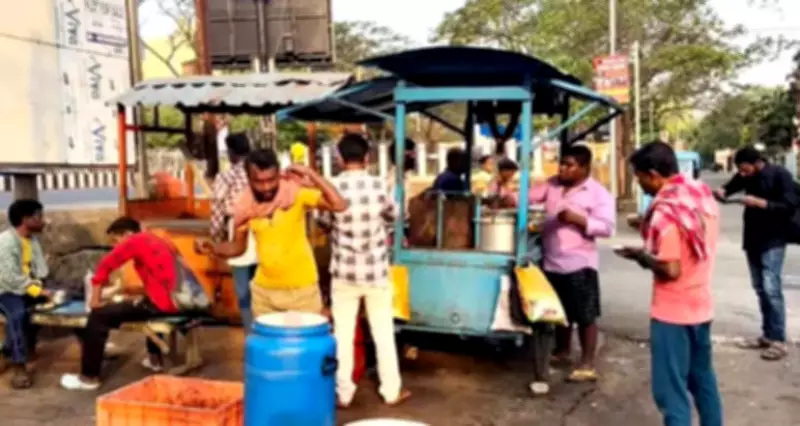
Bhubaneswar's 'Pakhala' Cart Feeds Urban Poor at Rs 25 Amid LPG Price Hikes
In the heart of Bhubaneswar, at Kalpana Square, a modest roadside food cart stands as a beacon of hope for the city's urban poor. Run by Rabindra Sahoo, affectionately known as Rabi Bhai, this cart offers a bowl of 'pakhala' (fermented rice) with vegetable sides for just Rs 25. Remarkably, the food is unlimited at this price, providing a crucial lifeline for those struggling to make ends meet, especially as LPG prices continue to rise.
A Simple Meal with Profound Impact
For many daily wage laborers and construction workers, this affordable meal is more than just sustenance; it offers nourishment and comfort in challenging times. "On most days, this is all we can manage," said Prabhat Mohanty, a construction worker. He added that the meal not only fills their stomachs but also helps them cope with the scorching summer heat, a testament to the cooling properties of 'pakhala'.
Rabi Bhai's Journey from 2009 to Today
Rabindra Sahoo began his journey in 2009, starting the cart with basic tiffin items like idli, upma, bara, and aloo chop. Over time, he introduced 'pakhala', keeping in mind the specific needs of daily laborers. "In Odisha's villages, 'pakhala' is still the preferred breakfast for farmers because it keeps you full throughout the day and cools the body during summers," he explained. When he started making a modest profit, he decided to serve 'pakhala' and vegetables to the poor, deliberately keeping the price low to ensure no one goes hungry.

Daily Operations and Community Support
No matter the season, Rabi opens his cart every day from 5 am to about 9 am, becoming a lifeline for the urban poor. The meal includes:
- Large bowls of 'pakhala'
- 'Aloo' or 'baigana bharta' (mashed potato or eggplant)
- Mixed fried vegetables
- Lemon slices, green chillies, and salt
- A glass of 'torani' (fermented rice water)
He serves nearly 100 people daily, many of whom are regulars who have been coming for years. Every year on January 1, he goes a step further by offering 'pakhala' and tiffin to everyone who visits his cart, free of charge.
Sustainable Sourcing and Modest Profits
Rabi's commitment extends to sustainable sourcing. "The rice used in 'pakhala' is grown by my family on our own ancestral land at Kaipadar village in Khurda district," he said. They produce around 70 to 80 gunny bags of rice in both rabi and kharif seasons, and Rabi uses his share to cook for people, eliminating the cost of rice. The little profit he makes comes from selling basic tiffin items, allowing him to maintain this affordable service.
This initiative highlights how small-scale efforts can make a significant difference in communities, offering a model of compassion and resilience in the face of economic challenges.

