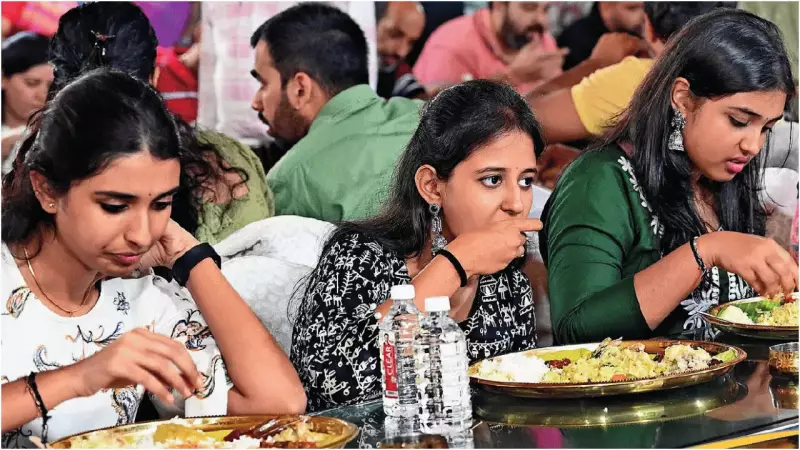
For devotees and culture enthusiasts attending the vibrant sabhas in Chennai, the culinary experience is as integral as the spiritual or artistic one. This year, the food stalls within these premises are witnessing a delicious revolution, marked by a strong shift towards innovation, health-conscious offerings, and a strategic appeal to the younger generation.
Innovation and Health Take Center Stage
Caterers across Chennai's famous sabha venues have made new and healthier dishes the defining theme of the season. Moving beyond traditional offerings, they are introducing home-style and regional specialties rarely found in commercial settings.
At The Music Academy, Nirmala Venkatesan of Sastha Catering Services highlights their revamped elai saapadu (leaf meal). "We've introduced new dishes, many of which would normally not be available outside one's home," she says. Their menu now features items like arachuvitta sambar, appalam vathakuzhambu, and unique rice varieties such as kothamalli sadham made with basmati rice, Chettinad rasam, and kovil puliyodharai.

Sowmya of Arusuvai Caterers at Vidya Bharathi Mandapam echoes this sentiment of creativity. "We've tried to be innovative and offer dishes that restaurants won't do," she states. Their offerings include Tamil Nadu staples like nonbu adai and thenga poorana kozhukattai, alongside inventive pachadis made from orange skin and veppam poo (neem flower). She emphasizes their policy of non-repetition: "We make sure not to repeat our menu."
The health trend is prominently led by millets. Kumar of Sattva Catering reveals, "This year, we've introduced new dishes made using millets, including dosais and idlis, as we've turned our focus towards offering more healthier options." Even sweets are getting a nutritious makeover, with innovations like karupatti kaju katli and karupatti Boost poli kesari.
K Srinivasan, son of the late Mountbatten Mani Iyer, is pioneering fruit-based creations. "I've introduced chikoo kozhukattai, pineapple kuzhi paniyaram, red banana kuzhi paniyaram and kozhukattai, and several other dishes based on fruits," he says. He also offers greens-infused dosas like palak, methi, and gongura, while a sprout idli has become a crowd favorite. He assures that all dishes genuinely incorporate the fruits and vegetables they promise.
Caterers Woo the Young Crowd with Familiar Flavors
Recognizing changing tastes, attracting young crowds has become a key strategy this season. Caterers note that youngsters often prefer noodles and pizza over traditional snacks like Mysore bonda and bajji.
Revanth, a teenager, shares his approval for the contemporary yet traditional options: "I really liked the podi idli and filter coffee I tried." Caterers are adapting by introducing items that bridge the gap. Kumar observes that youngsters enjoy vegetable chapati and ammini kozhukattai. Srinivasan has taken a bold step by introducing chocolate-flavoured idlis and dosais to captivate younger palates.
Pricing Reflects Variety and Cost, Say Caterers
The cost of the festive lunch remains a point of discussion among visitors. Prices this season range from ₹400 to ₹1,000 on regular days, with a notable spike on New Year's Day. Malini, an IT professional visiting with her family, points out, "At the Music Academy, it costs over ₹2,000 for a family of four." Business owner Manohar feels meals above ₹500 are expensive for many attendees.
Caterers, however, defend their pricing, linking it to ingredient quality, innovation, and operational costs. Sowmya prices her elaborate elai saapadu at ₹650, justifying it by the unique, non-repeated menu. Nirmala notes that despite charging ₹550 for lunch, footfalls have increased. Srinivasan, who offers a lunch at ₹685 featuring his iconic eight-decade-old badam halwa, affirms the positive public response to their curated offerings.

For New Year's Day, Nirmala is planning a special Kerala-themed feast. "This is exclusive for New Year's Day," she says, detailing a menu that will include chakka pradhaman, olan, erissery, and kalan, offering a culinary getaway to the neighboring state.
The scene at Chennai's sabhas thus paints a picture of a dynamic food culture that is respectfully preserving tradition while eagerly embracing innovation, health, and the tastes of a new generation.