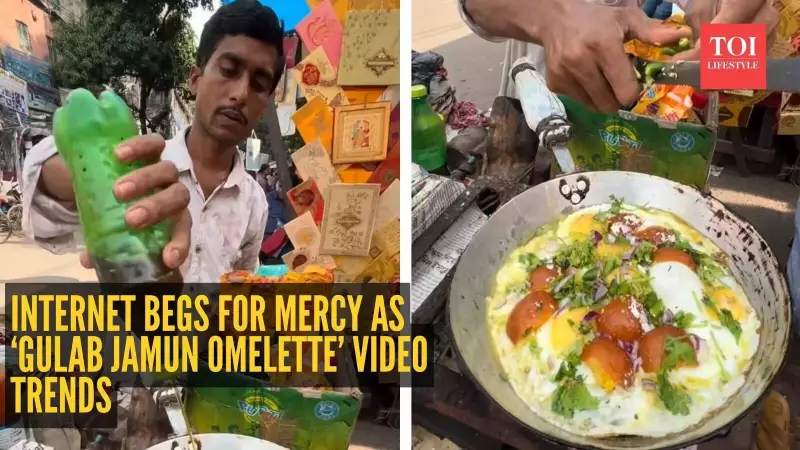
The internet's attention is a fickle thing, captured by the oddest of things at the most unexpected times. This week, the digital spotlight fell not on a celebrity scandal or a political controversy, but on a street food vendor in Kolkata and his creation that left netizens utterly bewildered: the gulab jamun omelette.
From Obscure Clip to Viral Sensation: The Recipe for Virality
The video, which originally surfaced online earlier this year but regained massive traction this week, features a simple yet shocking culinary process. A street vendor in Kolkata cracks six eggs into a steel pan. The ordinary act takes a wild turn when he proceeds to sprinkle pieces of the sweet dessert, gulab jamun, over the raw eggs. He then adds the typical savoury omelette ingredients – onions, green chillies, coriander, and salt – cooks the mixture, and plates it with a final, contentious drizzle of ketchup.
This unusual fusion of sweet and savoury, of dessert and breakfast, proved to be the perfect recipe for virality. The clip rapidly transitioned from a quiet post to one of the most discussed trends across Indian social media platforms, with viewers reacting in a mix of horror, disbelief, and dark humour.

A Flood of Reactions: Disgust, Humour, and Concern
The public response was immediate and voluminous, pushing the clip into a larger conversation about online content. Food delivery giant Swiggy India humorously chimed in, writing, “Itna bhi thik tha maafi mil jaati, par ketchup?!” (This was already wrong enough to be forgiven, but ketchup?!).
Many users expressed sheer disbelief. One warned, “If you are visiting him, then this is a one-way trip,” while another simply declared, “RIP Omelette.” A confused viewer questioned the video's engagement metrics, asking, “Who are those legends who like this video? It means they ate this recipe?”
Beyond the jokes, a significant number of comments raised serious concerns about food wastage for the sake of content creation. One user pointedly remarked, “Don't encourage wasting food like this for some minimal reasons of views and followers. The number of followers won’t exceed the poverty percentage.” This sentiment highlighted a growing unease with content that potentially sacrifices resources for shock value.
Authenticity and the Shock-Value Trend
As the video kept circulating, skepticism about its authenticity grew. Many wondered if the entire scenario was staged purely to generate clicks and go viral. “Just a fake video and scenario created for content and virality and wasting food,” wrote one commenter. Others took a pop-culture route to express their dismay, with a reference to the iconic Bollywood film *Sooryavansham*: “Someone bring me the poisonous pudding from Sooryavansham.”
A common thread in the reactions was the belief that the dish was designed purely to trigger reactions and was unlikely to be something anyone would genuinely consume. This questioning of intent is central to the debate the video has ignited.
The discussion around the gulab jamun omelette has now evolved beyond the bizarre recipe itself. For many observers, it epitomizes the rising trend of shock-driven content, where creators push boundaries—sometimes of taste and logic—to stay relevant in an overwhelmingly crowded digital space. The video's journey from an obscure upload to a national talking point demonstrates how quickly unconventional content can enter the trending cycle and spark widespread debates across social platforms.
Disclaimer: This article is based on the visuals from the viral clip and the subsequent public reactions shared on social media platforms. The authenticity and context of the video have not been independently verified.