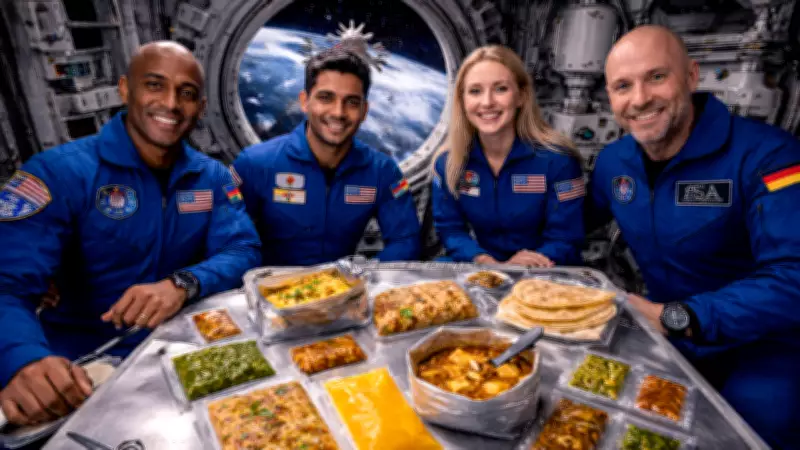
From Suji Halwa to Space Idli: The Indian Dishes That Have Traveled Beyond Earth
When we imagine space food, sterile tubes, bland pouches, and strictly engineered nutrition often come to mind—designed solely to keep astronauts functioning in the harsh environment beyond our planet. However, India's remarkable journey into space has carried something far more familiar and comforting along for the ride. Over the decades, scientists and food researchers have quietly and meticulously adapted traditional Indian dishes to survive the rigors of launch, storage, and the unique conditions of microgravity. The challenge extends far beyond merely preserving flavor; it involves ensuring the food is lightweight, completely safe, and easy to consume in orbit where every crumb can become a hazard. From the pioneering days of Rakesh Sharma to the upcoming Gaganyaan mission, a select few distinctly Indian preparations have made the incredible voyage beyond Earth, serving as both sustenance and a poignant link to home.
The First Bite of India in Orbit: Rakesh Sharma's Historic Mission
The story of Indian food in space begins with Rakesh Sharma, who made history as the first Indian citizen to travel beyond our atmosphere. On April 3, 1984, he embarked aboard the Soyuz T-11 spacecraft and spent an impressive 7 days, 21 hours, and 40 minutes aboard the Salyut 7 space station. Official records from the Indian space program highlight him as the sole Indian citizen to have ventured into space during that era, and later accounts reveal a fascinating culinary detail: the food onboard included specially prepared Indian dishes packed by the Defence Food Research Laboratory (DFRL) in Mysore. These pioneering dishes were suji halwa, aloo chhole, and vegetable pulao—simple, familiar recipes chosen for their symbolic weight as much as their nutritional value.
This initial menu held profound significance because it represented far more than a mere snack list for the astronaut. In the sterile, survival-focused environment of space, every item must rigorously earn its place, and these early Indian dishes did exactly that. They provided essential calories, a comforting sense of familiarity, and a quiet, powerful reminder of the astronaut's cultural roots and homeland. It was a small but meaningful piece of cultural continuity inserted into an otherwise foreign and challenging setting.

Idli Learns to Float: Systematic Food Development for Gaganyaan
By the time India began preparing in earnest for its own crewed missions, the approach to space food had evolved into a much more systematic and sophisticated process. For the highly anticipated Gaganyaan mission, India's inaugural crewed space venture, the menu developed by the Defence Food Research Laboratory expanded significantly to include approximately 30 diverse dishes. Among these are beloved staples such as:
- Idli sambar
- Upma
- Vegetable pulao
- Egg rolls and veg rolls
- Chapatis
- Chicken curry
- Spinach and paneer preparations
The food is ingeniously designed in ready-to-eat formats, often requiring only the addition of water, and astronauts will be equipped with specialized food heaters and liquid containers to enhance their dining experience. The case of idli is particularly fascinating because it required complete reimagining for space rather than simple packaging. Reports on the DFRL's innovative work detail how the idlis were crafted small, dried using advanced infrared radiation techniques, and then further dehydrated. The accompanying sambar and chutney were transformed into powder-based sides that could be easily revived later with water. In essence, the dish was meticulously preserved without being stripped of its essential identity—it remained recognizably idli, just adapted to withstand the unique physics of orbital life.

A Sweeter Menu for a Newer Generation: Shubhanshu Shukla's ISS Mission
The latest chapter in this ongoing culinary space journey unfolded with astronaut Shubhanshu Shukla's Axiom-4 mission to the International Space Station. Officials from the Indian Space Research Organisation (ISRO) confirmed that he would carry an assortment of Indian food items onboard, including various rice preparations, moong dal halwa, and refreshing mango nectar. These selections are far from random; they are deeply embedded in the heart of everyday Indian eating culture. Rice serves as a fundamental staple, halwa is a cherished festival dessert, and mango represents one of the most beloved summer treats. When carried into the vastness of orbit, these dishes accomplish something that space travel often struggles to achieve on its own: they preserve texture, evoke cherished memories, and provide genuine pleasure in an environment that can otherwise feel chemically sterile and emotionally distant.
Why These Dishes Keep Traveling: The Evolution of Space Cuisine
The deeper narrative here extends beyond the simple fact that Indian astronauts have taken familiar foods into space. It highlights how the food itself has had to undergo a remarkable evolution to become compact, stable, and entirely safe for consumption in microgravity. Dining on a space station is constrained by several critical factors:
- Extremely limited storage room and preparation space
- Exceptionally expensive cargo costs per kilogram
- The necessity to pack dense nutrition into minimal volume
This is precisely why Indian mission menus have consistently leaned toward dehydrated, rehydratable, and meticulously packaged dishes, avoiding anything loose, oily, or prone to crumbling. The journey from suji halwa to space-adapted idli underscores a beautiful synergy between culinary tradition and cutting-edge food science, ensuring that even miles above Earth, astronauts can savor a taste of home.