

Massive Food Safety Operation in Jaipur Uncovers Expired Product Relabeling Racket
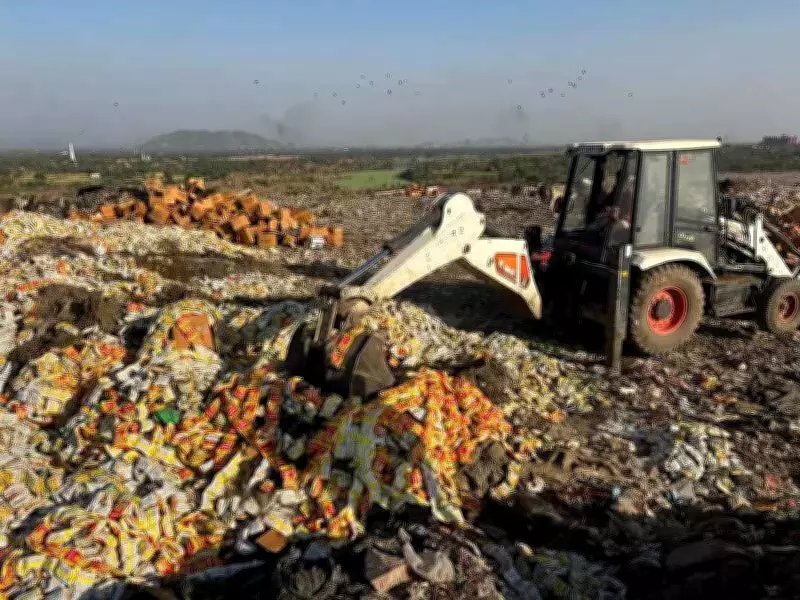
In a significant enforcement action by the Rajasthan food safety commissionerate, authorities have seized and destroyed approximately 1.5 lakh kilograms of expired food products in Jaipur. The crackdown revealed an elaborate alleged conspiracy to erase expiry dates and fraudulently relabel the stock under the reputable Amul brand for illegal resale in the market.
Four-Day Destruction Operation Following Warehouse Inspection
The disposal process spanned four full days, with the confiscated expired stock requiring transportation via 27 trucks to a designated dumping ground. This decisive action was initiated after the state government's 181 helpline received a specific complaint regarding suspicious activities at M/s Athlete Distributor, located in the Kho Nagoriyan area of Jaipur.
Led by the chief medical health officer of Jaipur-II, a specialized team conducted a thorough inspection of the firm's warehouse. Their investigation uncovered nearly 12,000 cartons containing a wide array of expired food items. The seized products included noodles, ketchup, mayonnaise, energy drinks, and various other non-dairy consumables that had surpassed their safe consumption dates.

Evidence of Date Tampering and Repackaging Materials Found
Officials reported that expiry dates had already been systematically erased from products stored in approximately 3,000 of the cartons. During the raid, authorities recovered thinner, acetone, chemicals, and other materials allegedly used to remove the printed manufacturing and expiry dates from the packaging.
Most incriminatingly, the inspection team discovered 4,500 brand-new, empty Amul-brand cartons at the premises. Investigators believe these cartons were intended for repackaging the expired stock, allowing the fraudulent goods to be sold at significantly higher profit margins under the trusted Amul name.
Supply Chain Investigation and Firm Confirmations
According to the food safety department, the original products were manufactured by M/s Kaira District Co-operative Milk Producers Union based in Gujarat and supplied through M/s Advansis India Private Limited. During the subsequent investigation, representatives from these companies reportedly confirmed that the expiry dates had indeed been removed from the products.
They further stated that Gagan Ahuja, the proprietor of Athlete Distributor, had a history of purchasing near-expiry goods at heavily discounted prices, suggesting a premeditated pattern of acquiring stock destined for this illicit operation.
Suspicious Operations and Expired Licenses
Food Safety Commissioner T Shubhmangala highlighted the warehouse's suspicious operational conditions. Neighbors had reported that once 10 to 12 workers entered the facility, the main gate would remain securely shut throughout the entire day, indicating covert activities.
Adding to the regulatory violations, officials determined that the food license for M/s Athlete Store had expired, operating without valid authorization. Additional Commissioner (Food Safety) Bhagwat Singh revealed that the accused allegedly confessed to learning the method of altering expiry dates from a social media platform, demonstrating how digital resources are being misused for fraudulent practices.
Legal Actions and Ongoing Proceedings
The food safety team has undertaken comprehensive procedural steps, including collecting product samples, seizing all expired stock, confiscating machines and related materials used in the scam, and sealing the premises to prevent further illegal activity.
Officials confirmed that the department will file a formal court complaint against Athlete Distributor under multiple provisions of the Food Safety and Standards Act, 2006. Notices have also been issued to both Kaira District Co-operative Milk Producers Union and Advansis India Private Limited for alleged irregularities in their supply and licensing practices connected to this case.
This operation underscores the critical importance of vigilant food safety monitoring and swift public reporting mechanisms in protecting consumer health from potentially dangerous, adulterated products entering the market through deceptive means.

