

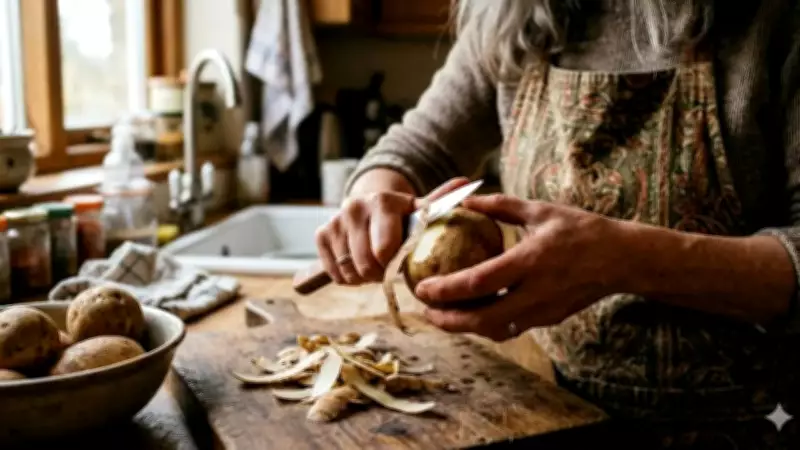
Potatoes rarely ask for attention in the kitchen. They sit quietly in baskets, appear in nearly every kind of meal, and usually take the longest to prepare. Peeling them is often the part people put off, especially during large family cooking or festive meals when several kilos need to be cleaned at once. Many households still rely on small shortcuts learned through routine rather than specialised tools. Some methods work better with boiled potatoes, while others help loosen the skin before cooking even begins. A few take only seconds but save a surprising amount of effort later. None of them requires a peeler, and most use things already lying around in an ordinary kitchen drawer.
Kitchen Hacks to Peel Potatoes Fast Without a Peeler
1. The Boil-and-Pull Method
This is probably the closest thing to a reliable kitchen shortcut. Before boiling, a shallow cut is made around the centre of each potato. It does not need to go deep. Once the potatoes are cooked, they are moved briefly into cold water. The sudden temperature change loosens the outer skin from the softer inside. After cooling for a few moments, the peel can usually be pulled away using fingers alone. In many cases, it comes off in two large pieces instead of tiny scraps. People often use this method when preparing mashed potatoes because it avoids losing too much of the potato itself during peeling.
2. Using the Edge of a Spoon
A spoon tends to work better than expected, especially with boiled potatoes that still feel warm. Instead of cutting into the surface, the rounded metal edge lightly scrapes away the loosened skin without removing much flesh underneath. Older kitchen spoons often work particularly well because their edges are slightly rougher from years of use. The method is slower than pulling the peel away entirely, though it creates less waste. Some people prefer it because there is less risk of slipping compared to using knives. It also helps when peeling smaller potatoes that are awkward to hold steadily in the hand.

3. Loosening the Skin in the Microwave
Microwaves are not usually associated with potato preparation beyond reheating leftovers, though they can help with peeling too. After piercing the potatoes with a fork, they are heated for a short time until the skin begins separating slightly from the inside. The exact timing depends on size. Once cooled enough to handle, sections of skin can often be rubbed or lifted away by hand. It works best with thin-skinned potatoes rather than very starchy varieties. Some patches may still cling stubbornly, but the process generally becomes faster than peeling completely raw potatoes from the start.
4. Rubbing with Coarse Salt
This method appears occasionally in older home kitchens where nothing is wasted, and shortcuts are passed around casually rather than written down. Boiled potatoes are sprinkled with coarse salt while still slightly damp. The rough texture acts almost like sandpaper when rubbed gently with a cloth or kitchen towel. The peel begins lifting in patches instead of needing careful scraping. Thin-skinned potatoes respond best. Heavier rubbing can break softer potatoes apart, so most people use a light hand rather than pressing firmly. It is messy around the sink, but surprisingly quick when preparing several potatoes together.
5. The Ice-Water Shock Trick
Hot potatoes react quickly when dropped into very cold water. The skin contracts faster than the inside, creating a slight separation between the two layers. That tiny gap is often enough to make peeling easier without needing tools. Some cooks use a bowl filled with ice cubes, while others simply run cold tap water over the potatoes. The timing matters more than people expect. Leaving them too long in cold water can make them harder to handle neatly afterwards. A short dip usually works best. The peel then loosens enough to slide away with fingers or a cloth.

6. Peeling with a Knife and Thumb
Not every shortcut needs extra preparation. Some people simply make one slit along the potato after boiling and use their thumb to push the skin away in strips. The warmth softens the peel enough for it to separate naturally without careful cutting. It is not the tidiest method, though it remains common in home kitchens because it is quick and requires almost no effort. Larger potatoes are easier to handle this way. Smaller ones tend to break apart if pressed too firmly, particularly when they have been boiled until very soft.
7. Using a Kitchen Towel
A clean kitchen towel can sometimes remove potato skin with little more than friction. Warm boiled potatoes are wrapped loosely and rubbed gently inside the cloth. Thin peels begin loosening almost immediately, especially if the potatoes were freshly drained and still steaming slightly. The towel usually ends up damp and messy afterwards, so older cloths are preferred. This approach is mostly used for baby potatoes or small waxy varieties where the skin is already delicate. It does not work particularly well on thick-skinned potatoes that hold their outer layer more firmly after cooking.
8. Steaming Instead of Boiling
Steaming changes the texture of potato skin in a slightly different way. Rather than becoming waterlogged, the outer layer softens gradually while staying fairly dry. After steaming, the peel often lifts more cleanly because it has loosened without absorbing too much moisture. Some people prefer this method when preparing potatoes for salads or roasted dishes where the potatoes need to keep their shape afterwards. The peeling itself is not dramatically faster, though the skin tends to come away in broader pieces and leaves behind less surface damage on the potato underneath.
