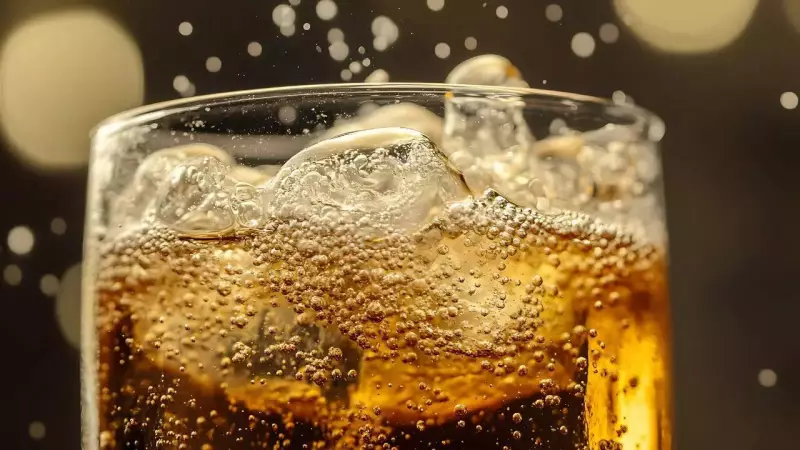
That satisfying hiss when you open a bottle of soda or the gentle fizz in a glass of beer is a sensation loved by millions. But what happens when that sparkle disappears, leaving behind a dull, flat drink? The journey from fizzy to flat is a fascinating tale of chemistry, physics, and sensory science.
The Fundamental Science of Carbonation
The distinctive fizz in carbonated beverages comes from dissolved carbon dioxide gas (CO₂). During manufacturing, this gas is either naturally produced through fermentation, as seen in beer and sparkling wine, or it is artificially injected under high pressure into soft drinks and seltzer water. When the container is sealed, this high pressure keeps the CO₂ dissolved within the liquid.
The magic begins to unravel the moment you open the bottle or can. The internal pressure suddenly drops to match the surrounding atmospheric pressure. This shift is governed by Henry's Law, a principle which states that the amount of gas dissolved in a liquid is directly proportional to the pressure above it. When the pressure decreases, the dissolved CO₂ begins to escape, forming the bubbles you see and hear.

Temperature is a critical player in this process. Colder liquids have a greater capacity to hold dissolved CO₂, which is why a chilled drink stays fizzy for longer. Conversely, a warm drink releases its gas more rapidly, leading to a quicker loss of that desirable sparkle.
How Bubbles Form and Behave
A recent review published in the journal Foods sheds light on the intricate world of bubble formation and foam stability, which are key indicators of beverage quality. Bubbles do not appear randomly; they originate at specific sites known as nucleation points.
These nucleation points are tiny imperfections or microscopic gas pockets trapped on the surface of your glass or within the liquid itself. When the pressure drops upon opening, these sites provide a gathering point for the escaping CO₂, allowing visible bubbles to form and rise to the surface.
The character of these bubbles—their size and how long they last—is determined by several factors. Surface tension, viscosity, and the presence of proteins or sugars all play a role. This is why the foam on a beer or a sparkling wine, which contains these stabilizing compounds, persists much longer than the fleeting bubbles in a glass of carbonated water or soda.
Smaller bubbles are generally associated with a smoother, more pleasant texture, while larger bubbles create a coarser, short-lived foam. As more and more CO₂ escapes over time, the concentration of gas in the liquid decreases, bubble formation becomes less frequent, and the drink ultimately turns flat.
The Chemical Shift and New Technologies
The transition from fizzy to flat is not merely physical; it involves a chemical change as well. When CO₂ dissolves in water, it forms carbonic acid, which gives these drinks their characteristic slight acidity. As the gas escapes, this equilibrium is disturbed, reducing the acidity and subtly altering the flavour profile. This is why a flat cola tastes noticeably different from a freshly opened one, even though the ingredients are identical.
Advances in food science are now providing unprecedented insights into this process. The Foods review highlights the use of robotics, computer vision, and artificial intelligence to analyse bubbles in real-time. These technologies measure bubble size, movement, and distribution with great accuracy, eliminating human error.
Machine learning models are already being applied to beverages like beer, correlating foam structure with consumer preference. These tools are paving the way for better quality control across the industry, helping manufacturers understand and preserve the sensory appeal of carbonation.
So, the next time your drink loses its sparkle, remember it's not just a minor inconvenience. It's a complex dance of gas, liquid, and pressure—a delicate balance that makes the simple joy of a fizzy drink possible.