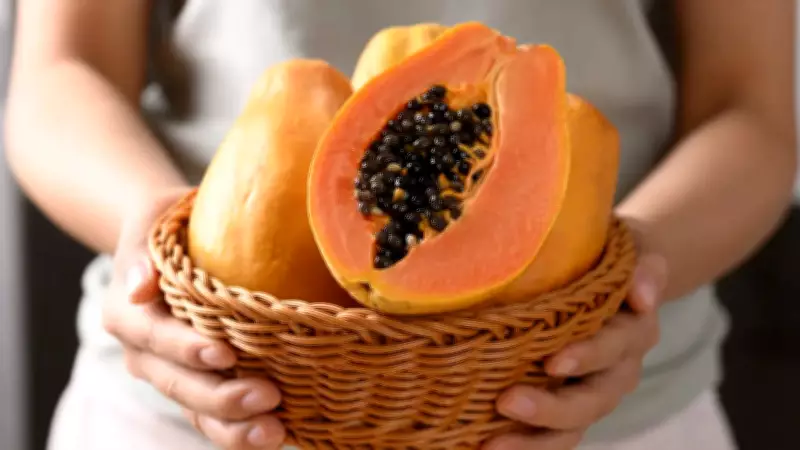
Papaya is a humble fruit with numerous health benefits. It is a nutrient-rich tropical fruit known for its digestive, immune-boosting, and skin-enhancing properties. From Ayurveda to nutritionists, all endorse the benefits of this fruit, which contains papain, an enzyme that aids digestion and prevents bloating. Packed with vitamin C, vitamin A, and antioxidants, papaya also strengthens the immune system, improves vision, and promotes glowing skin. However, not many are aware of the adulteration happening in the market. In a recent advisory, the Food Safety and Standards Authority of India (FSSAI) asked states to restrict the use of calcium carbide for artificially ripening fruits such as mangoes, bananas, and papayas. It has been found that rising demand for papaya has led market players to use illegal means of ripening the fruit to meet local demand. Here are a few tips you can keep handy to check if the fruit is artificially ripened or not.
Observe the Color
This is one of the easiest methods. Observe the color of the outer skin. Naturally ripened papayas do not turn uniformly yellow or orange. According to experts, they mostly develop patches of yellow and green as they ripen gradually. In contrast, chemically ripened papayas often appear overly uniform in color.
Check the Texture
A naturally ripened papaya will feel slightly soft when pressed gently, indicating that the flesh inside has matured evenly. In contrast, a chemically ripened one may feel firm or rubbery despite its ripe appearance.

Smell the Fruit
Another way to cross-check purity is to smell the papaya. According to experts, a naturally ripened papaya emits a pleasant, sweet, and tropical aroma near the stem area. If the fruit lacks this fragrance or gives off a faint chemical-like smell, it might be chemically ripened.
Cut the Fruit and Check
When you cut and open the fruit, a naturally ripened papaya will have vibrant orange flesh that is soft and juicy, and the seeds are typically well-formed and surrounded by a gelatinous coating. If the fruit is chemically treated, it may show uneven coloration inside, with patches of yellow or pale flesh.
Taste the Papaya
According to experts, a naturally ripened papaya will be sweet, rich, and full of flavor. In contrast, artificially ripened ones might taste bland with a slightly bitter aftertaste. They may also lack the depth of flavor expected from the ripened fruit.
Look for Burnt Marks
According to FSSAI, fruits exposed to chemicals like calcium carbide sometimes show unnatural dark burnt-looking spots or patches on the skin.
Strip Paper Test
This test uses a moist indicator paper strip (often potassium permanganate-treated paper or similar reactive strips) to check for gases released from the fruit, suspecting artificial ripening with calcium carbide. For the test, papayas are placed in a closed container, to which a moist indicator strip is added and left for a short while. If the strip shows noticeable discoloration or rapid color change, the chance of artificial ripening is considered high. This sometimes accompanies an unusual smell or uneven ripening signs as well.