

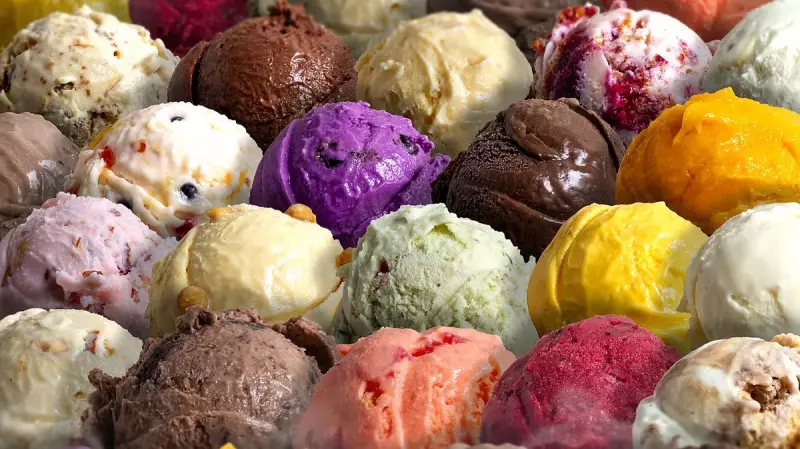
The story of ice cream is a delicious saga spanning millennia, weaving through empires and continents before becoming the beloved global treat we know today. Its origins are far more ancient and royal than one might imagine, rooted not in modern freezers but in the ingenious methods of preserving winter's chill for summer's delight.
Ancient Beginnings: Snow, Honey, and Royalty
The earliest known precursor to ice cream dates back over 2,500 years to the Achaemenid Empire of Persia. Around 500 BCE, Persian engineers mastered the art of building "yakhchals" – ingenious domed structures that functioned as primitive refrigerators. These structures, often built with thick, heat-resistant walls, used underground storage and windcatchers to preserve ice and snow collected from nearby mountains during winter.
This precious, preserved snow was not eaten plain. It was transformed into a luxurious dessert for the elite. The Persians would flavor the snow with fruit syrups, honey, and saffron, creating a refreshing treat called "faloodeh" or similar early sorbets. This practice highlights a crucial point: the history of ice cream is deeply intertwined with royalty and wealth, as controlling cold in a hot climate was a symbol of immense power and resources.

The knowledge of these frozen delights traveled along trade routes. It is believed that when the Roman Emperor Nero (ruling from 54 to 68 CE) demanded ice to be brought from the mountains to cool his fruit drinks, he was continuing a tradition inspired by Eastern practices. The movement of recipes and techniques was slow but steady, setting the stage for a culinary revolution.
The Eastern Evolution and the Mughal Mastery
As the techniques moved eastwards, they found a particularly fertile ground in the Indian subcontinent under the Mughal Empire. The Mughals, with their Persian cultural connections and love for lavish cuisine, became pivotal figures in ice cream's story. They are widely credited with perfecting a denser, richer ancestor of modern ice cream: kulfi.
Unlike its Western cousin, traditional kulfi is not whipped, resulting in a denser, creamier texture. The Mughals would slow-cook sweetened, flavored milk for hours until it reduced dramatically, then pour it into conical moulds and freeze them in pots packed with ice and salt. This method of using salt to lower the freezing point of ice was a significant technological leap, allowing for faster and more efficient freezing. Favored flavors included pistachio, cardamom, saffron, and rose – a legacy that continues in Indian kulfi today.
The Mughal passion for this frozen dessert was legendary. Historical accounts suggest that an entire department within the royal kitchens was dedicated to procuring ice from the Himalayas and preparing these delicacies. This era solidified the dessert's status as a food of kings and nobility.
The Journey West and Global Democratization
The transmission of ice cream knowledge to Europe is often linked to travelers like the Venetian merchant Marco Polo in the 13th century. While historians debate the specifics, it is widely accepted that he likely encountered frozen milk-based desserts in the East and described them upon his return, sparking European interest.
By the 16th and 17th centuries, frozen desserts became the rage in European royal courts. Catherine de' Medici is said to have introduced sorbet to France in the 1500s. In 1660, the Sicilian chef Francesco Procopio dei Coltelli made history by opening "Café Procope" in Paris, one of the first establishments to sell sorbets and ice creams to the general public, not just aristocracy.

The real transformation into the modern era began in the 18th and 19th centuries. American ingenuity played a key role. In 1843, a New Jersey woman named Nancy Johnson patented the first hand-cranked ice cream freezer, which simplified production. Then, in 1851, Jacob Fussell, a milk dealer from Baltimore, established the first large-scale commercial ice cream factory. By using his surplus cream, he made ice cream affordable and accessible to the masses, truly democratizing the dessert.
The subsequent inventions of mechanical refrigeration, the ice cream cone at the 1904 St. Louis World's Fair, and industrial production lines turned ice cream into the ubiquitous, beloved global phenomenon it is today. Yet, its core appeal – a sweet, cold respite – remains unchanged from the days when Persian kings savored snow sweetened with honey.
From the yakhchals of Persia to the royal kitchens of the Mughals and the bustling cafes of Paris, ice cream's 2,500-year history is a testament to human creativity and our universal desire for a sweet, cooling treat. It is a story of cultural exchange, technological innovation, and the journey of a luxury item into a joy for all.





