How to Unclog Your Kitchen Sink Without a Plumber: A Step-by-Step Guide
Your kitchen sink is filled with grimy, stagnant water, and it's not draining at all. You have dishes piling up, and the timing couldn't be worse. While calling a professional plumber might seem like the only solution, for most common kitchen drain blockages, it's actually unnecessary. The majority of kitchen sink clogs are caused by the same culprits: accumulated grease, food particles, and soap residue that gradually narrow the pipes until they're almost completely blocked. The good news is that nearly all of these clogs can be resolved at home, without any specialized tools, in less than an hour. Here's a detailed, practical guide on how to actually do it.
Start with the Simplest Solution First
Before you attempt anything more involved or reach for chemicals, try using boiling water. This method sounds deceptively simple, but it is highly effective for grease-based clogs, which account for most kitchen sink issues. Boil a full kettle of water, wait approximately one minute to let it cool slightly, then slowly pour it directly down the drain in two or three stages. Allow about thirty seconds between each pour. The intense heat melts the solidified grease, and the water flushes it through the pipes. In many cases, this straightforward approach is all that's needed to restore proper drainage.
If the water remains completely stagnant and doesn't move at all, you likely have a more solid blockage, such as food debris or other physical obstructions. Boiling water won't be effective in this scenario, so it's time to move on to the next method.

The Baking Soda and Vinegar Method (It Actually Works)
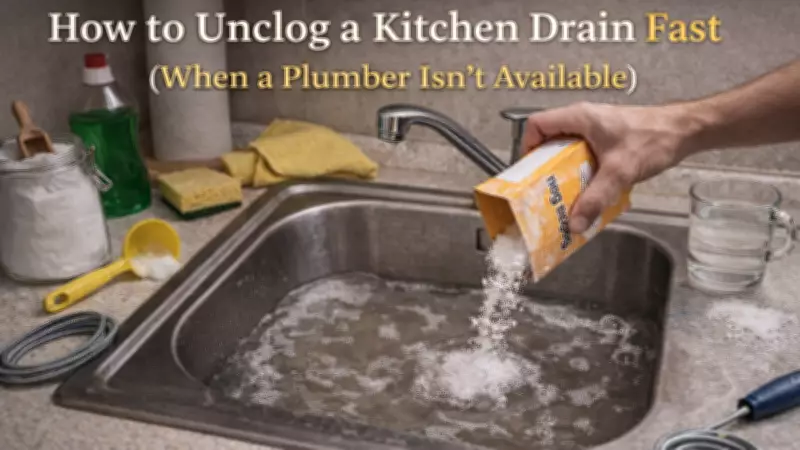
This technique might remind you of a middle school science experiment, but don't underestimate its effectiveness. Begin by pouring half a cup of baking soda directly into the drain, ensuring it goes past the drain cover and into the pipe itself. Immediately follow this with half a cup of white vinegar. The mixture will bubble and fizz vigorously, which is exactly what you want. This chemical reaction helps break down the gunk and buildup lining the interior of your pipes. Cover the drain opening with a cloth or a drain stopper to force the reaction downward, preventing it from bubbling back up.
Leave the solution to work for about twenty minutes. Afterward, flush the drain with hot water from the tap—not boiling this time, just regular hot water. For mild to moderate clogs, this combination performs reliably well. Moreover, it is completely safe for your plumbing system, unlike many chemical drain cleaners available in supermarkets, which can be harsh and potentially damaging over time.
Use a Plunger for Stubborn Clogs
If the water still isn't draining properly, it's time to bring out a plunger. Many people don't realize that a standard cup plunger can be used on a kitchen sink; you don't need the flanged type designed for toilets. Ensure there is enough water in the sink to cover the rubber cup of the plunger. Position the plunger directly over the drain, press down firmly to create a tight seal, and then work it up and down vigorously about ten to fifteen times. Finally, pull it off sharply.
Repeat this process a few times. The plunger creates pressure that can push or pull the blockage loose. While it's not the most glamorous task, it works more often than people expect, particularly for partial clogs where water drains slowly rather than not at all.
Important note: If you have a double sink, block the second drain with a wet cloth before you start plunging. Otherwise, the pressure will escape through the other side, rendering your efforts ineffective.
Check the P-Trap If Nothing Else Works
The P-trap is the curved, U-shaped pipe section located directly under your sink. Its primary function is to hold a small amount of water to block sewer gases, but it's also a common spot where solid debris collects and causes blockages. If you've tried all the methods above and the drain remains clogged, the obstruction is likely right there in the P-trap.

First, place a bucket underneath the pipe to catch any water and debris. Then, unscrew the two slip-joint nuts on either side of the curved section by hand; most can be removed without tools. Be prepared for water and debris to fall into the bucket. Once the P-trap is detached, clean it out thoroughly, rinse it, and screw it back into place. Hand-tightening is usually sufficient, but give it a small extra turn to ensure it doesn't leak.
Turn the tap on slowly to test the drainage. In nine out of ten cases, this step will solve the problem.
A Quick Word on Chemical Drain Cleaners
Resist the temptation to use chemical drain cleaners. They are harsh, can damage older pipes over time, and are unpleasant to handle, especially if the drain is fully blocked and the liquid just sits in your sink. The methods described above are slower but significantly safer for your plumbing system. If none of these DIY approaches work, then it's time to call a professional plumber. However, in most situations, you probably won't need to.
Disclaimer: The information provided here is for general guidance only. Results may vary depending on your specific plumbing setup. If the clog persists or you notice leaks, consult a licensed plumber.