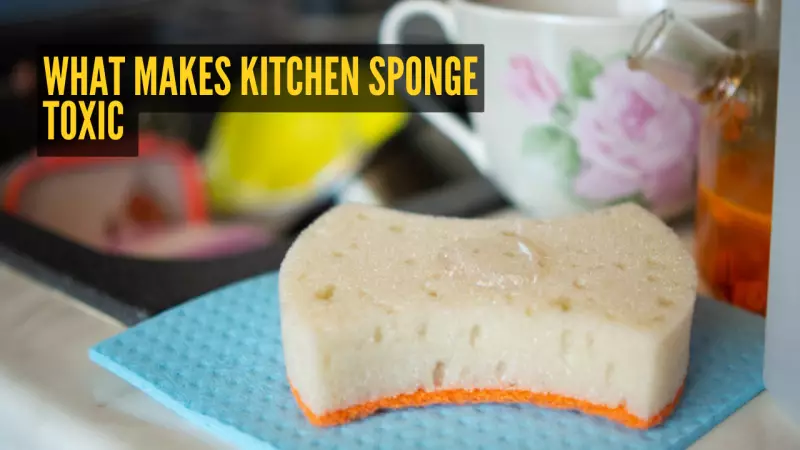
When we think of kitchen hygiene, our focus often lands on clean countertops, spotless utensils, and covered dustbins. However, a common, seemingly harmless item used daily is now being called out by scientists as a silent health hazard lurking in your sink. The humble kitchen sponge, found in nearly every household, is being labelled as one of the most toxic items in your home, releasing harmful chemicals and harbouring billions of dangerous bacteria.
The Shocking Science Behind Your Sponge
In a detailed Instagram reel, scientist and author Warren Phillips has raised a serious alarm about the ubiquitous yellow kitchen sponge. He explains that this everyday cleaning tool is composed of up to 50 different chemicals, many of which are hormone-disruptive. These chemical residues are left on your plates and cutlery after washing, meaning you could be ingesting them with every meal.
Furthermore, Phillips highlights the severe microplastic pollution caused by sponges. "You're leaving behind microplastic particles that get ingested, and research shows can lead to an increased risk of heart disease and dementia," he states. The core of the problem lies in the material: most artificial sponges are made from cellulose, which ironically acts as perfect food for bacteria to thrive on.

A Breeding Ground for Billions of Pathogens
The scientific evidence supporting these claims is alarming. A study titled "Viability discrimination of bacterial microbiomes in home kitchen dish sponges" analysed five used sponges. It found that sponge-associated bacterial communities are primarily viable and contain multiple viable bacterial foodborne pathogens. Researchers detected twenty unique foodborne pathogens across the samples, with each sponge housing between three to six viable ones. Escherichia coli (E. coli) and Staphylococcus aureus were identified in every single sponge tested.
Another study, "Study on microbial communities in domestic kitchen sponges," confirmed a dangerously high contamination level. It noted the presence of Cronobacter sakazakii and Extended Spectrum Beta Lactamase (ESBL) producing bacteria, which are resistant to many antibiotics. The study concluded that the sponge's constant dampness, food particles, and promiscuous use across surfaces create an ideal setting for microbial colonization and cross-contamination in the kitchen.
Warren Phillips puts the risk into a staggering perspective: up to 45 billion toxic microorganisms can live in a single square centimetre of a kitchen sponge. Using such a sponge to wash dishes spreads this bacteria, which, when ingested, can lead to gut dysbiosis—an imbalance linked to serious inflammatory bowel conditions.
Safer Alternatives for a Healthy Kitchen
So, what should you use instead of the conventional yellow sponge? Experts recommend making a simple swap to more natural, hygienic options. According to Warren Phillips, the best alternatives include:
- 100% organic cotton towels: They can be washed and sanitized at high temperatures regularly.
- 100% natural loofahs: A plant-based option that dries faster and is less prone to bacterial buildup.
- Organic bamboo scrapers: Effective for removing stuck-on food without retaining as much moisture.
- Stainless steel scouring pads: Durable and less likely to harbour bacteria compared to porous sponges.
If you continue to use a sponge, a critical rule is to replace it every 15 to 20 days without fail. Regular washing or even microwaving is not enough to fully eliminate the deep-seated germs and biofilms that form within its structure.
Disclaimer: The information provided here is for general knowledge purposes only and is not a substitute for professional medical advice. Always consult your doctor or a healthcare expert for guidance related to your health and hygiene practices.