

The Damp Laundry Syndrome: A Common Household Frustration
Have you ever rushed to your dryer, expecting soft, dry towels, only to find a cold, wet ball of clothes? This frustrating phenomenon has a name: the damp laundry syndrome. It often tempts homeowners to call a repair service or blame a faulty heating element, but the solution is surprisingly simple and inexpensive.
The Physics of Overloading: Why More Isn't Better
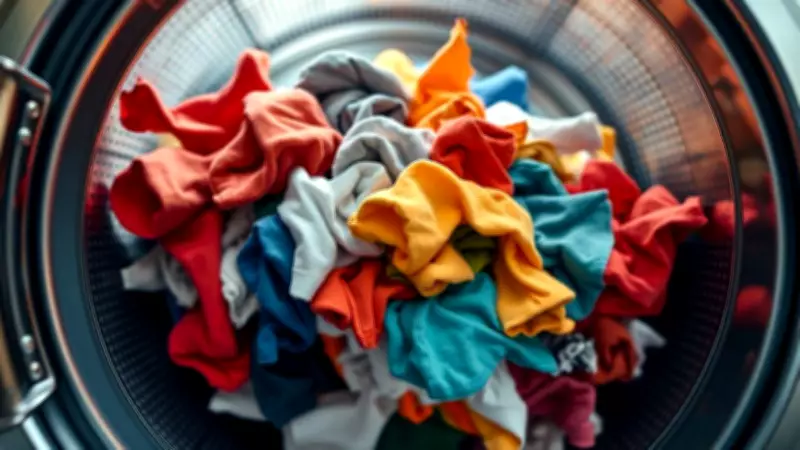
In our hectic daily lives, we often try to maximize efficiency by cramming as much as possible into one load. However, this approach contradicts the laws of physics. Packing a dryer to capacity actually suffocates it, as dryers require both heat and air circulation to function properly. Without adequate airflow, moisture trapped in the clothes has no outlet to escape, leading to ineffective drying.
Air circulation is the underlying problem. Research published in the journal Scientific Reports highlights the critical importance of airflow for uniform drying. Although this study focuses on industrial-scale operations, the same principles apply to household dryers. Hot air must be evenly distributed across all surfaces to achieve thorough drying.

The Science Behind Inefficient Drying
This isn't just theoretical. Scientists have found that when objects are crowded together, airflow is drastically reduced, plummeting the machine's efficiency. By attempting to save time with one large load, you may end up doubling your energy consumption because the dryer has to run longer to reach the center of the damp clump. Providing a little breathing room inside the drum can significantly enhance air movement, ensuring items like jeans and hoodies dry completely on the first cycle.
Another often-overlooked factor is how air behaves under resistance. Investigations into energy losses from air leakage in condensing tumble dryers reveal that these appliances are highly susceptible to pressure variations. Overloading increases internal pressure, forcing heated air to escape through seals and gaps between the heater and drum. Instead of warming your laundry, the dryer expends energy heating the laundry room and drawing in cooler air from outside, creating an unbalanced and power-intensive cycle.
Finding the Sweet Spot: The Ideal Load Size
Running small loads might seem efficient, but scientific evidence suggests otherwise. There's a "sweet spot" for optimal drying, akin to Goldilocks' porridge—not too much, not too little. Small loads can be equally ineffective because air velocities within the drum become too high, hindering proper evaporation.
The best practice for most household dryers is to fill the drum about halfway to two-thirds full. This provides enough tumbling action to keep clothes moving while leaving sufficient empty space for hot air to carry moisture away. Clothes should fall freely from the top to the bottom of the drum as it spins. If they rotate in a solid, unmoving block, they will never dry properly.
Additional Tips for Maintaining Airflow
Beyond controlling load size, smaller measures can help maintain this delicate balance of air circulation:
- Clean the lint filter regularly to prevent blockages.
- Ensure the external vent is not obstructed, as air cannot flow through the machine if it cannot exit the house.
The secret to hassle-free laundry lies in viewing your dryer as more than just a container for wet clothes. Giving your garments breathing space allows the appliance to perform effectively, saving on energy costs, extending clothing lifespan, and most importantly, avoiding the annoyance of damp socks.

