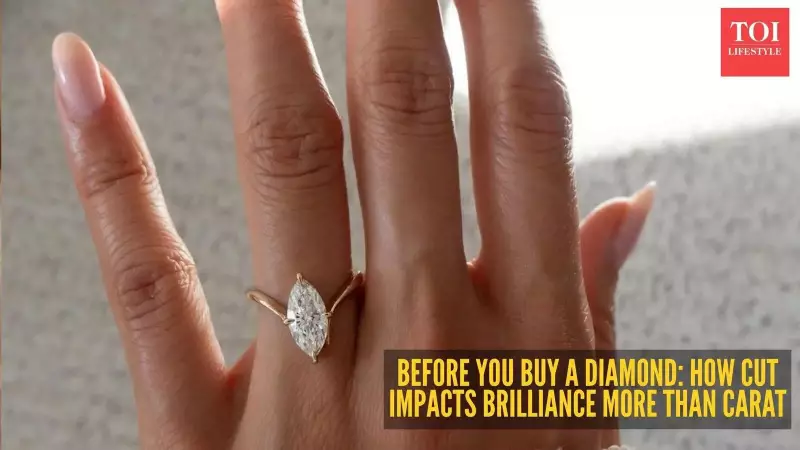
As the wedding season approaches, countless couples across India begin the search for the perfect diamond. For many, the primary focus is on the carat weight, dreaming of a large stone that makes a statement. However, gemology experts reveal a crucial, often overlooked truth: a diamond's true beauty lies not in its size, but in its cut. A large diamond with a poor cut can appear as lifeless as a piece of glass, while a well-cut stone, regardless of carat, can dazzle with brilliant fire.
The Human Touch: Why Cut Reigns Supreme
Among the famous 4Cs of diamonds—Cut, Color, Clarity, and Carat—the Cut is the only factor controlled by human skill. It is not a gift of nature but a testament to the cutter's artistry. This craftsmanship determines how effectively a diamond interacts with light. A masterful cut acts like a complex series of mirrors, bending and reflecting light back to the viewer's eye, creating that coveted sparkle. A poor cut allows light to leak out, leaving the stone looking dark and dull.
The Gemological Institute of America (GIA), the world's foremost authority on diamond grading, has established a definitive scale with five cut grades for the popular Round Brilliant shape. Understanding these grades is essential for any buyer looking to make a wise investment.

Decoding the GIA Cut Grade Ladder
1. Excellent Cut: The Ultimate Sparkle
This grade represents the pinnacle of the cutter's art. To achieve an Excellent rating, the artisan often sacrifices a significant portion of the original rough diamond to achieve ideal proportions and symmetry. The result is a stone that behaves like a perfect optical instrument.
It reflects nearly all light that enters it, resulting in maximum brilliance (white light reflections) and fire (spectral rainbow flashes). For those seeking uncompromising beauty and for whom budget is not the primary constraint, this is the definitive choice.
2. Very Good Cut: The Value Champion
To the unaided eye, a Very Good cut diamond is virtually identical to an Excellent one. It reflects most of the light brilliantly, with only minute imperfections detectable under a jeweller's loupe. This grade offers a spectacular balance.
You secure approximately 95% of the visual sparkle of the top grade but at a more accessible price point. It is widely considered the smart buy for discerning shoppers who want exceptional beauty without the premium cost.
3. Good Cut: The Size Compromise
This grade marks a clear trade-off. Often, a Good cut indicates the cutter prioritized retaining more carat weight from the rough crystal over achieving optimal proportions. The focus shifts from maximum sparkle to a larger size.
The diamond will not be lifeless, but it will lack the vibrant, sharp sparkle of higher grades. Shadows may be visible near the edges, and the stone will appear quieter. This is a practical choice if your primary goal is the largest possible stone within a set budget, but with managed expectations on its light performance.
Grades to Approach with Caution
4. Fair Cut: The Glassy Appearance
With a Fair cut, a substantial amount of light escapes through the bottom or sides of the diamond. This leads to a noticeable lack of brilliance and contrast—the interplay of light and dark that creates scintillation.
The stone can appear noticeably dull or glassy. Most jewellery professionals advise against using a Fair cut diamond as a centre stone, such as in an engagement ring. It may be acceptable for small accent stones in side settings where individual sparkle is less critical.
5. Poor Cut: The Stone to Avoid
This is the lowest grade on the scale. Poor cut diamonds are often cut too deep or too shallow, severely compromising their ability to reflect light. Common visual flaws include the 'nail head' effect, a dark spot in the centre, or a 'fish eye,' a washed-out, watery appearance.
Even a high-carat diamond with a Poor cut will look lifeless and unattractive. Experts unanimously recommend avoiding this grade for any significant jewellery purchase.

Pro Tip: Cut is Not Shape
A common mistake first-time buyers make is confusing a diamond's cut with its shape. The shape refers to the outline—Round, Oval, Princess, Pear, etc. The cut refers to the quality of the faceting and proportions that dictate light performance. You can have a beautifully shaped Round diamond that suffers from a Poor cut. Always insist on reviewing the diamond's official GIA or reputable lab grading report, which will list the cut grade separately.
This wedding season, empower your purchase with knowledge. Look beyond the carat weight and prioritize the cut. By choosing a higher cut grade, you invest in a diamond that captures light and attention, ensuring it sparkles brilliantly for a lifetime.