The year 2025 proved to be a watershed moment for India's influence on the global luxury and fashion landscape. From historic red carpet appearances to landmark retail entries and legal triumphs for iconic brands, Indian creativity, craftsmanship, and consumer power commanded unprecedented attention on the world stage.
Stars and Designers Shine on Global Platforms
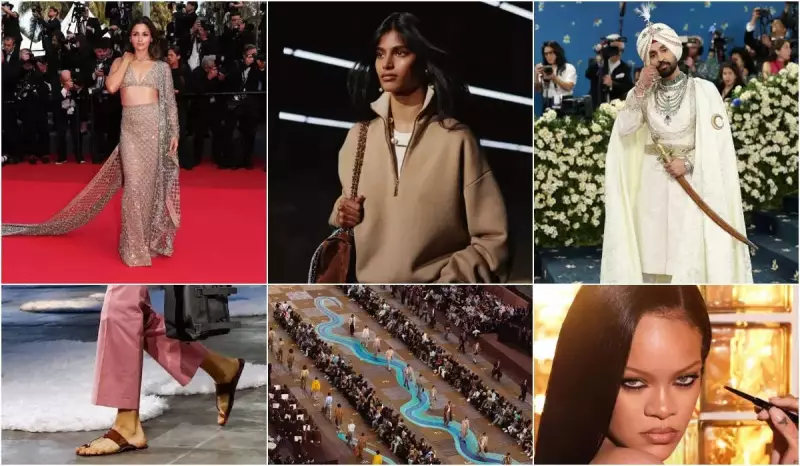
The 2025 Met Gala witnessed a powerful Indian debut, with four first-timers making their mark. Superstar Shah Rukh Khan chose signature elegance in an all-black Sabyasachi outfit featuring a long coat and a gold cane. Punjabi icon Diljit Dosanjh made a bold cultural statement in an embroidered angrakha and a cape adorned with Punjab's map and Gurmukhi script, complete with a jeweled turban and sword. Actress Kiara Advani turned heads in a sculptural Gaurav Gupta gown with a gold breastplate, while designer Manish Malhotra attended in an embroidered cape coat.
Beyond the Met, Chanel deepened its India focus by appointing Ananya Panday as its first-ever Indian brand ambassador. The year also saw history made when Hyderabad-born model Bhavitha Mandava became the first Indian to open Chanel's prestigious Métiers d'Art show in New York.

Alia Bhatt, as Gucci's first Indian global ambassador, blended tradition with luxury at the Cannes Film Festival closing ceremony, wearing Gucci's first custom saree. Her expanding influence was further cemented with a global ambassador role at Levi's later in the year.
Runways Become Cultural Dialogues
International luxury houses increasingly wove Indian narratives into their core collections. Vivienne Westwood made its long-awaited India debut with a landmark show at Mumbai's Gateway of India, featuring a special capsule made from Indian handwoven textiles like chanderi silk and khadi.
Similarly, Louis Vuitton's Spring/Summer 2026 menswear show in Paris placed India at its creative heart. The runway was transformed into a giant Snakes and Ladders board, conceptualized with Mumbai architect Bijoy Jain. The collection highlighted Indian craftsmanship, and the show's score was co-composed with A. R. Rahman. The brand also sparked viral conversations with its debut of a ₹35-lakh auto-rickshaw-shaped handbag on the Paris runway.
Craft, Heritage, and Accountability
The year underscored both celebration and the need for respectful cultural exchange. Prada announced a limited-edition Kolhapuri sandal collection made in collaboration with artisans from Maharashtra and Karnataka, priced around €800.
However, Dior faced criticism at Paris Fashion Week for a menswear overcoat priced at approximately ₹1.7 crore featuring Lucknow's traditional mukaish embroidery without clear attribution to the Indian craft or its artisans, sparking debates on cultural credit.
In jewellery, Bvlgari brought its Serpenti Infinito exhibition to Mumbai's Nita Mukesh Ambani Cultural Centre, inaugurated by Priyanka Chopra Jonas. For Diwali, Jimmy Choo launched a festive campaign shot at Jaipur's City Palace with ambassador Princess Gauravi Kumari.
Legal Wins and Major Market Entries
In a significant legal ruling, the Delhi High Court recognized the Hermès Birkin bag as a well-known trademark in India, granting its name and distinctive shape stronger legal protection against imitations.
The Indian market saw major global entries. French luxury department store Galeries Lafayette opened a five-floor flagship in Mumbai in November. Rihanna's Fenty Beauty launched across 16 Indian cities, though a campaign image faced pushback for cultural insensitivity. In a landmark move for the automotive sector, Elon Musk's Tesla officially entered India, opening its first showroom in Mumbai and launching the Model Y SUV.

This flurry of activity was backed by strong market indicators. India's luxury market reached nearly $12 billion in 2025, with growth projected at around 74% annually. A shift towards experiences was clear, as luxury travel and hospitality grew 8% to $103 billion.
The convergence of celebrity influence, artistic craftsmanship, strategic brand investments, and evolving consumer clout in 2025 firmly positioned India as an indispensable and dynamic force in the future of global luxury.