The New Face of India's Luxury Replica Economy
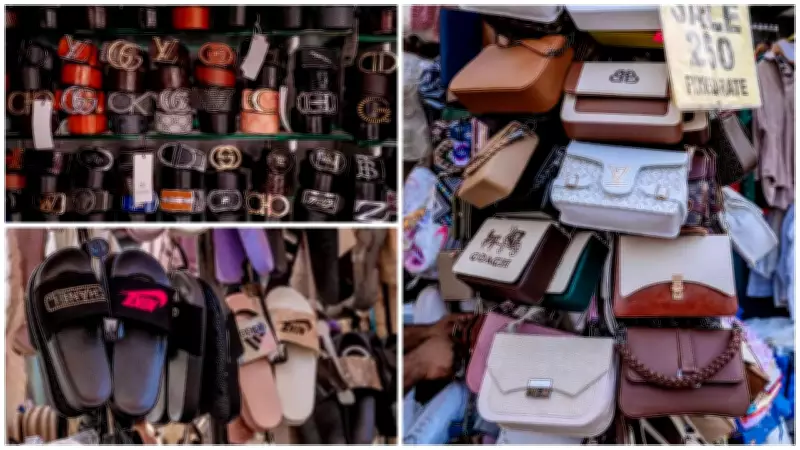
Gucci, Hermès, Coach, Louis Vuitton, Cartier, Dior, Burberry — these iconic brand names are now ubiquitous across the Indian landscape. From bustling street markets and temporary pop-up stalls to curated Instagram pages and exclusive WhatsApp groups, luxury logos have become impossible to avoid. The products on display often look indistinguishable from the authentic items, meticulously replicating everything from the precise stitching and exact weight to the accompanying paperwork. This phenomenon represents the sophisticated new face of India's luxury replica economy — a rapidly evolving underground industry where counterfeits have transformed from crude imitations into near-perfect replicas capable of deceiving even seasoned collectors, discerning creators, and loyal brand enthusiasts.
The Anatomy of a Superfake
These high-quality imitations, commonly referred to as 'first copies' or 'superfakes', frequently arrive with packaging that mirrors the original experience. They come complete with branded boxes, protective dust covers, and authentic-looking warranty cards. Handles are carefully wrapped in foam, hardware is shielded with protective film, and products feature identification numbers or QR codes — which, unsurprisingly, lead to dead ends when scanned. The attention to detail marks a significant shift in the counterfeit market's approach to manufacturing and presentation.
India's Perfect Storm for Replicas
India has quietly ascended to become one of the world's most profitable markets for luxury replicas, fueled by a convergence of powerful factors. An intensely aspirational luxury culture, amplified by social media platforms, combines with prohibitively high import duties that inflate retail prices for genuine articles. This is further compounded by a long-standing cultural acceptance of "first copy" fashion within certain consumer segments. Rahul Verma, a consumer who has purchased several first copies, explains the practical appeal: "When you want to stay current with fashion trends but face budget limitations, first copies offer a sensible solution. Some of these replicas demonstrate remarkable durability. Not everyone possesses the generational wealth required to purchase handbags costing one lakh rupees or more."

The Psychology of Purchasing Fakes
Luxury lifestyle content creator Akash Choudhary, a regular purchaser of high-end fashion, believes the attraction extends beyond mere affordability. "Most individuals buy counterfeit items because they seek inclusion. They desire to feel part of an exclusive circle associated with luxury, success, power, and privileged access. When someone acquires a fake product, they aren't merely buying an item — they're purchasing a shortcut to social belonging. It represents a borrowed identity, a fantasy of arrival without undertaking the conventional journey," he elaborates.
Arshi Shaikh, an online seller based in Navi Mumbai who specializes in what she terms 'premium clones', emphasizes that transparency forms the foundation of her business. According to Shaikh, numerous buyers perceive clones as a practical compromise — gaining access to a specific aesthetic or social signal without enduring the financial burden of authentic luxury goods. "Logos retain significance because luxury remains intrinsically linked to social signaling. However, customers increasingly inquire about finish quality, weight, durability, and overall craftsmanship. Quality has emerged as the primary differentiator in today's market. Contemporary consumption is fundamentally connected to perception and validation," she explains.
The Global Supply Chain of Counterfeits
According to the 2025 Global Trade in Fakes report jointly published by the OECD and EUIPO, while counterfeit and pirated goods originate from nearly every economy worldwide, China (including Hong Kong) continues to dominate as the primary source. Various media reports attribute between 63 percent to over 80 percent of the global counterfeit market to Chinese manufacturing. Cities including Guangzhou, Shenzhen, Shanghai, and Beijing maintain long-standing associations with replica goods production.

Other nations featuring prominently in fake goods manufacturing include Turkey, Thailand, India, Malaysia, Vietnam, and Bangladesh. Within India, specific markets have gained notoriety: Mumbai's Heera Panna, Kolkata's Kidderpore, and Delhi's Palika Bazaar and Tank Road appear on the Office of the US Trade Representative's list of notorious markets, which monitors global hubs distributing counterfeit products. An Al Jazeera report quotes shopkeepers claiming that sellers frequently travel to China to arrange consignments of counterfeit luxury items.
The Digital Shift in Counterfeit Sales
While physical marketplaces remain widespread, the majority of replica sales now occur through online channels. "Online sales constitute the essential revenue stream for counterfeiters. This is where we observe a high percentage of fake products being traded," Al Jazeera quoted Vikas Jain, founder and CEO of Acviss, a Bengaluru-based technology company providing brand protection and anti-counterfeiting solutions.
Luxury brands maintain acute awareness of this parallel economy, yet possess limited effective measures to curtail its expansion. Prominent houses including Louis Vuitton, Christian Louboutin, Gucci, Cartier, Rolex, Hermès, Yves Saint Laurent, and Burberry have all initiated legal proceedings against counterfeiters in India, though their victories have proven largely temporary. "Brands prefer to avoid shifting the narrative from their latest collections or philanthropic initiatives toward the less flattering focus of combating counterfeiters," Paul Russell, a consumer behavior psychologist at the UK-based Luxury Academy, informed Al Jazeera.
Assessing the Counterfeit Industry's Value
Industry projections from Corsearch, a private brand-protection firm, suggest the global trade in counterfeit goods could reach $1.79 trillion by 2030. This represents a substantial 75 percent increase from 2023, when the market valuation stood at $1.02 trillion, indicating growth approximately 3.6 times higher than the predicted expansion of the global economy during the same timeframe.
According to a separate 2025 report by the OECD and EUIPO, counterfeit and pirated goods accounted for an estimated $467 billion in global trade during 2021. Within the domestic context, media reports citing ASSOCHAM estimates indicate that approximately 5 percent of luxury apparel sold in India may be counterfeit.
Understanding the Replica Hierarchy
Superfake
Occupying the highest tier of replicas, superfakes are engineered to withstand authentication checks, sometimes even on professional resale platforms. They may utilize similar leather sources, custom hardware, advanced stitching techniques, and accurate serialization. Production runs remain limited, prices command premium levels, and detection typically requires expert inspection.
Mirror Copy
Designed to replicate original products as closely as possible, mirror copies demonstrate meticulous attention to materials, hardware, weight, stitching, and intricate detailing. Logos and serial codes often appear near-identical, while packaging receives careful reproduction. These replicas attract buyers seeking a convincing appearance without paying superfake prices.
First Copy
Positioned a step above basic street fakes, first copies prioritize visual similarity at first glance. Logos, silhouettes, and colors remain recognizable, but materials, hardware, and craftsmanship generally fall short of authentic standards. Serial numbers, packaging, and authentication elements are usually absent or poorly replicated.
Street Fakes (Low-Grade Copies)
Representing the most basic replicas, these are manufactured for volume rather than accuracy. Materials tend to be inexpensive, logos often display slight discrepancies, finishing appears rough, and distribution occurs widely through street markets and online platforms.
The Art of Carrying Counterfeits Convincingly
Vidushi, a Mumbai-based content creator, believes that carrying a fake item convincingly constitutes a skill in itself — one not universally possessed. "I maintain friendships with individuals who have contacts in Mumbai and Dubai sourcing most bags. Certain Coach bags retail for approximately ₹50,000–60,000 but are frequently sold as copies for ₹10,000–15,000. I own original pieces, and when comparing them with my friends' Dubai-sourced items, I genuinely struggle to identify differences," she reveals.
For Vidushi, the focus extends beyond the individual item to encompass the complete presentation. "If you're wearing authentic Prada sunglasses, applying Bulgari or Chanel perfume, and carrying an iPhone valued at ₹1.5 lakh, who would genuinely question your handbag's authenticity?"
She offers guidance for first-time buyers: "Avoid purchasing fake sunglasses or handbags from brands like Louis Vuitton or Gucci. Even authentic items can appear counterfeit if your overall presentation doesn't reflect affluence. The complete ensemble matters — clothing, bag, glasses, shoes, phone — everything must align with the standard you wish to project."
Sharing additional advice, she continues: "Refrain from buying fakes at Colaba; experienced observers can easily identify those. Mumbai hosts dealers specializing in first copies or restored bags. They often advise customers against specific purchases due to poor quality. Some even maintain Instagram accounts, with regular buyers monitoring their updates."
Aligning Personal Style with Brand Perception
Communications consultant Silky Chopra Mehrotra, who transitioned from carrying fake bags to exclusively purchasing originals, suggests counterfeit detection often proves straightforward — though context influences perception. "You can typically identify when someone carries a fake bag, but the setting matters significantly. I notice several at most social gatherings, usually Louis Vuitton. That particular brand requires careful purchasing consideration due to the proliferation of fakes. During my younger years, obsessed with brands, I also carried counterfeit bags. Now that I exclusively carry originals, I comprehend why younger individuals desire them," she acknowledges.
She adds that fake fashion accessories — particularly luxury handbags and sunglasses — have grown increasingly sophisticated. However, authentic brands continue adhering to strict design, material, and quality protocols that replicas frequently fail to match.
"Packaging communicates a narrative. Authentic brands employ premium, consistent packaging — thick dust bags, clean stitching, embossed logos, and sturdy boxes. Misspelled brand names, flimsy packaging, inconsistent fonts, or missing care booklets serve as clear warning signs," she elaborates.
"Another crucial aspect involves logo and branding precision. Originals maintain absolute consistency; even millimeter deviations can indicate counterfeit status. Genuine bags feature straight, symmetrical, and tight stitching without loose threads. If stitching appears rushed or uneven, the item is almost certainly fake."
She concludes with practical advice: "If operating within tight budgetary constraints and simply desiring the bag, purchase it from any source. However, if avoiding detection matters, your personal style must harmonize with the brand you're carrying."
Practical Guidance for Distinguishing Authenticity
- Authentic leather emits a rich, organic scent; fakes often smell chemical or excessively perfumed. Stitching demonstrates obsessive precision — particularly on bags from prestigious houses like Chanel and Hermès
- Typography serves as another reliable indicator. "Fonts represent the most significant tell. Spacing, thickness, curves, microalignments — the differences exist at nano levels. Luxury resides in these nano-details," Choudhary emphasizes
- Packaging also conveys important information. Genuine dust bags feel thick and soft; boxes exhibit rigidity and flawless finishing. Serial cards and QR codes provide limited assurance — most superfakes include convincing documentation
- The fundamental principle? "Purchase the seller, not merely the product. No legitimate luxury seller discounts new merchandise by 60 or 70 percent. If the price appears unbelievable, it usually is," Choudhary explains
- Utilize authentication services where available: Luxury and sneaker resale platforms may offer authentication — employ it as a tool rather than an absolute guarantee
Legal Implications at International Borders
Travelers to Europe or the United States should exercise caution: carrying counterfeit Louis Vuitton or Prada bags could result in substantial fines.
The European Anti-Fraud Office (OLAF) has coordinated some of the most significant recent crackdowns on counterfeit fashion across Europe. During a large-scale operation launched in 2024, OLAF collaborated with customs authorities across multiple nations to intercept over 1.8 million fake designer items, with an estimated market value exceeding €180 million. The operation spanned Austria, Belgium, Germany, Italy, and several non-EU countries, revealing how counterfeiters attempt to circumvent border controls.
The scale of this challenge continues expanding. According to an EUIPO–European Commission report published in November 2024, authorities detained 152 million counterfeit items valued at €3.4 billion during 2023 — representing a 77 percent year-on-year increase.