From Stigma to Status: The Meteoric Rise of Pre-Owned Luxury Watches
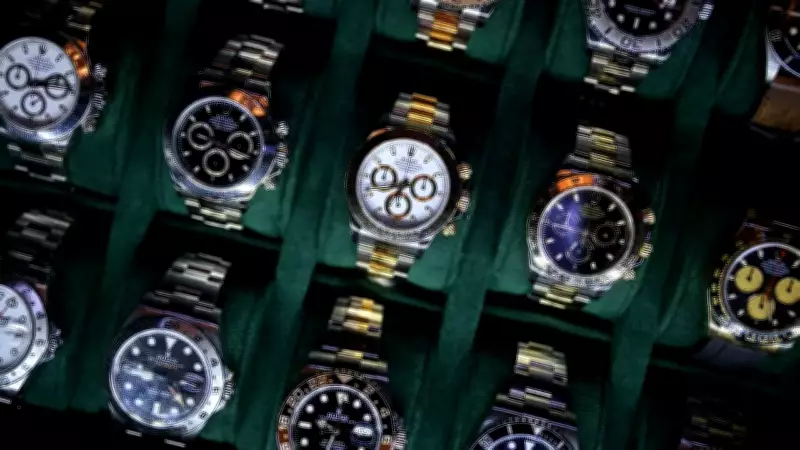
Imagine purchasing a pre-owned Rolex Submariner or GMT-Master II for $2,000 (approximately ₹1.8 lakh) back in 2010. Fast forward to today, and that same timepiece could be valued at around $12,000 (over ₹11 lakh), according to data from Bob’s Watches, a prominent online marketplace for buying and selling pre-owned watches. This staggering appreciation is just one indicator of how dramatically the perception and economics of second-hand luxury have transformed.
The Multi-Million Dollar Secondary Market Boom
The secondary market for luxury goods is no longer a niche segment; it has evolved into a high-stakes, global playground. In December 2024, a stainless steel Tag Heuer Monaco 1133B, famously worn by Steve McQueen, commanded a remarkable $1.4 million (₹12.8 crore) at a Sotheby’s auction. Earlier that year, a 1946 Patek Philippe crafted in pink gold fetched an astonishing $3.8 million (nearly ₹35 crore). These record-breaking sales underscore the immense value and demand within the pre-owned luxury space.
Morgan Stanley’s Luxeconsult 2024 report estimates that the trade of pre-owned Swiss watches will reach a colossal $25 billion this year alone, a figure that already represents half the size of the primary new watch market. This growth trajectory is not confined to timepieces. McKinsey’s State of Fashion 2026 report projects that the global second-hand fashion and luxury market will expand two to three times faster than the first-hand market through 2027. This surge is fueled by rising consumer demand and technological advancements that enhance scale and profitability for resellers.

Pre-Owned: A Smart, Informed Choice, Not a Compromise
For contemporary watch buyers, opting for pre-owned is increasingly seen as a strategic and well-informed decision rather than a secondary choice. "There’s far more awareness around the pre-owned market now," observes Harman Wadhwa, an authorised watchmaker. "People are turning to it because the watches they desire are often unavailable, discontinued, or exclusively sold in specific countries."
Soaring prices in the primary market have accelerated this shift. Wadhwa notes that annual price increases, which once averaged 7–10 per cent, have now climbed to approximately 11–12 per cent, driven by currency fluctuations and rising gold prices. "Buying new has become significantly more expensive, which naturally pushes buyers towards the pre-owned segment," he explains.
Even visiting a luxury watch boutique no longer guarantees a purchase. Highly sought-after models, such as the stainless steel Rolex Cosmograph Daytona (retailing from $16,000), come with waiting lists spanning years, as brands meticulously control supply. This scarcity, coupled with rising global wealth, has intensified demand. Auction sales vividly reflect this frenzy: 2021 witnessed an 86% surge, followed by a 16% increase in 2022, culminating in a total of $846 million, according to Everywatch. Deloitte’s 2024 report further highlights that pre-owned watches now constitute over a third of the global luxury watch market.
Why Watches Excel in the Secondary Market
Watches possess distinct advantages over other luxury items in the resale arena. "They stand the test of time and are easier to repair than materials like cashmere or leather," points out Dr Karan Madan. This durability makes them ideal candidates for a thriving pre-owned market.
Joëlle Grunberg of McKinsey adds, "Fashion and accessories can learn from the watch market: iconic, timeless products retain their value far better than transient items. Evergreen pieces maintain their desirability and price stability, while trendy pieces may quickly become outdated." The lesson is clear: enduring design and craftsmanship are key to long-term value retention.
Brands Legitimize Resale with Certified Pre-Owned Programs
The landscape of the pre-owned market has shifted dramatically. Once dominated by grey-market dealers, it is now being shaped by auction houses, multi-brand retailers, and the brands themselves. A significant driver of this change is the introduction of Certified Pre-Owned (CPO) programmes.

Retailers like Bucherer, Watches of Switzerland, and India’s Ethos, along with luxury brands including Rolex, Audemars Piguet, Richard Mille, and Vacheron Constantin, now offer authentication, professional servicing, and official warranties for pre-owned timepieces. This concept, well-established in the automotive industry, is relatively new to luxury watches but is rapidly gaining traction.
Rolex entered the CPO space in late 2022 and has been steadily expanding its programme, though it has yet to launch officially in India. Its acquisition of Bucherer in 2023, which operates over 100 outlets across Europe and the US, provided significant scale. By July 2023, an estimated 5,500 Rolex CPO listings were active across at least 61 authorised retailers worldwide, creating formidable competition for the grey market. Other brands are following suit; Vacheron Constantin launched its own CPO programme in November 2024.
For brands, CPO programmes restore control over pricing, quality, and the items circulating in the market. For consumers, they provide crucial confidence. As Dr Karan Madan states, "CPO is enabling the growth of the second-hand market. The peace of mind that comes from knowing your watch is genuine, complete, and professionally serviced is invaluable."
Navigating the Pitfalls: Counterfeits and Condition
While buying pre-owned can be thrilling—often feeling like a prized discovery—it carries risks. Counterfeiting remains a paramount concern. "I’ve seen people wear a fake Rolex for decades without realizing it," reveals Harman Wadhwa. "Even watches made of real gold, worth lakhs, weren’t genuine Rolex. The fakes are so sophisticated that you often only know once the watch is opened."
This underscores the critical importance of documentation. "The warranty card is non-negotiable," Wadhwa emphasizes. Dr Madan advises, "The full set matters: box, papers, warranty card, even extra bracelet links. The more complete it is, the better the value." While newer watches may feature RFID or NFC-enabled cards for easier verification, the fundamental rule persists: if a deal seems too good to be true, it likely is.
Condition is another vital consideration, though it isn't always a deal-breaker. "In the pre-owned market, condition is king," says Punit Mehta, founder of the watch collector community Redbar India. "But with vintage watches, a few scratches can add character. They’re signs of a life lived." However, Wadhwa strongly recommends having any pre-owned watch examined by a certified watchmaker. "A watch can look beautiful on the outside and still have internal problems: worn gears, dried lubricants, inaccurate timekeeping, or parts that haven’t been serviced in years. These issues can lead to costly repairs or permanent damage if left unchecked."
Ultimately, trust is paramount. In established watch collector communities, as Mehta notes, there is a system of accountability. "You know who you’re buying from." In the pre-owned world, this reassurance can be worth more than any discount.
The Indian Market: A Cautious Yet Growing Appetite
The pre-owned luxury watch market in India is expanding, albeit cautiously. "We’re price-conscious, but also image-conscious," explains Dr Madan. "While pre-owned luxury is normalized in the West, here there’s still an instinctive preference for buying new. A new watch often serves as a marker of success and milestones."
However, this mindset is gradually evolving. Conversations around value-for-money are softening resistance, particularly among younger buyers and seasoned collectors. First-time buyers typically lean towards new watches, but "collectors with multiple watches are more open to pre-owned," says Wadhwa. "They often upgrade, trade, or sell one piece to acquire another by spending a little more." As Madan puts it, "Collectors who already own 15 or 20 watches aren’t hesitant—they’re actively searching for the next addition to their collection."
The journey of pre-owned luxury watches from a stigmatized category to a mainstream, high-value market is a testament to changing consumer behaviors, brand adaptation, and the timeless appeal of craftsmanship. As certified programmes expand and awareness grows, the secondary market is poised to become an even more integral part of the global luxury landscape.