Six Legendary Vintage Luxury Cars That Remain the Ultimate Collector's Dream
In the world of vintage luxury automobiles, collectors often discuss horsepower and elegant coachwork, but the true driving force behind their obsession is something more intangible: legend. These exceptional vehicles were shaped by bold engineers, aristocratic patrons, wartime constraints, and designers who treated metal as if it were fine sculpture. Produced in extremely limited numbers and meticulously preserved by generations of dedicated owners, they appear so infrequently on the market that even whispers of a sale can create a frenzy in auction houses. Each car represents a unique moment where unparalleled craftsmanship, immense wealth, and ambitious vision converged on four wheels, resulting in timeless masterpieces. Here, we delve into six legendary vintage luxury cars that collectors still dream of owning.
1) Ferrari 250 GTO (1962-64)
Constructed by Ferrari as a homologation special for international GT racing, the 250 GTO had a production run of only 36 units between 1962 and 1964. According to Ferrari's official heritage documentation, this model combined advanced aerodynamic bodywork with a competition-tuned 3.0-litre Colombo V12 engine, making it one of the most successful GT racers of its era. The sculpted coachwork was developed through extensive wind-tunnel testing, a pioneering approach at the time, and it remains an iconic benchmark of 1960s automotive design.
Why collectors obsess: Collectors are captivated by the 250 GTO because every detail narrates a rich history. Ferrari's own records, race entries, and factory-original parts determine whether a car is merely rare or truly historic, distinctions that can add millions to its auction value. This meticulous paper trail is why the model consistently ranks among the world's most valuable cars.

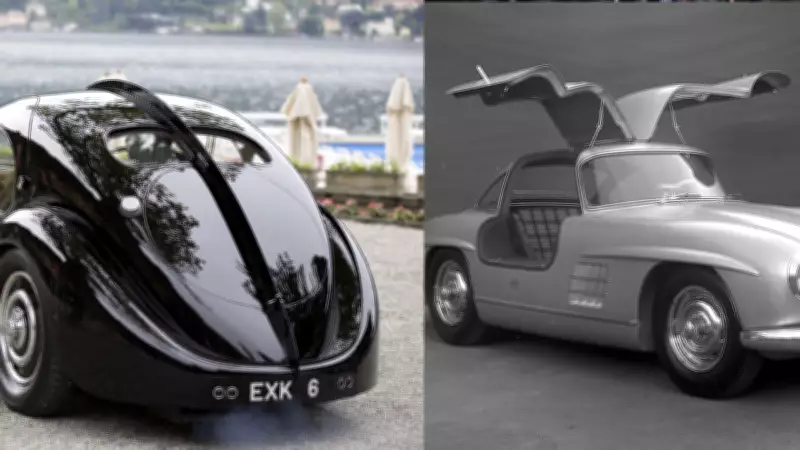
2) Bugatti Type 57SC Atlantic (1936–38)
Only four Atlantics were ever manufactured by Bugatti between 1936 and 1938, and this minuscule production run is just part of their allure. According to Bugatti's official press materials, the dramatic riveted dorsal seam, exceptionally long bonnet, and sleek teardrop cabin resulted from lightweight magnesium-alloy body construction and Jean Bugatti's aerodynamic ambitions. For its time, the shape felt astonishingly futuristic, transforming functional engineering into rolling sculpture and giving the Atlantic a presence that still resembles a museum masterpiece more than a conventional road car.
Why collectors obsess: Collectors are drawn to the Atlantic because almost nothing about it is ordinary. With just four built, and one lost, the dramatic riveted spine and flowing bodywork make each surviving example instantly recognisable. The remaining cars are secured in elite collections, making sightings rare and almost ceremonial events.
3) Mercedes-Benz 300SL Gullwing (1954–57)
When Mercedes-Benz introduced the 300 SL in 1954, it was designed to be revolutionary, not just elegant. According to the company's official heritage material, the car pioneered direct fuel injection in a production road vehicle and featured a lightweight tubular spaceframe that necessitated the iconic upward-swinging "Gullwing" doors. These doors quickly became its visual signature, while the high-revving straight-six engine made it the fastest series-production car of its era, redefining post-war luxury performance.
Why collectors obsess: Collectors gravitate towards the 300 SL because it offers rarity without fragility. Factory records, matching-numbers drivetrains, and documented restorations can significantly influence values, but the appeal extends beyond paperwork. A properly restored Gullwing remains genuinely usable on modern roads while maintaining museum-grade presence, a combination few 1950s supercars can claim. Its unmistakable doors, engineering innovations, and official motorsport heritage keep demand perpetually high, turning every major auction appearance into a headline and solidifying its status as a blue-chip asset in the classic-car world.

4) Aston Martin DB5 (1963–65)
When Aston Martin launched the DB5 in 1963, it was conceived as a refined grand tourer, but it rapidly evolved into something far more significant. Official Aston Martin heritage records indicate that the car was hand-built in limited numbers, powered by a formidable straight-six engine, and finished with interiors that prioritised craftsmanship over excess. Its blend of discreet British elegance and genuine performance was amplified by its starring role in Goldfinger, transforming the DB5 into a lasting global cultural icon.
Why collectors obsess: Collectors pursue the DB5 because it merges mechanical credibility with enduring cultural fame. Its cinematic legacy turned the car into a worldwide symbol, while hand-built construction and period engineering continue to impress purists. Even examples that never appeared in films are valued as historical artefacts, which is why the DB5 trades not merely as a vintage automobile but as an enduring emblem of style, ambition, and storytelling.
5) Lamborghini Miura (1966–73)
When Lamborghini unveiled the Miura in 1966, it shattered expectations of what a road-going performance car could be. Official company heritage accounts highlight its revolutionary mid-mounted V12 layout and the dramatic bodywork shaped by Bertone. Low, wide, and unmistakably exotic, the Miura stunned motor-show crowds and elevated Lamborghini from a daring newcomer to a global luxury-performance powerhouse, establishing a template that later supercars would follow for decades.
Why collectors obsess: Collectors seek out the Miura because authenticity and specification define its standing. Lamborghini heritage documentation shows how later SV and extremely scarce SVJ versions introduced mechanical refinements that now command intense competition at auction. Matching-numbers engines, factory paint shades, and traceable ownership histories can dramatically transform values, while restorations are judged against original build records. This scrutiny, combined with the car's pioneering layout and emotional design, keeps demand fierce and ensures top examples remain among the most hotly contested trophies in the collector market.
6) Rolls-Royce Phantom II Continental (1930s)
Created for affluent owners who desired limousine comfort with unexpected speed, the Phantom II Continental revealed a more athletic side of Rolls-Royce in the pre-war era. According to official marque heritage material, the chassis was lighter and tuned for long-distance touring, while buyers commissioned bespoke coachwork from elite bodybuilders. The result was a grand touring machine that combined hushed refinement with genuine pace, an expression of 1930s luxury that balanced chauffeur-driven dignity with owner-driver excitement.
Why collectors obsess: Collectors revere the Phantom II Continental because individuality is inherent to its DNA. Factory records confirm that each surviving car features unique coachwork, making direct comparisons nearly impossible and originality paramount. With relatively few produced and even fewer remaining intact, documented histories and correct-bodied examples are fiercely contested whenever they surface. This mix of scarcity, craftsmanship, and Rolls-Royce's official sporting intent has turned the Continental into one of the most coveted pre-war grand tourers globally.