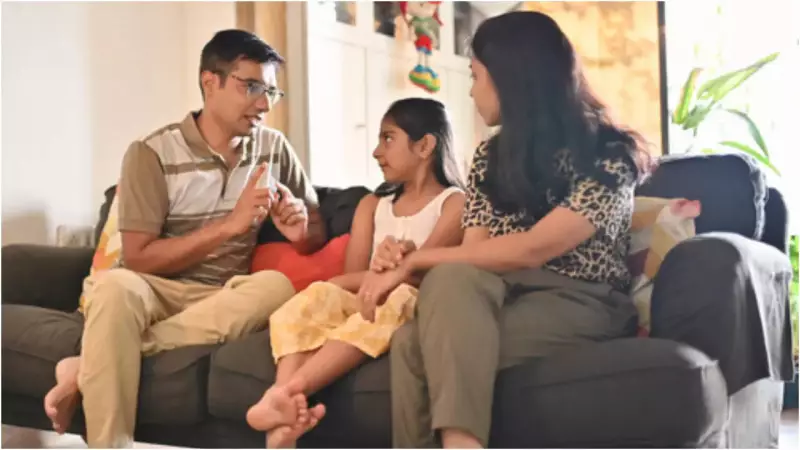
In a powerful social media message that has resonated with many, noted educator and parenting voice Advaita has sparked an essential conversation about authenticity in childhood. She questions whether parents, often unintentionally, stifle their children's true selves by focusing more on how they speak rather than what they are saying.
The Unseen Impact of Correcting a Child's Voice
Advaita's video, shared widely online, poses a critical reflection for caregivers. "Do we hold our children back from being their authentic selves without realising it?" she asks in her caption. She points out a common contradiction: while parents claim to want their children to express feelings freely, they are quick to correct the manner of that expression—be it for speaking too loudly, too dramatically, or not cheerfully enough.
She emphasises that the real measure of a child's communication is not the tone but the depth of connection and the content of their message. Her call to action is simple yet profound: "Let’s pause. Let’s listen. Let’s give them space to be themselves."

How Asking Kids to 'Put on a Voice' Erodes Identity
Delving deeper in her video, Advaita challenges a specific behavioural pattern. She asks parents to reconsider constantly telling children to "speak a certain way," which she equates to asking them to adopt a false persona. This includes prompting them to greet someone with an unnaturally bright "Good morning!" or to narrate experiences with a performative, sing-song voice they don't use in natural conversation.
"What we're doing is we're not allowing them to be their authentic self," she explains. "We're not allowing them to get used to their own voice." She normalises behaviours like mumbling or occasional silence, stating these are not valid indicators of a child's ability or willingness to express themselves. Each time a child is asked to mimic another's speech pattern, a small piece of their unique identity is chipped away.
The Long-Term Consequences and a Path to Change
What may seem like harmless encouragement in the moment can have lasting effects, Advaita warns. Children may internalise the message that their natural way of speaking is "not that great" and that they must constantly emulate others to be accepted. She observes that this learned, inauthentic voice often surfaces in public or performative situations, creating a disconnect between the child's true self and their projected self.
"After they grow up we want them to connect with themselves and be authentic," she notes, highlighting the irony. "But we kind of program them to be someone else and talk like someone else when they're little."
Her solution is straightforward. She urges parents to "turn that down a few notches" and permit children to speak exactly as they feel. This approach, she believes, is crucial for long-term well-being. It fosters individuals who are comfortable in their own skin, capable of articulating genuine feelings in their unique manner. The ultimate priority, she concludes, should be what the child is feeling and saying, not the polished delivery. Her final plea is clear: ensure children are being themselves when they speak, not putting on a voice to become someone else.