The Rise of Practical Romance: Quick-Commerce Transforms Valentine's Day Gifting
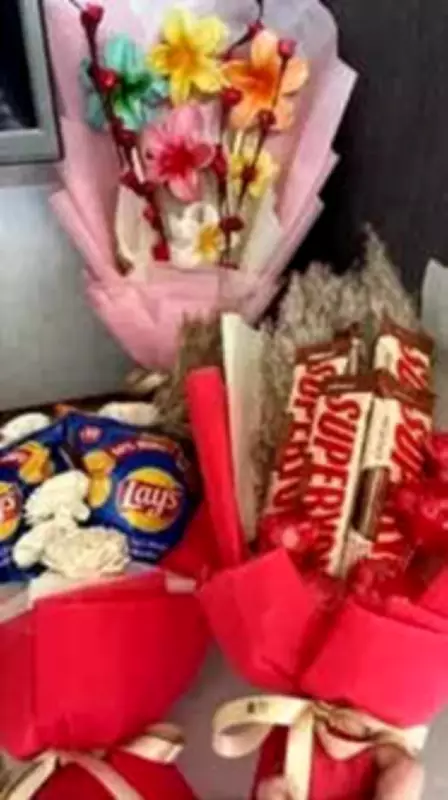
By 10 pm on a February evening, traditional roses wrapped in plastic are already wilting at busy traffic intersections across Indian cities. Yet, on smartphones everywhere, a new type of bouquet is quietly selling out—one composed not of flowers, but of protein bars, peri-peri chips, condoms, and chocolate, neatly categorized under Instamart's Valentine's Day specials.
A New Era of Valentine's Gestures
In Baner, a couple shares a laugh as a "bouquet" of nacho chips arrives at their doorstep. Over in Andheri, a group of flatmates gathers around a condom bouquet ordered as a playful gag gift. Meanwhile, in Bengaluru, someone earnestly contemplates whether a stack of protein bars qualifies as a genuine love language. This is Valentine's Day in the age of quick-commerce, where romance is delivered in under 10 minutes and often resembles a personalized grocery list.
The appeal of this trend is straightforward to understand. For a generation fluent in internet memes and midnight cravings, love is increasingly expressed through familiarity and practicality. It involves knowing that your partner dislikes flowers but adores Biscoff cookies, prefers savory snacks over sweet treats, and equates self-care with sheet masks rather than poetic sonnets. Consequently, the modern bouquet shifts from being a mere display item to a symbol of intimate recognition.

The Data Behind the Shift
Last year, roses still dominated Valentine's orders, with hundreds purchased every minute in a last-minute rush to uphold tradition. This year, however, shopping carts tell a different story. They are filled with snack hampers, grooming kits, bath and body combos—small, thoughtful bundles that silently communicate, "I understand your daily routine." Grand, sweeping gestures are gradually being replaced by specific, personalized ones, and platforms like Instamart are capitalizing on this by meeting consumers exactly where they are: on their couches, mid-scroll, and mid-craving.
Social media platforms vividly illustrate this behavioral shift in real time. Users request skincare bouquets in comments sections and float Biscoff bouquets as half-jokes, half-serious hints. When an online trend persists long enough, it inevitably spills over into real-world actions and purchasing decisions.Romance Evolves, Not Fades
This evolution does not signify the decline of romance; rather, it highlights its transformation into more literal and tangible forms. In 2026, love can certainly be heart-shaped, but it can also be wafer-shaped, foil-wrapped, or delivered in a simple brown paper bag bearing a barcode. The core message transcends the contents of the bouquet itself, focusing instead on the quiet, underlying sentiment: "I know what you will genuinely use, and I wanted you to have it tonight."
Quick-commerce is not merely changing how gifts are delivered; it is reshaping the very language of love for a digitally-native generation that values convenience, personalization, and authenticity over conventional symbols.