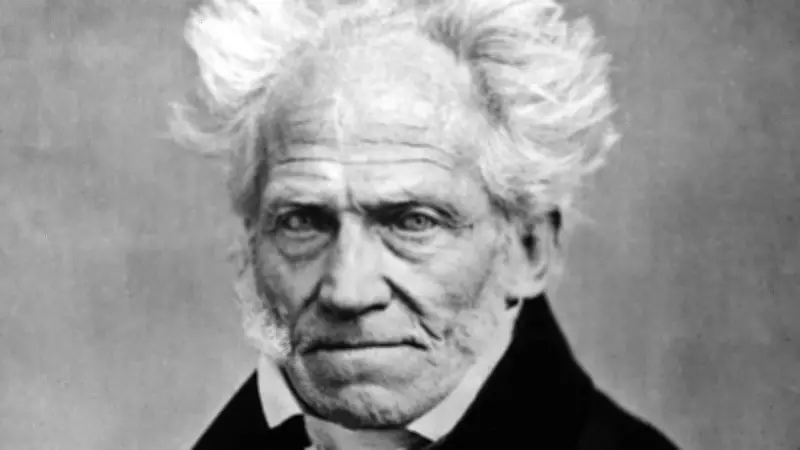
There is something almost blunt about this line. No decoration, no warmth around it. Schopenhauer does not really try to soften the idea of marriage here; he just drops it in a very direct way.
A Sharp Perspective on Marriage
Most people usually think of marriage in softer terms. Partnership, stability, shared life, and all that. But this quote goes in a different direction entirely. It feels more like a warning than a celebration, depending on how you read it. And maybe that is why it keeps getting pulled back into circulation online. It sits in that uncomfortable space where people nod quietly, even if they do not fully agree. Not everything in life feels equal after commitment. That is the part people keep circling back to.
Quote of the Day by Arthur Schopenhauer
"Marrying means to halve one's rights and double one's duties."

What Is the Meaning Behind the Quote?
Schopenhauer is basically pointing at a shift in balance when two people enter marriage. He is not talking about laws or paperwork specifically, but more the lived reality of it. When he says "halve one's rights," it is less about literal rights and more about independence. Decisions stop being fully individual. Even small things tend to involve another person. It becomes shared space, shared direction. And then there is the other half of the line. "Double one's duties" is where the weight sits. Responsibilities expand. Not always in dramatic ways. Sometimes it is just emotional availability, daily coordination, family expectations, or simply having to think for two instead of one.
It does not always feel like a clean trade. Sometimes it feels uneven depending on the relationship. That part is important. Experts today would probably describe this differently, maybe something like emotional labor distribution or interdependence. But Schopenhauer does not really use soft framing. He keeps it sharp. Almost too sharp, honestly. Still, people relate to it because they recognize fragments of it in real-life situations. Not the whole idea. Just pieces.
Why Schopenhauer Thought This Way
Arthur Schopenhauer had a pretty consistent worldview. He leaned heavily towards seeing life through struggle, desire, and dissatisfaction. That shaped how he interpreted relationships, too. In his writing, human desire is never fully settled. There is always tension. Always something slightly unresolved. So when he looks at marriage, he does not treat it as emotional harmony. He sees structure, constraint, and obligation. That does not mean he thought relationships were meaningless. It is more that he focused on what they cost in terms of personal independence.
Some readers interpret this as pessimism. Others see it as just stripped-down realism. It depends on how you approach him. Either way, he rarely wrote in a comforting tone. That is probably why his lines still stick. They do not try to reassure you.
Why This Quote Still Shows Up Everywhere
This quote has kind of outlived its original context. It keeps appearing in discussions about modern relationships, sometimes seriously, sometimes half-jokingly. Part of the reason is that people talk more openly now about emotional workload inside relationships. Things like mental load, shared responsibilities, and invisible effort. These are modern terms, but the underlying experience is not new. So when someone reads Schopenhauer's line today, it sometimes clicks in a very personal way. Not as doctrine. More like a passing recognition.
Of course, it is not universally true. Many relationships do not follow that pattern at all. Some feel very balanced, even freeing. Others do not. The quote just flattens all of that into a single idea, which is why people argue with it and still share it anyway. There is something slightly addictive about simple statements like that, even when reality is messier.

Other Famous Quotes by Schopenhauer
- "Compassion is the basis of morality."
- "Talent hits a target no one else can hit; genius hits a target no one else can see."
- "We forfeit three-fourths of ourselves in order to be like other people."
- "Every man takes the limits of his own field of vision for the limits of the world."
- "Life is a constant process of dying."
- "Change alone is eternal, perpetual, immortal."
- "The greatest of follies is to sacrifice health for any other kind of happiness."
Marriage, Simplified Too Much
If you take the quote literally, it sounds like a fixed equation. Half rights, double duties. But real life does not really behave like that. Marriage is not static. It shifts depending on people, timing, culture, and personal dynamics. Some people gain a lot of emotional stability from it. Others feel constrained. Most sit somewhere in between at different points.
What Schopenhauer captures, though, is the idea of transformation. Once two lives merge into one shared structure, things do not stay identical. Priorities shift. Decisions change shape. Responsibilities expand in ways you do not always anticipate at the start. That part is hard to argue with, even if the framing is too absolute.
Closing Thought
This quote stays alive because it triggers a reaction, not agreement. People either push back against it or quietly recognize something in it. Arthur Schopenhauer probably would not care much either way. His writing rarely aimed for comfort or consensus. What matters more is the conversation it keeps restarting. Because marriage itself is not a fixed equation. It never really was. And that is exactly where the tension in the quote comes from.
About the Author: TOI Lifestyle Desk - The TOI Lifestyle Desk is a dynamic team of dedicated journalists who, with unwavering passion and commitment, sift through the pulse of the nation to curate a vibrant tapestry of lifestyle news for The Times of India readers. At the TOI Lifestyle Desk, we go beyond the obvious, delving into the extraordinary. Consider us your lifestyle companion, providing a daily dose of inspiration and information. Whether you are seeking the latest fashion trends, travel escapades, culinary delights, or wellness tips, the TOI Lifestyle Desk is your one-stop destination for an enriching lifestyle experience.