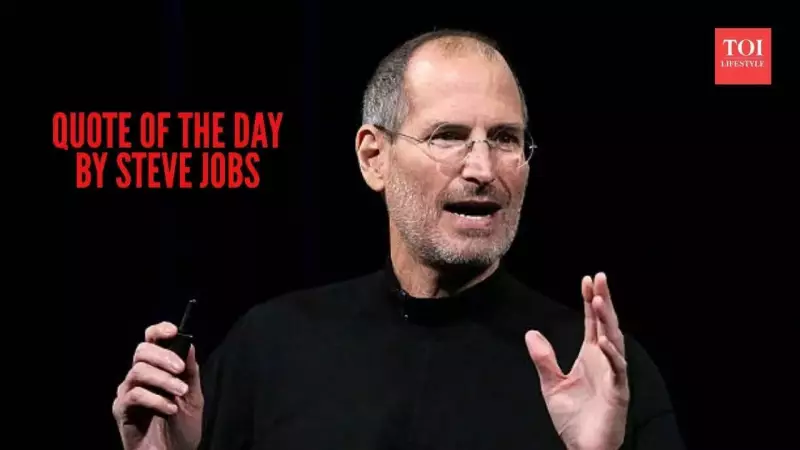
The legacy of Steve Jobs, the visionary co-founder of Apple Inc., extends far beyond the iconic devices he helped create. Born in 1955 in San Francisco, his journey from a curious child fascinated by electronics to a global icon of innovation was marked by profound highs and lows. His core belief—that technology must be both powerful and intuitively human—reshaped entire industries. However, one of his most enduring gifts to the world is a piece of wisdom shared not in a product launch, but in a university address.
The Power of a Commencement Address
In 2005, Steve Jobs delivered a now-legendary commencement speech at Stanford University. It was here he shared a philosophy that has since guided millions: "Your time is limited, so don't waste it living someone else's life." This statement forms the heart of a message urging graduates, and by extension everyone, to break free from conformity. Jobs warned against the trap of 'dogma'—blindly following the pre-set paths and ideologies of others. He championed the courage to listen to one's own inner voice above the noise of external opinions.
This advice did not come from a place of untested idealism. Jobs's own career was a testament to its principles. After his dramatic ousting from Apple in the 1980s, he faced what many saw as a professional end. Yet, he listened to his intuition, founding NeXT and playing a pivotal role in the rise of Pixar Animation Studios. His eventual triumphant return to Apple led to the era of the iPod, iPhone, and iPad—products that were born from a refusal to accept the status quo.

Decoding the Call for Authentic Living
What makes this quote resonate so deeply, especially in today's fast-paced, social media-driven world? Jobs identified a universal challenge: the pressure to conform. Many individuals pursue careers, lifestyles, and goals dictated by societal convention or family expectation, rather than by personal passion and instinct. Jobs argued that this leads to a life unfulfilled.
The core of his message is a call to authenticity. He posited that our hearts and intuition already possess a deep understanding of our true desires. Following them, however, requires immense courage. It means facing doubt, weathering criticism, and embracing uncertainty. Jobs believed that intuition is a form of intelligence—a synthesis of our unique experiences and understanding that doesn't always follow linear logic. Trusting this internal compass, he asserted, is the key to becoming who we are meant to be.
Why It Remains Relevant Today
Steve Jobs's words cut through the clutter of modern life with startling clarity. In an age of information overload and constant comparison, his reminder that "time is limited" is more urgent than ever. The pursuit of authenticity is not a selfish act but a necessary one for genuine fulfillment and contribution.
His philosophy teaches that a meaningful life is not built through imitation or mere compliance with external rules. It is constructed through self-trust, purpose, and the bravery to think differently. By choosing to follow our own unique path, we honour the precious time we have and craft a legacy that is authentically our own, much like Jobs himself did. His life and his words continue to serve as a powerful reminder that the most profound innovations can sometimes be in how we choose to live.