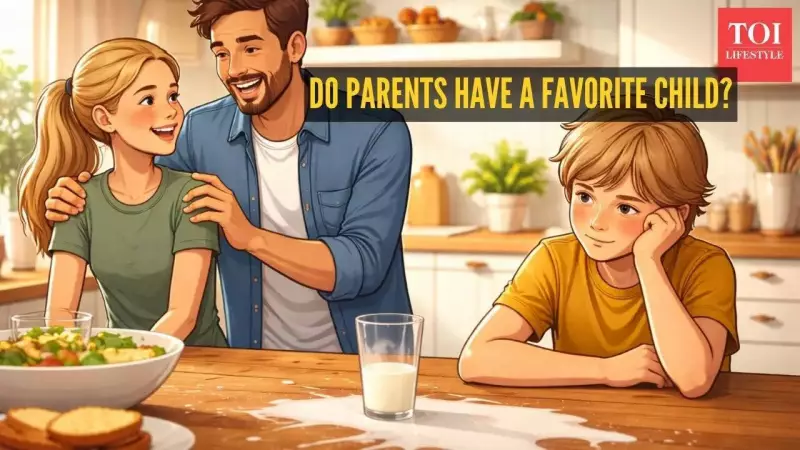
Picture a common family scene. Two young siblings accidentally knock over a glass of milk at dinner. One child receives a gentle reminder to be careful. The other endures a lengthy scolding that ruins the entire evening. Decades later, both siblings vividly remember the incident, not for the spilled milk, but for the silent message of unequal treatment it conveyed.
While most families cling to the ideal of equal love, research confirms a different reality. Parental favoritism is a widespread phenomenon, and its emotional fallout can persist long into adulthood, shaping mental health and family bonds for a lifetime.
The Lifelong Shadow of Childhood Perceptions
Studies from recent decades paint a clear picture: children who feel less favoured compared to their siblings face a higher risk of poorer mental health, strained family relationships, and weaker academic performance. Crucially, these effects are not confined to childhood. A significant long-term study found that an adult child's belief about being favoured or disfavoured is a stronger predictor of their mental health than factors like their marital status, job, or even age. Only physical health showed a more powerful connection.

"You can talk to older adults and they’ll tell you what happened when they were 5," said Laurie Kramer, a sibling relationship expert at Northeastern University. "They’re stuck on that."
Perhaps the most critical finding is that children's perceptions carry more weight than parents' intentions. In one study, parents and their children disagreed more than half the time about whether favouritism existed, who benefited, and if it was fair. Since families rarely discuss these dynamics openly, misunderstandings solidify into deep, long-term emotional wounds.
"We’re all thinking about it," Kramer noted. "But no one talks about these things."
Who Becomes the Favourite Child? The Surprising Findings
Studying parental favouritism is challenging, especially in cultures that idealise equal treatment. When Professor J. Jill Suitor from Purdue University began what would become the largest longitudinal study on the topic, even her own family doubted parents would admit to having a favourite.
To get honest answers, researchers used indirect questions. They asked mothers which child they felt emotionally closest to, which one they devoted more resources to, and which child disappointed them most. Starting in 2001, Suitor tracked over 500 mothers with two or more adult children, eventually observing the effects across generations.
The results were revealing. Approximately two-thirds of parents showed a clear preference, and that favourite often remained the same for decades. Daughters and younger siblings were more likely to receive preferential treatment, a pattern supported by a major analysis published this year. Personality also played a role; parents tended to favour children who were more agreeable and conscientious, likely because they were easier to raise.
In adulthood, shared values like agreement on religion and politics became the most significant factor. Surprisingly, things children assumed would matter—such as career success or legal trouble—often did not sway parental favour. "We had moms who visited their kids in prison every week," Suitor explained. "They said, 'I’m very close to Johnny. This wasn’t his fault. He’s a good boy.'"
The Enduring Emotional Cost for All Siblings
The damage caused by favouritism is a two-way street. Children who feel disfavoured are at a higher risk for anxiety, depression, substance use, and broken family ties. Meanwhile, the favoured children often carry burdens of their own: guilt, pressure to maintain their status, and a sense of unearned advantage.
Most striking is the longevity of the pain. Suitor's research found that the impact of favouritism on people in their 60s was just as potent as it was decades earlier. The emotional scars are profound and persistent. One woman shared with researchers that she was still haunted by her mother's deathbed confession: "I’ve always loved your sister more."

"These are very deep attachments and they’re ones we have all of our lives," Suitor concluded. "They are the person you feel should love you the most." This research underscores that family dynamics, perceived or real, can cast a long shadow, influencing well-being long after childhood has ended.