India has witnessed a social revolution in the last eight decades, marked by staggering leaps in education and connectivity. Yet, one of the most intimate aspects of life—marriage—remains surprisingly resistant to change, creating a fascinating paradox in modern Indian society.
From Scarcity to Smartphones: A Nation Transformed
Consider the world of Indians who are now in their 80s. They grew up in an era largely devoid of telephones, reliable piped water, and even sliced bread. For women, the landscape was particularly stark, with a female literacy rate languishing below 10%. Fast forward to today, and the contrast is breathtaking. Indian women in their 20s now boast a literacy rate of 96%, a metric that arguably signifies the most profound transformation the country has seen since gaining Independence.
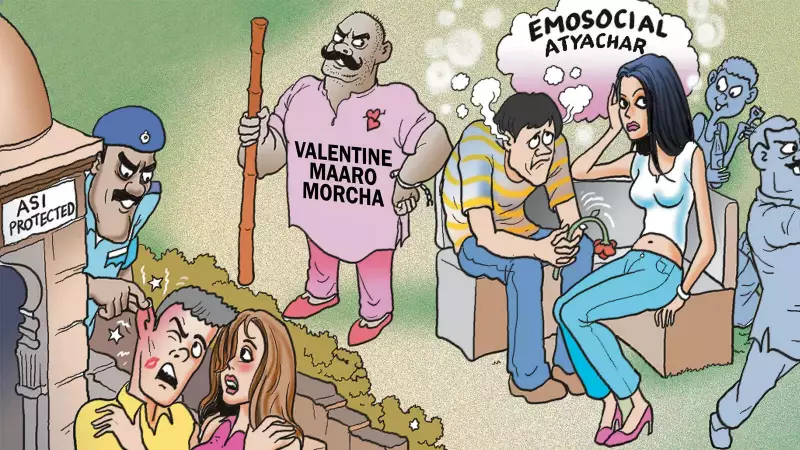
This educational surge is part of a broader wave of modernization. Couples across the country now openly celebrate Valentine's Day, a concept once considered foreign. Access to global media, the internet, and urban lifestyles has reshaped aspirations and social interactions for the younger generation.

The Stubborn Persistence of Arranged Alliances
Despite these sweeping changes in education and cultural exposure, the fundamental approach to matrimony tells a different story. The rate of 'love marriages'—unions born out of personal choice and romance—has not seen a parallel rise. Data reveals a startling continuity across generations.
Over 90% of Indians in their 20s find their life partners through 'arranged' marriages, a system involving family mediation. This figure is virtually identical to the percentage of their grandparents' generation—those in their 80s—who entered arranged alliances. This suggests that while young Indians, especially women, are more educated and independent than ever before, the institution of marriage continues to be strongly guided by familial and social frameworks.
Navigating Tradition and Choice
This creates a unique social dynamic where modern aspirations coexist with traditional practices. The high literacy rate empowers women with knowledge and potential economic independence, theoretically expanding their field of choice. Yet, the overwhelming preference for arranged marriages indicates that deep-seated cultural norms, family expectations, and social structures continue to hold significant sway.
The phenomenon underscores a complex reality: material and educational progress does not automatically translate into a wholesale shift in personal and social customs. The concept of marriage in India often intertwines individual desire with familial duty, community approval, and long-standing tradition, creating a blend that defies simple categorization as purely 'arranged' or 'love-based'.
As India continues its rapid development, the space between personal freedom and social obligation will likely keep evolving. The story of India's youth—highly literate, globally connected, yet largely adhering to a traditional matrimonial path—remains one of the most compelling narratives of a society in transition, where change is both dramatic and deeply nuanced.