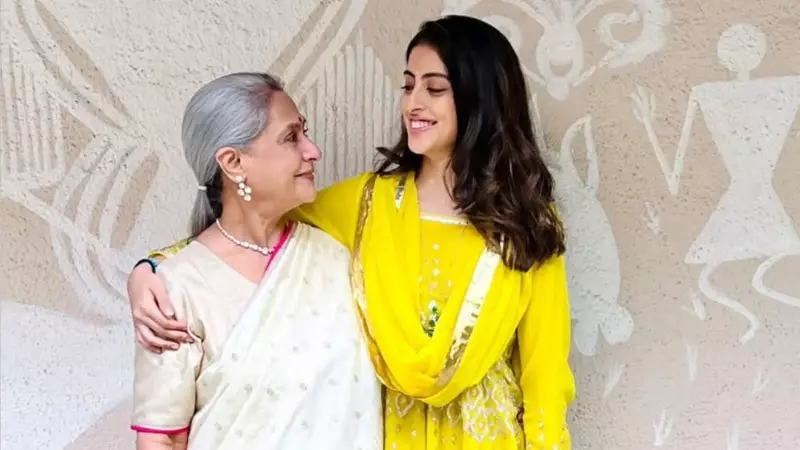
Veteran actor and outspoken public figure Jaya Bachchan has once again sparked a nationwide conversation, this time by declaring the institution of marriage as 'outdated' and expressing her wish that her granddaughter, Navya Naveli Nanda, does not get married. Her candid remarks, made during an interview, have ignited debate and reflection on evolving relationship norms in contemporary India.
Bachchan's Unfiltered Take on Matrimony
During an interaction with journalist Barkha Dutt on Mojo Story on December 6, 2025, Jaya Bachchan was asked for her views on whether marriage has become a relic of the past. She responded with a firm 'Yes, absolutely.' Elaborating further, the actor stated, "I don't want Navya to get married."
Bachchan, acknowledging the generational shift, mentioned that she feels too old to advise young women on raising children today, noting how 'smart' the current generation is. She emphasized that the legal formalities of marriage do not define a relationship's validity. To illustrate her point, she used a popular Hindi idiom, "Delhi ka ladoo hai khao toh mushkil na khao toh mushkil", suggesting that one should simply enjoy life without overcomplicating it with paperwork.

She shared a personal anecdote, revealing that she and her husband, legendary actor Amitabh Bachchan, did not sign their marriage register until many years after their wedding, humorously noting they were 'living illegally' until then. This, for her, underscored that a commitment exists beyond legal documentation.
Expert Decodes the Modern Shift in Relationship Perspectives
Jaya Bachchan's comments have resonated with many, reflecting a broader societal re-evaluation. Kruti Shah, a counselling psychologist at Mpower, Aditya Birla Trust, analyzed this trend, stating that Bachchan's views are striking a chord not due to controversy but because they mirror a changing reality.
Shah, in conversation with indianexpress.com, explained that in her therapy sessions, young adults are actively questioning how traditional institutions like marriage fit into a rapidly modernizing world. She clarified that they are not necessarily rejecting marriage but are intent on reshaping it to suit contemporary values.
Based on her extensive work with young clients, Shah identified three dominant themes driving this evolution:
- Redefining Roles with Flexibility: The expectation of inherited gender-based duties is fading. Modern couples seek to divide responsibilities based on skill, interest, and practical context, moving away from the rigid model of a homemaker wife and a breadwinner husband.
- Communication as the Foundation: The success of a modern relationship hinges on clear, early communication of expectations. Misunderstandhips often stem from unspoken assumptions. Marriage feels outdated only when this crucial dialogue is absent.
- The Evolving Role of Family: Young couples today desire supportive families that adapt rather than dictate. In joint family setups, generational gaps and rigid ideologies can become a significant source of strain, and the new generation seeks a more accommodating ecosystem.
Marriage as a 'Living Agreement'
From a psychological standpoint, Kruti Shah decoded modern marriage as less of a fixed institution and more of a 'living agreement.' It is seen as malleable, personalized, and co-crafted by the partners involved. The old model of silent endurance is being replaced by a demand for active partnership and mutual growth.
Shah concluded, "Marriage isn't outdated. What feels outdated are the expectations that ignore individuality." She affirmed that when couples enter matrimony with clarity, flexibility, and mutual respect, it transforms from a potential relic of tradition into a conscious, evolving partnership shaped by the people within it.
The discussion, triggered by Jaya Bachchan's forthright opinion on her granddaughter Navya Naveli Nanda's future, underscores a significant cultural moment in India. It highlights the ongoing negotiation between cherished traditions and the desire for personal autonomy and redefined partnerships in the 21st century.