Failure is one of those words most people secretly fear, even while reposting quotes about it. We celebrate success stories, but we often skip the messy middle—the rejections, wrong turns, and nights of doubt that come before the success. That is why this line from Barack Obama lands with such honest force:
The Quote
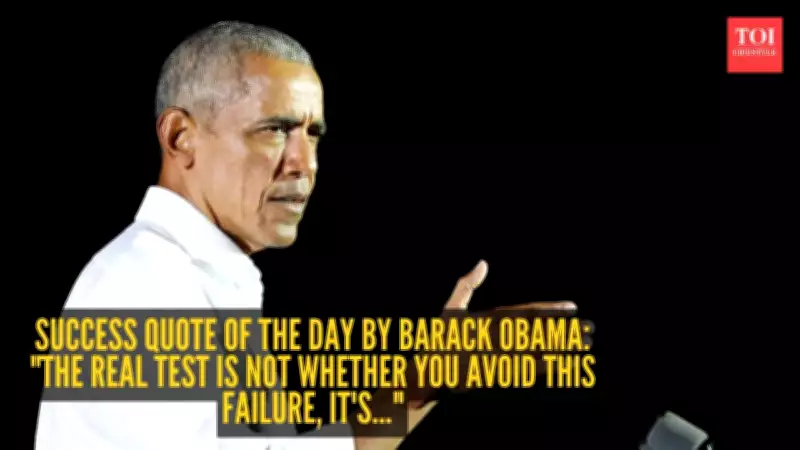
"The real test is not whether you avoid this failure, because you won't. It's whether you let it harden or shame you into inaction, or whether you learn from it; whether you choose to persevere." — Barack Obama
It is not a soothing "don't worry, everything will work out" kind of quote. It is more of a gentle wake-up call: you will fail, and the most important part is what you do next.

You Cannot Build a Life by Dodging Failure
Many of us are taught—sometimes silently—that failure is proof we are not good enough. So we start organising our choices around avoiding embarrassment:
- Not applying if we are not 100% sure we will be selected
- Not confessing feelings to someone in case they say no
- Not starting a project unless we are certain it will be a hit
Obama's quote cuts straight through that mindset. The test of your life is not whether you manage to avoid every failure. That is impossible. If you are doing anything meaningful, you will make mistakes, misjudge situations, and sometimes fall flat. Trying to build a life by avoiding failure is like trying to learn swimming without ever touching water.
The Dangerous Part: What Failure Does to You
"The real test… is whether you let it harden or shame you into inaction…"
This is the critical part. Failure itself rarely destroys a dream. What often destroys it is what you decide that failure means about you.
- "I did not clear this exam" quietly becomes "I am not smart enough."
- "My business idea did not work" turns into "I am not meant to be an entrepreneur."
- "This relationship ended" morphs into "I am unlovable."
When failure hardens you, you become cynical: "What is the point of trying?" When it shames you, you shrink: you stop raising your hand, sharing ideas, taking chances. Slowly, inaction becomes your default. You do not get hurt, but you also do not grow.
The Other Option: Learning and Staying Soft
"…or whether you learn from it; whether you choose to persevere."
The power of this quote lies in those last verbs: learn and choose. Learning from failure is not automatic—it is a decision. It looks like:
- Asking, "What is this trying to teach me?" instead of just "Why me?"
- Noticing what did go right, not only what went wrong
- Adjusting the plan instead of abandoning the destination
Perseverance is not blind stubbornness. It is a flexible kind of courage. You are willing to change strategies, timelines, and even identities—but you do not abandon your deeper values and dreams. You keep moving, even if it is slower or in a new direction.
How This Plays Out in Real Life
Think about some common areas:
- Career: You did not get the job. Do you stop applying, or do you upgrade your skills and try again—or pivot to a better fit?
- Studies: You fail a subject or an entrance exam. Do you decide "I am done," or do you review your methods, seek help, and give yourself another chance?
- Creativity: Your first post, video, or project gets barely any response. Do you delete everything in shame, or do you treat it as version 1.0 and keep experimenting?
In each case, the test is not that failure happened—it is what story you tell yourself about it and what you do next.
Letting Go of Perfection Pressure
A hidden gift in Obama's words is permission to stop pretending perfection is possible. If even a former US President openly says, "You will not avoid failure," it is a reminder that no title, talent, or level of success makes you immune to mistakes.
When you accept this, you:
- Take more honest risks
- Feel less ashamed when something does not work
- Become kinder to yourself in the process
It shifts the focus from "I must not fail" to "I must not stop because of failure." That is a completely different way of living.

Turning the Quote into a Personal Rule
You can turn this quote into a simple reflection habit whenever something goes wrong:
- Name the failure clearly. What actually happened?
- Notice your first story. Are you shaming yourself? Blaming others? Wanting to disappear?
- Ask the key question: "What can I learn from this that will make me stronger or wiser next time?"
- Choose one small act of perseverance. Send one more application. Rework the idea. Have the uncomfortable conversation. Try again in a slightly better way.
Over time, this pattern builds resilience. You stop seeing failure as a dead end and start seeing it as part of the road.
Final Thought
Remember: "The real test is not whether you avoid this failure, because you won't. It's whether you let it harden or shame you into inaction, or whether you learn from it; whether you choose to persevere."
If you look at your own life right now, is there a recent failure that you have secretly been letting shame you into inaction—and what would choosing to persevere look like in just one small step today?