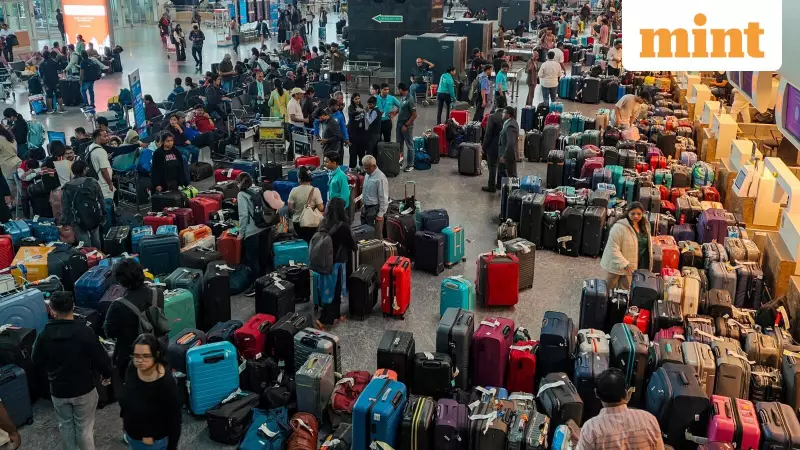
Recent days have seen significant inconvenience for Indian travelers, with numerous IndiGo flights facing cancellations, delays, and last-minute rescheduling. This has forced many to alter or cancel their plans abruptly. While such widespread issues are uncommon, history shows they are not unprecedented. The global aviation network has faced several severe paralysis events that caused massive upheaval for passengers worldwide.
When Systems Fail: Government Shutdowns and Technical Flaws
Earlier this year, a shutdown of the United States government created ripple effects across its aviation sector. The Federal Aviation Administration (FAA) operated with a severely reduced staff, compelling it to implement major cuts to air traffic management. Reports indicated that air traffic was reduced at as many as 40 selected airports.
The situation peaked on 8 November, when the tally of flights cancelled or delayed hit a staggering 5,000. With nearly 13,000 air traffic controllers working without pay, operational challenges mounted as many called in sick or sought other jobs. Normalcy was restored only after the government shutdown concluded.

In November 2025, a technical menace from space triggered another crisis. Aviation leader Airbus was forced to revise schedules due to issues identified with its A320 model aircraft. The problem, linked to intense solar radiation potentially corrupting crucial flight control data, impacted an estimated 6,000 flights globally.
Tragedies and Natural Disasters: Grounding the Fleet
The aviation industry was struck by tragedy on 12 June 2025, when Air India Flight 171 from Ahmedabad to London crashed shortly after take-off. The accident resulted in one survivor amidst devastating loss. In the immediate aftermath, as a precaution, all flights operating from Delhi Airport Terminal 1 to Ahmedabad were cancelled. Services resumed later following necessary assessments.
Nature's fury has also left indelible marks on air travel. Hurricane Katrina is a prime example. Beyond the catastrophic ground damage, it severely crippled air connectivity. Commercial operations at the Louis Armstrong New Orleans International Airport (MSY) were completely suspended. The airport witnessed a dramatic fall in passenger traffic, taking nearly ten years to recover to normal levels.
Averting Crisis: The Power Outage That Didn't Paralyze Skies
Not every potential disaster leads to collapse, as demonstrated by events on 28 April 2025. A massive power outage engulfed the entire Iberian Peninsula and parts of France, stranding trains and disrupting public transport for hours.
However, air traffic over Spain remained largely unaffected. This was a direct result of robust contingency planning. Area control centers and air traffic control towers swiftly activated autonomous power generators and backup systems, ensuring service continuity. While some delays occurred, the airspace stayed open and managed to maintain fluid operations, showcasing the importance of emergency preparedness in aviation infrastructure.
These historical episodes underscore the fragility and resilience of global air travel. From geopolitical events and technical vulnerabilities to natural calamities, the sector must constantly evolve to manage disruptions and safeguard passenger plans.