The Hidden Dangers in Your Airline Baggage Tags
In today's fast-paced world, where busy schedules and monotonous routines dominate daily life, the thrill of grabbing your bag, boarding a plane, and embarking on new adventures to favorite destinations offers a surreal escape. However, amidst the excitement, a seemingly innocuous item—the airline baggage tag—has recently come under scrutiny for potential privacy risks.
The Viral Warning That Sparked Concerns
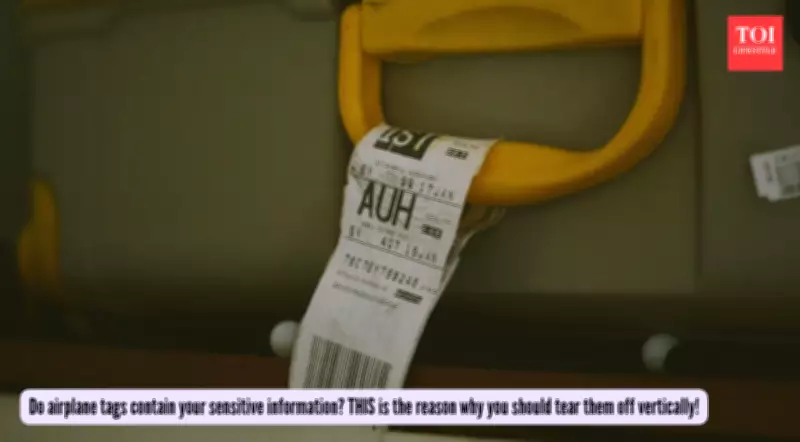
An Instagram video by user Ariya recently went viral, urging travelers to reconsider how they handle airline baggage tags. In the video, Ariya emphasized, "The tags that you get to put on suitcases, you should not just take them off and throw them away. Here's why. You see, these barcodes contain all of your personal information. You might want to keep those, as your information is on them. Your credit card information, your address, all of it is on it. Don't know how or if anybody has the capability to access it, but the world we live in." This warning quickly spread across social media, raising alarms among frequent flyers.
Expert Clarification on Data Encoded in Tags
In response to these fears, aviation expert Amit Mittal provided crucial insights, pushing back on the notion of credit card exposure. He clarified, "The barcode on your luggage tag does not contain your credit card information." According to Mittal, the barcode primarily holds a 10-digit License Plate Number (LPN) that points to the airline's database, as reported by Indian Express.

Mittal further broke down the typical contents of the barcode, explaining that it encodes the LPN, flight number, destination airport code, and Passenger Name Record (PNR), which is a six-character booking reference. "The barcode itself is not a storage device of detailed personal data. It links to backend systems," he stated. This means that while the tag contains some information, it does not store sensitive financial details directly.
Privacy Risks and Access Concerns
Despite the reassurances, Mittal highlighted a small but significant caution. "Basic booking details could potentially be viewed if someone misuses the PNR and surname combination," he warned. This underscores that while the tags are generally secure, improper disposal could expose personal information like your name and travel itinerary.
Additionally, leaving old tags attached to luggage can cause operational issues. "Leaving previous barcodes attached can confuse automated scanners, causing unnecessary system load or even baggage misrouting," Mittal noted. This not only affects airport efficiency but also poses a minor privacy risk if the tags are left accessible.
How to Safely Dispose of Flight Tags
To mitigate these risks, Mittal offered simple yet effective advice for travelers. "Once you reach home or your hotel, remove the tag and tear vertically through the barcode. This makes it unreadable to optical scanners," he recommended. Alternative methods include shredding the tags or using a permanent marker to obscure the PNR and name, ensuring that any residual data cannot be easily accessed.
By following these steps, travelers can protect their privacy, reduce littering, and contribute to smoother airport operations. As air travel continues to grow, staying informed about such nuances becomes essential for a safe and hassle-free journey.