Delhi's Tulip Phenomenon: More Than Just Pretty Flowers
In a city known for its extremes - from scorching summers to bitter winters - the annual tulip bloom offers a brief, beautiful respite. What appears as a simple spring outing slowly reveals itself as a complex story of seasonal spectacle, intergenerational longing, and curated urban beauty blooming in the shadow of the nation's seat of power.
The Interrupted Outing
On a breezy March afternoon, families and flower enthusiasts headed to Shanti Path in Chanakyapuri, drawn by images of tulips that had flooded newspapers and social media. What they hadn't anticipated was how international tensions would affect their local outing. Just minutes before arrival, security cordoned off the area due to urgent prime ministerial movements connected to global developments.
The disappointment was palpable. A group of young women in crisp cotton and delicate chiffon saris stood disappointed at the entrance. "I borrowed this sari from my mom just for a picture in the tulip garden," one confessed to another who tried to console her with traditional sweets.

Nearby, an elderly couple negotiated with police officers. "Sir, we have come from very far only to see these tulip fields. Please let us take a quick stroll and a few pictures," the man pleaded. They received exactly two minutes, during which they hurriedly captured memories with their smartphones.
Intergenerational Connections Through Flowers
As the elderly couple walked away, the man told his wife something revealing: "See, we couldn't go to Holland like Amitabh and Rekha in 'Silsila,' but I got you here, and the tulips are equally beautiful in our own city. What a pity the PM's visit coincided with our date."
This simple statement captured the essence of Delhi's tulip phenomenon. For generations that grew up in the 1980s and 1990s, tulips represent the romantic template of Yash Chopra's Hindi cinema, when foreign travel was aspirational. Today, with tulips blooming like city natives across Delhi, that distance collapses.
For younger generations, the vocabulary differs. Tulip visits represent opportunities for digital sharing, self-love practices, and mental health focus in a city often overwhelming with its traffic, pollution, and climate extremes.
NDMC's Beautification Success
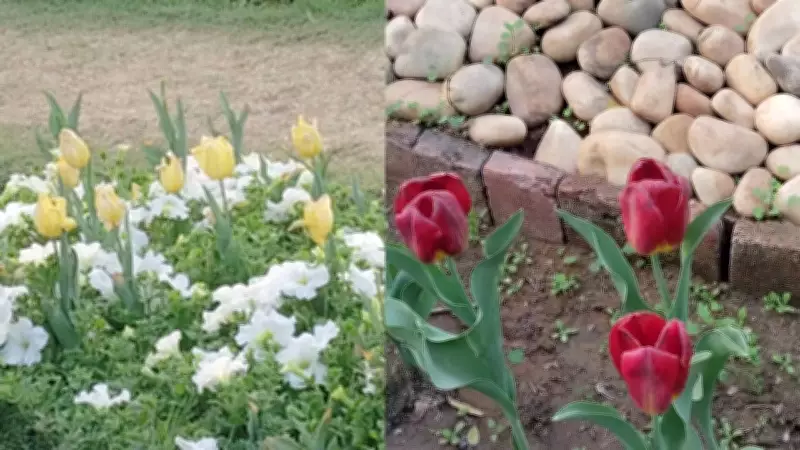
When security restrictions made the Shanti Path visit brief, determined flower enthusiasts found alternative locations. Lodi Gardens welcomed visitors with elegant, robust blooms in scarlet red, mellow yellow, various pink shades, and pristine white.
This alternative viewing was possible thanks to the New Delhi Municipal Council's ambitious beautification drive. In December 2025, NDMC planted approximately 260,000 tulip bulbs across Lutyens' Delhi, including 15,000 at a special conservation center at the Tulip House in Lodi Gardens.
Without this extensive planting, many weekend outings would have been completely wasted. The council's initiative transformed what could have been a single-location spectacle into a city-wide floral celebration.
The Instagrammable Appeal
Tulips possess undeniable visual appeal - slender stems, symmetrical rows, and photogenic qualities that make them irresistible for social media sharing. But their significance runs deeper than mere aesthetics.
This intergenerational crossover makes Delhi's tulip phenomenon particularly powerful. The same landscape serves as both archive and aspiration - allowing older generations to revisit memories while helping younger ones create new experiences.
A Blueprint for Local Blooms
The tulip craze offers policymakers and tourism planners a valuable roadmap. The same enthusiasm and funding that made tulips a spring ritual could be extended to India's home-grown seasonal blooms.
Delhi has long cultural relationships with indigenous flowers like rajanigandha (Indian tuberose), which perfumes monsoon evenings and appears in both traditional and luxury fragrance formulations. Marigold - the charming flower of summer festivals, weddings, and formal events - could be showcased with equal sophistication in summer floral festivals.

The goal isn't to replace tulips but to spotlight local blooms with matching passion. The opportunity exists to build on current success, moving from an exotic, single-flower spectacle to a more inclusive floral culture celebrating India's diverse botanical heritage.
Where to Find Delhi's Tulips
The Delhi Tulip Festival 2026 began on February 23 and continues through March 10 at Shanti Path Lawn in Chanakyapuri. Additional viewing locations include:
- Central Park in Connaught Place
- Lodi Gardens
- Talkatora Garden
- Sardar Patel Marg
- Mandi House
- NDMC Convention Centre Lawn
- Windsor Place
- Sher Shah Suri Marg
- Roundabouts near the Vice President's House
In a city where conspicuous consumption often defines experiences, tulip sightings come free of cost, proving that meaningful memories need not be expensive affairs. They represent moments where politics, memory, and natural beauty intersect, creating stories that linger long after the blooms fade.