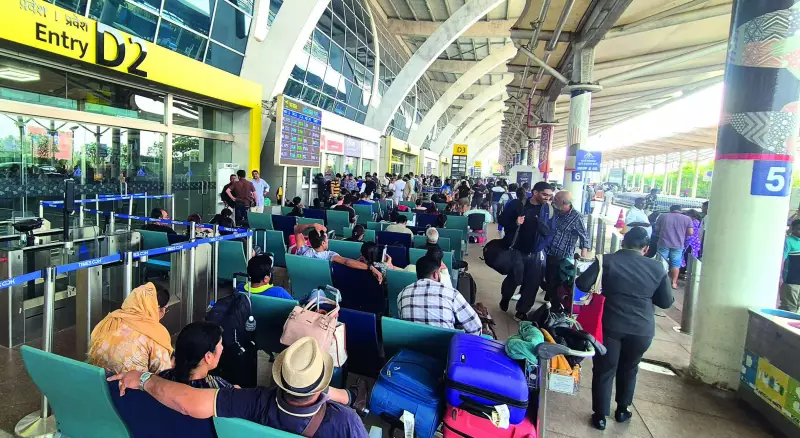
Passengers flying with IndiGo from Goa faced significant disruption over the weekend as the airline executed a major operational reboot. While the carrier aimed to stabilize its network, the move resulted in numerous flight cancellations and delays, leaving travelers scrambling for costly alternatives.
Goa Airports Bear the Brunt of Cancellations
The impact was sharply felt at both of Goa's airports. At Dabolim airport, a significant portion of IndiGo's schedule was grounded. Out of 37 scheduled flights, 14 were cancelled, with only around 23 managing to operate. The situation was similarly challenging at the newer Mopa airport, where 12 flights were cancelled and one was declared non-operational from a daily schedule of 31 IndiGo services.
Nationwide, the airline managed to operate over 1,500 flights. An IndiGo representative stated the cancellations were part of a plan, saying, "The main objective was to reboot the network, systems, and rosters so that we could start afresh on Saturday with a higher number of flights and improved stability." The airline claimed over 95% of its network connectivity, covering 135 out of 138 destinations, had been re-established.

Passenger Ordeal: Delays, Refund Hurdles, and Sky-High Alternatives
For affected passengers, the experience was far from stable. Those whose flights were cancelled found the process of securing refunds or alternative flights to be tedious and frustrating. The disruption continued on major domestic routes including Mumbai, Bengaluru, Hyderabad, Delhi, Vadodara, and Chennai. The ripple effect of the operational issues was evident, with flights to Kolkata and Surat delayed by five and four hours respectively.
Airports Authority of India officials noted that while terminals remained chaotic, check-in counters saw fewer bottlenecks, with both ground staff and passengers displaying a largely subdued demeanour amidst the chaos.
IndiGo's loss became a windfall for local transport operators. With flights grounded, private bus and taxi services did brisk business. Passengers stranded from cities like Chennai, Bengaluru, and Mumbai were forced to book expensive last-minute rides home.
One traveler, Rohit Kumar from Chennai, shared his group's plight. "Since Friday morning, our group of 22 people, including women, were trying to arrange for an alternative mode of transport to travel to Chennai, but despite our efforts, it went in vain," he said. His friend in Goa eventually arranged a tourist bus that charged Rs 7,000 per person for the journey to Chennai. In another instance, a group of stranded tourists hired a private car from Dabolim airport to Mumbai for a staggering Rs 18,000, paying in cash before the journey.
Policy vs. Reality: The Refund Confusion
The airline announced that all refunds for cancelled flights would be processed automatically. It also offered a full waiver on cancellation and rescheduling fees for travel until December 15. However, the policy did not seem to translate seamlessly for all customers. Nidhi Sajwa, who had booked a return flight from Delhi to Goa for December 10 and 14, discovered that 80% of her ticket fare was being deducted when she tried to cancel, highlighting a gap between the airline's announcement and the practical experience of some passengers.
While IndiGo points to early signs of improvement from its operational reset, the weekend's events underscore the fragile nature of air travel recovery and the heavy cost—both financial and logistical—that passengers often bear during such disruptions.