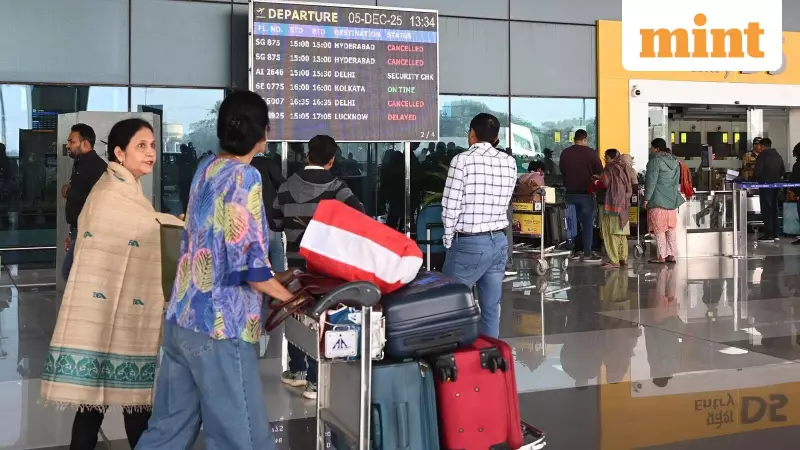
India's aviation sector was thrown into chaos on Saturday as the country's largest carrier, IndiGo, cancelled a massive number of flights across its network. The widespread disruptions left thousands of passengers stranded at major airports, facing uncertainty and frustration due to last-minute changes and poor communication.
Nationwide Disruption and Passenger Anguish
The scale of the problem became evident by Saturday morning, with airport authorities and the airline's own updates confirming a severe operational breakdown. Passengers at key hubs like Mumbai, Guwahati, and Hyderabad reported receiving updates at the very last minute, leading to confusion and long, snaking queues at help desks. The common complaints highlighted a significant lapse in communication from the airline's side during the crisis.
By the Numbers: A Breakdown of Cancellations
The impact was felt most acutely at the national capital's airport. Delhi Airport confirmed a total of 106 IndiGo flight cancellations, comprising 54 departures and 52 arrivals, by Saturday morning. IndiGo's own 9:00 am operations update indicated an even higher figure, listing 109 cancellations across India, which included 58 departing and 51 arriving flights.

The southern hub of Hyderabad was severely affected as well. GMR authorities at Hyderabad Airport stated that IndiGo had pre-scheduled a staggering 69 cancellations for the day. This included 43 outbound and 26 inbound flights, crippling the airport's schedule for the airline.
Northeast India Bears the Brunt
The crisis had a particularly harsh effect on air connectivity in Northeast India. At Guwahati’s Lokpriya Gopinath Bordoloi International Airport, scenes of frustration unfolded as crowds of passengers were left waiting for hours without clear information. Several flights to and from the region were abruptly grounded, isolating a part of the country heavily reliant on air travel.
The IndiGo flight cancellation crisis of Saturday underscores the vulnerability of India's air travel infrastructure to large-scale operational failures. It has raised serious questions about contingency planning and passenger communication protocols for airlines during such events, leaving a trail of inconvenienced travellers and a hit to the carrier's reputation.