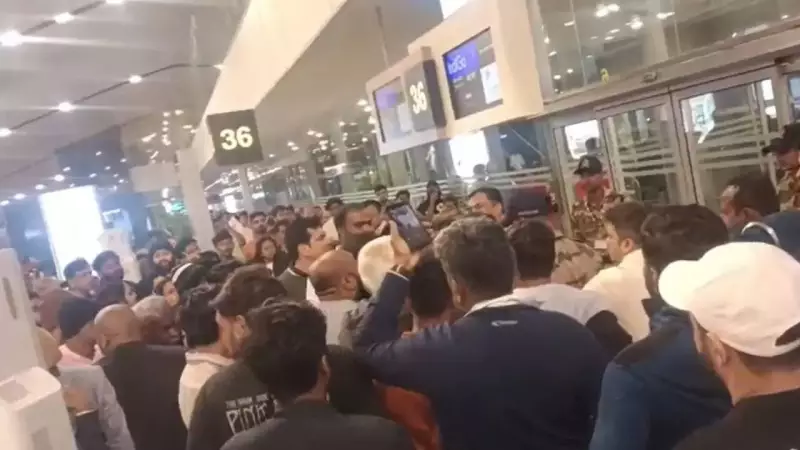
Passenger chaos erupted at Bengaluru's Kempegowda International Airport (KIA) on Thursday as a massive operational disruption hit IndiGo, India's largest carrier. Hundreds of flights were cancelled nationwide, leaving travellers stranded, frustrated, and facing exorbitant last-minute airfares.
Scale of the Disruption: A Record for IndiGo
The crisis marks an unprecedented event in the airline's 20-year history. Across India, IndiGo cancelled a staggering 225 flights in Delhi, 104 in Mumbai, 92 in Hyderabad, and 102 in Bengaluru. At KIA alone, officials confirmed 52 arrivals and 50 departures were scrapped, with updates promised only after 6 PM. The airline, which commands a dominant 65% share of the domestic market, attributed the meltdown to acute pilot shortages and crew duty-limit issues.
Passenger Nightmare: Stranded, Priced Out, and Protesting
The impact on passengers was immediate and severe. Social media platform X was flooded with images of overcrowded terminals, passengers sleeping on luggage, and piles of unattended bags. One user detailed spending four hours at the airport, noting some had been there for over 13 hours. "Every single Indigo flight has been delayed significantly and then cancelled," the post read.

Inside the terminal, long queues snaked around check-in counters and security lines, with all seating areas packed. The uncertainty was palpable, with many unsure whether to return home or wait for a last-minute update. The frustration boiled over at several airports, where angry flyers staged protests at boarding gates, disrupting operations for other airlines as well.
Desperate passengers trying to rebook faced another shock: skyrocketing airfares on alternative carriers. A passenger whose 2:15 PM flight was cancelled said a last-minute ticket to Bengaluru had become "pricier than a seat at a Taylor Swift concert," accusing other airlines of indulging in surge pricing. Data showed a Delhi-Bengaluru ticket for Friday or Saturday ranging between Rs 11,000 and an astonishing Rs 43,145.
Regulatory Scrutiny and the Road to Recovery
The Directorate General of Civil Aviation (DGCA) intervened swiftly, holding multiple emergency meetings with the airline's management. The regulator directed IndiGo to stabilise operations immediately and prevent fare hikes exploiting the reduced capacity.
In a statement, the DGCA revealed that IndiGo has sought temporary exemptions from specific Flight Duty Time Limitation (FDTL) rules for its A320 fleet operations until February 10, 2026, to ease the crisis while maintaining safety. The airline has assured the regulator that normalized and stable operations will be fully restored by February 10, 2026, with corrective actions currently underway.
The ripple effects of the disruption were widespread. With IndiGo aircraft stuck at airports like Pune, the movement of flights from other airlines was also delayed, amplifying the travel chaos across the Indian aviation network.