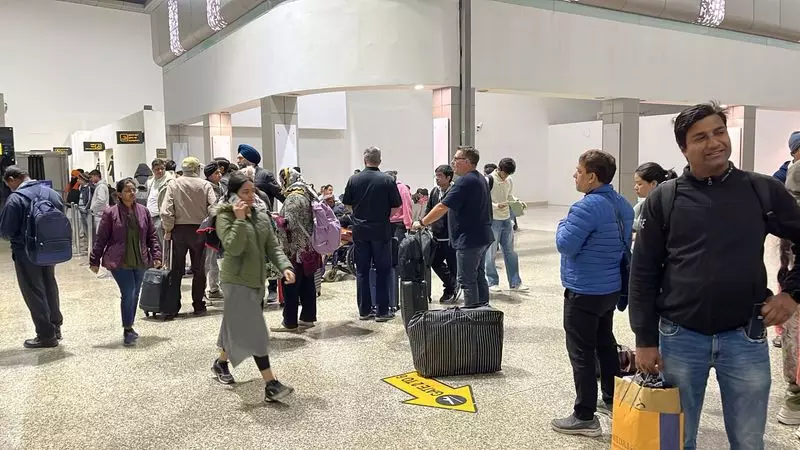
Passengers at Chandigarh International Airport faced another day of significant travel disruption on Monday, as operational issues with IndiGo, the country's largest carrier, continued to wreak havoc on flight schedules. The morning saw a drastically reduced number of flight movements, causing long queues, confusion, and frustration among travelers.
Morning Operations Grind to a Near Halt
According to data from airport sources, the situation remained critical in the early hours. Only four IndiGo flights managed to arrive at the airport between 6 AM and 9 AM. The departures were not faring much better, with just six flights taking off during the same three-hour window. This brought the total flight movements to a mere ten, a fraction of the normal traffic expected at a major regional hub like Chandigarh.
The cascading effect of these disruptions was visible across the terminal. Passengers reported waiting for hours without clear communication from the airline regarding the status of their flights. Many, who had arrived at the airport for early morning departures, found themselves stranded as their flights were either delayed indefinitely or canceled outright.

A Weekend of Widespread Disruption
The chaos witnessed on Monday morning was not an isolated incident but the continuation of a severe operational meltdown that began over the weekend. On Sunday, the situation was even more dire, with mass cancellations and delays affecting a vast network of IndiGo flights across multiple cities. The airline cited "unforeseen operational challenges" as the primary reason for the widespread disruption.
While the exact nature of these challenges was not specified in detail by the airline, industry observers point to a potential confluence of factors. These could include crew scheduling issues, aircraft availability problems, or the lingering impact of adverse weather in certain parts of the country that disrupted the network's rhythm.
The ripple effects were felt strongly in Chandigarh, a key airport connecting the northern region. The limited number of arrivals meant fewer aircraft were available at the station for subsequent departures, creating a vicious cycle of delays and cancellations.
Passenger Anguish and Airline Response
The terminal was a scene of palpable distress. Families with young children, business travelers, and elderly passengers were among those most severely impacted. The lack of timely information exacerbated the situation, with many complaining about the difficulty in reaching airline customer service or getting alternative bookings arranged promptly.
In response to the crisis, IndiGo issued statements acknowledging the inconvenience caused to its passengers. The airline's standard protocol in such situations involves providing options such as:
- Re-booking passengers on the next available flight at no additional cost.
- Offering a full refund for canceled flights.
- Providing meals and hotel accommodations for passengers facing extended delays, as per regulatory guidelines.
However, on-ground implementation of these policies often falls short during peak disruption periods, leaving passengers to fend for themselves. The airline has urged affected travelers to check their flight status via the IndiGo website or mobile app before heading to the airport.
The ongoing disruption at Chandigarh Airport highlights the fragility of air travel networks when a major player like IndiGo faces operational hurdles. It serves as a stark reminder for passengers to build contingency plans, especially during peak travel seasons. Aviation authorities are likely monitoring the situation closely, as prolonged disruption of this scale at a significant airport raises concerns about systemic reliability and passenger rights. For now, travelers flying in and out of Chandigarh are advised to brace for continued uncertainty and allow for extensive extra time for their journeys.