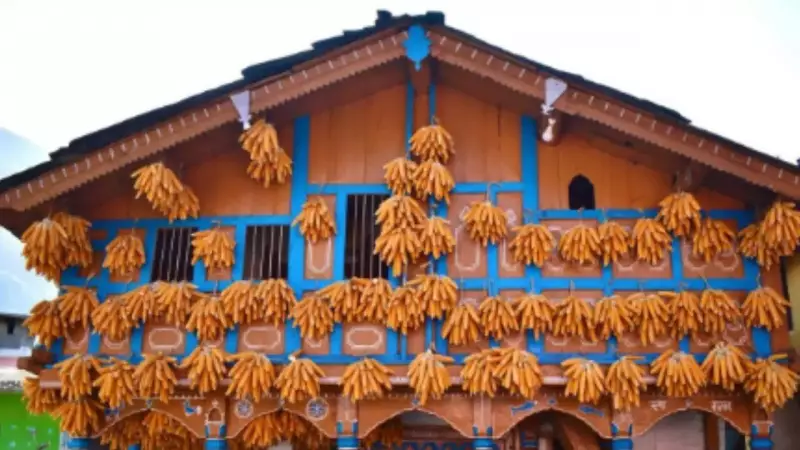
Nestled just beyond the familiar tourist bustle of Mussoorie, where the sounds of the city fade into the serene whispers of the mountains, lies Sainji. This village in Uttarakhand's Tehri Garhwal district breathes to a different, more ancient rhythm. It announces itself not with signboards, but with a breathtaking visual signature: countless golden corn cobs hanging from balconies, outside windows, and along homes, swaying gently in the crisp Himalayan air.
More Than Decoration: Corn as Culture and Survival
Earning the moniker India's Corn Village, Sainji's relationship with maize is profound. This is not a staged display for tourists or social media. The practice of hanging corn to dry is a centuries-old agricultural wisdom crucial for survival. After the harvest, the corn is bundled and suspended to dry naturally in the cool mountain climate. This method preserves the crop for months, ensures seeds survive for the next planting cycle, and provides a steady supply of flour.
What began as necessity has blossomed into a vibrant identity. The golden hues that adorn nearly every home in the village of 40 to 50 families are symbols of prosperity and prudent planning. The agricultural practices here are a testament to inherited communal knowledge. Farming in Sainji is predominantly organic, as chemical fertilisers never found a foothold where they weren't needed. Generations have perfected crop rotation, seed conservation, and the use of natural manure, passing down techniques through observation and lived experience.

The Heart of Sainji: A Self-Sufficient Community
The true wealth of Sainji lies not just in its fields, but in the bonds between its people. Daily life is deeply communal. Farming knowledge, seeds, and labour are shared resources, ensuring no family faces hardship alone. Festivals, weddings, and celebrations are collective affairs, strengthening ties and minimizing waste.
This strong sense of togetherness allows Sainji to maintain remarkable self-sufficiency. Even cultural calendars follow local rhythms; Diwali here is celebrated later than in most of India, guided by regional traditions. This prioritization of community over convenience is the bedrock of the village's sustainable way of life.
Experiencing Sainji: An Authentic Himalayan Escape
As an offbeat destination, Sainji offers a stark contrast to crowded hill stations. Visitors won't find curated tours or staged performances. Instead, they wander narrow lanes framed by corn-draped houses, walk past terraced fields, and observe daily life unfold. Conversations with locals often become impromptu lessons in mountain farming and ecology.
The food is simple and rooted in the land, featuring corn-based staples like makki ki roti. The architecture itself tells a story. Homes painted in bright colours feature distinctive wooden doorframes with lower entrances—a traditional design believed to ward off evil spirits. Some houses have doors that resemble windows, sparking curiosity and dialogue about how generations have adapted their dwellings to the harsh mountain weather while honoring customs.
The best time to visit Sainji is between September and October, post-harvest, when the corn drying turns the village into a living golden canvas. The weather is pleasant, and the authentic rhythms of village life are on full display. To reach, one must travel to Mussoorie, with Dehradun being the nearest major hub. Sainji is located approximately five kilometres from the popular Kempty Falls.
Sainji leaves a lasting impression because its beauty is effortless and its sustainability is genuine. The clean lanes, neatly stored harvests, and shared spaces reflect a quiet pride. The corn hanging outside, once a simple marker of prosperity, now symbolizes a deeper abundance: of food, community, and harmony with the land. In an era of rapid change, Sainji stands as a powerful reminder of the resilience found in tradition and togetherness.