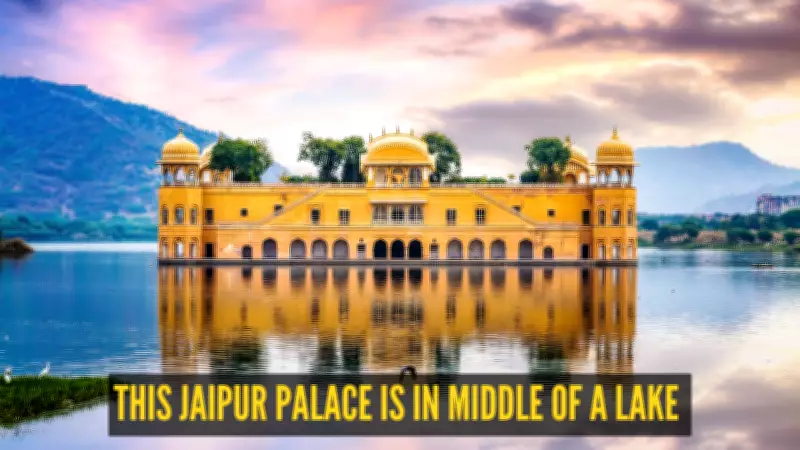
When the evening sun illuminates Jaipur, a sandstone structure appears to float gracefully on a lake. Surrounded by the Aravalli hills and reflected in the still waters of Man Sagar Lake, Jal Mahal, known as the "Water Palace," ranks among Rajasthan's most photographed attractions. Daily, thousands pause to capture its image, yet few know the story behind this seemingly buoyant palace. Situated on the Jaipur-Amer Road, Jal Mahal is not merely visually appealing; it stands as a testament to historic water conservation and architectural ingenuity, making it an essential destination for visitors to the Pink City.
A Page from History Floating in the Middle of a Lake
Jal Mahal lies in the center of Man Sagar Lake, approximately 6 kilometers from the City Palace and 4 kilometers from Amer Fort. Its striking feature is its location, rising directly from the water, attracting history enthusiasts, photographers, and nature lovers. The lake's origins date back to the late 16th century, when a dam was constructed to combat severe droughts. Raja Man Singh I later expanded the reservoir, creating what is now Man Sagar Lake. In the 18th century, Maharaja Madho Singh I developed the current palace as a royal hunting lodge and retreat.
The Unique Design That Sets Jal Mahal Apart
The palace's architecture blends Rajput and Mughal styles, using red and pink sandstone. It features chhatris, a symmetrical layout, and fine stonework. However, the true marvel lies below the surface. Jal Mahal is actually a five-story building. When the lake reaches full capacity, four of these floors are completely submerged, leaving only the top floor and terrace visible. This clever engineering creates the illusion of floating.

A Paradise for Photographers and Birdwatchers
Although entry inside the palace is not permitted, a walk along the lakeside offers ample beauty. Early morning or sunset visits provide the best experience. At sunrise, the atmosphere is serene and pleasant, with opportunities for birdwatchers to spot migratory birds, especially in winter. In the evening, the palace glows in golden hues from the sunset, and after dark, decorative lights create a fairy-tale reflection on the lake.
How to Reach Jal Mahal
Getting to the palace is straightforward from anywhere in Jaipur.
- By Air: Jaipur International Airport is approximately 18 kilometers away.
- By Rail: Jaipur Junction, about 8 kilometers from the lake, connects to major Indian hubs.
- By Road: For those driving from Delhi or the National Capital Region, the Delhi-Mumbai Expressway has reduced travel time from six to seven hours to just three to four hours.
What Else to Explore Nearby
Jal Mahal is ideally situated on Jaipur's heritage circuit. Nearby attractions include:
- Amer Fort: A short drive away, featuring massive courtyards and the Sheesh Mahal.
- Jaigarh and Nahargarh Forts: Jaigarh houses the Jaivana cannon, while Nahargarh offers panoramic city views.
- Royal Gaitore: A quieter spot with beautifully carved marble cenotaphs of the royal family.
- Jantar Mantar, Hawa Mahal, and City Palace: Heading back into the historic Pink City brings you to the City Palace, Hawa Mahal, and the UNESCO-listed Jantar Mantar observatory. Together, these sites map the architectural legacy of the Kachwaha rulers.
Jal Mahal is far more than a pretty building on water. It represents a physical timeline of royal history, environmental endurance, and architectural genius. Rising gracefully from Man Sagar Lake, it continues to captivate visitors centuries after its construction.