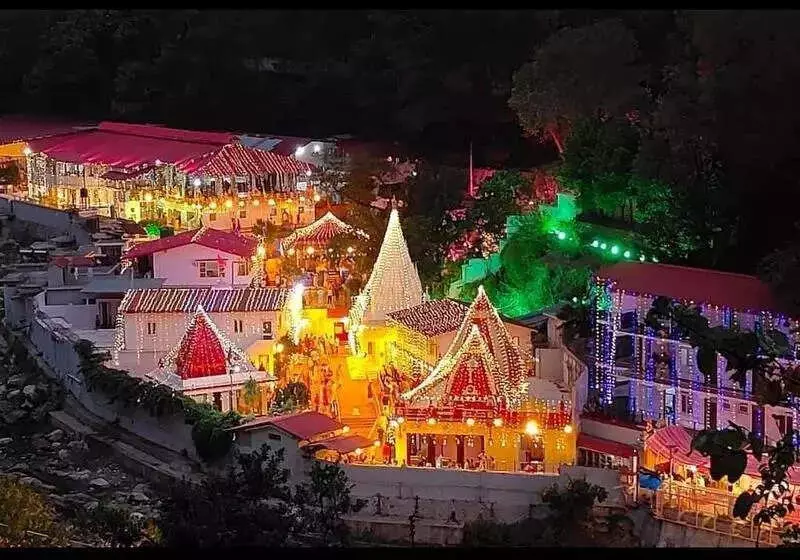
The road leading to the globally revered Kainchi Dham in Uttarakhand has become a persistent bottleneck, causing significant hardship for commuters on the vital Kumaon route. The problem intensifies dramatically during the summer and winter vacation periods when hundreds of thousands of devotees throng the shrine dedicated to Baba Neem Karoli.
Key Findings From The Tourism Department Study
To tackle the growing crisis, the state's tourism department undertook a detailed carrying capacity study between September and November. The research uncovered critical insights into visitor demographics and patterns. It found that a substantial 64% of devotees make a same-day trip, arriving for darshan and departing without an overnight stay.
The study painted a clear picture of the typical visitor: the majority, 67%, fall within the 15–30 age bracket. Another 26% are aged between 30 and 45 years, while 6% are between 45 and 60. Notably, 82.4% of the total footfall comprises pilgrims from across India, underscoring the site's national appeal.

Infrastructure Gaps and Visitor Dissatisfaction
The assessment brought glaring infrastructure and civic deficiencies to the forefront. A staggering 74% of respondents reported dissatisfaction with the available parking facilities, pinpointing a primary cause for traffic snarls. Sanitation emerged as another major pain point, with 58% expressing discontent.
Further concerns were raised about general cleanliness (24% dissatisfied) and the availability of food and drinking water (19% unhappy). On peak days, the shrine witnesses a footfall of approximately 11,000 devotees, a number that drops to between 2,000 and 3,000 on leaner days. The study also revealed that 59.4% of visitors during the research period were first-timers, while 40% were repeat visitors. Only 22% opted to stay in local hotels or homestays.
Official Response and Future Action Plan
Tourism Secretary Dhiraj Singh Garbyal emphasized the study's critical role in understanding visitor flow for improved traffic and crowd management. He noted that footfall peaks between 11 am and 4 pm, with relatively low activity around 7 am and again from 5 pm to 7 pm.
"The study gives a clear idea of how things need to be managed in the future, as this road connects Nainital with other districts of Kumaon, and any blockade here affects traffic across the region," Garbyal stated. To directly address the congestion, authorities plan to develop parking facilities for 450 vehicles. A six to seven-month project is being charted to streamline all arrangements before the next summer vacation season.
Garbyal also highlighted the shrine's international draw, noting a significant number of foreign devotees, particularly from the Netherlands and Nepal, who visit for meditation. "It is important to provide them with a separate and peaceful location. We have asked the authorities to identify a nearby site and seek approval from the eco-tourism committee," he added, outlining plans for dedicated facilities.