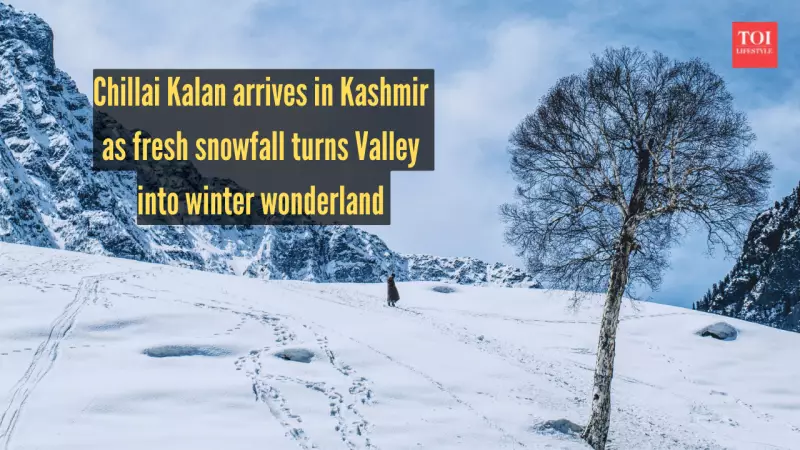
The Kashmir Valley has officially stepped into the heart of winter with the arrival of Chillai Kalan, the famed 40-day period of intense cold. Marking its onset, fresh snowfall in the higher reaches and widespread rain in the plains have draped the region in a pristine white blanket, breaking a prolonged dry spell that had lasted nearly three months.
Tourist Hotspots Turn Into Picture-Perfect Destinations
The season's first major snowfall has converted popular tourist destinations into spectacular winter landscapes. Gulmarg, the internationally renowned ski resort, received nearly nine inches of snow within 24 hours, covering its slopes, roads, and meadows. This development has brought cheer to skiers, Christmas and New Year holidaymakers, and the local tourism industry, which had been anxiously awaiting the snow.
Other famed locations like Sonamarg and Pahalgam also witnessed their first seasonal snowfall. Reports indicate the snow began early and continued intermittently, creating postcard-perfect vistas and raising expectations for a significant uptick in tourist arrivals after a sluggish start to the winter season.

Beyond Beauty: Relief for Farmers and Improved Air Quality
The impact of this snowfall extends far beyond aesthetics and tourism. It has provided crucial relief for the agricultural community. The extended dry period had begun to pose a threat to Rabi crops and sparked concerns for the upcoming fruit-growing season. Snowfall during Chillai Kalan is vital for replenishing groundwater reserves and mountain streams that sustain the lakes, rivers, and springs of Jammu and Kashmir through the summer months.
Furthermore, experts highlight that the rain and snow have effectively scrubbed the atmosphere, washing away suspended particles and leading to a marked improvement in air quality. This purification is expected to alleviate breathing difficulties for individuals with respiratory conditions, chest infections, and other seasonal ailments, particularly among children and the elderly.
Travel Disruptions and Official Preparedness
The winter spell has also led to significant travel disruptions. Due to snow accumulation and hazardous, slippery conditions, authorities have closed several vital roads. These include the Srinagar-Leh highway, the Mughal Road, Sinthan Pass in Anantnag, Razdan Pass in Bandipora, and Sadna Top in Kupwara. Officials confirmed moderate snowfall at Sadhna Top, a key pass connecting the Tangdhar sector.
Looking ahead, the Meteorological Department has forecast light to moderate rain or snow at scattered places across the Union Territory over the next 24 to 48 hours, albeit in shorter and milder spells. Temperatures continue to drop, with Jammu city recording a minimum of 10.4°C, Batote at 6.5°C, Banihal at 2.4°C, and Bhaderwah at 2.2°C.
Officials state that preparations are complete to manage heavier snowfall. Snow-clearing machinery, power and water supply systems, health services, and stocks of essential commodities have all been reviewed. Chief Minister Omar Abdullah confirmed the administration's readiness across snow-prone regions in both Kashmir and Jammu. He emphasized that while the snowfall presents challenges, it was eagerly anticipated for its role in cleansing the air, reducing pollution, and giving a boost to winter tourism. The Chillai Kalan period will continue until January 31, to be followed by the milder phases of Chillai Khurd and Chillai Bacha.