For generations, the rivers and canals of Kerala were not mere scenic backdrops. They were the arteries of daily life, shaping journeys, memories, and communities. This intimate relationship, however, faded with the advent of faster roads and railways. Today, a groundbreaking project in Kochi is not just reviving a transport mode but rekindling an age-old bond with water, setting a precedent for the entire nation.
From Nostalgic Tales to Modern Transit
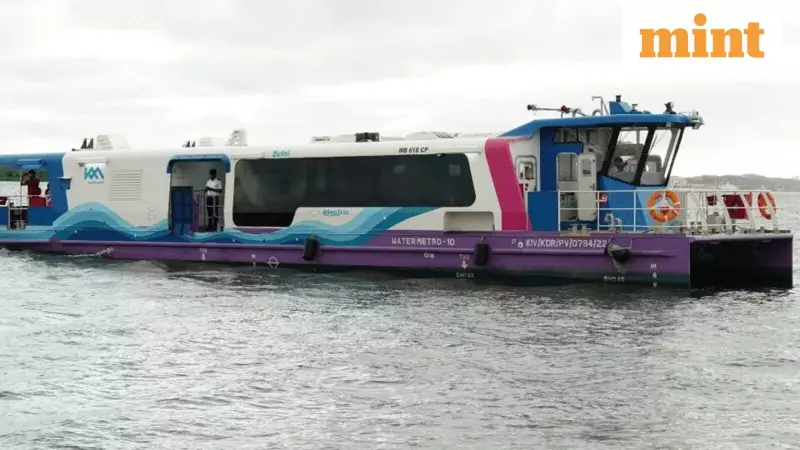
The author's connection to Kerala was woven from her mother's stories, where water was a central character—from monsoon river adventures to wedding journeys on rain-drenched ferries. This personal history made the launch of the Kochi Water Metro in 2023 particularly significant. What was initially assumed to be a tourist attraction revealed itself as something far more profound during a ride from Vytilla to Kakkanad.
The experience felt like a return to the state's aquatic heritage. This sentiment was echoed by Jose Dominic, the retired patriarch of CGH Earth, during a meeting in Mattancherry in October. He highlighted the Water Metro's potential to reshape access to historic Jew Town, offering a scenic alternative to congested narrow lanes. His hopeful outlook mirrored the belief from the author's childhood stories: that water could still connect places and people.

A Blueprint for National Expansion
The success in Kochi has ignited a wave of interest across India. Investigations revealed that the Inland Waterways Authority of India (IWAI) has tasked Kochi Metro Rail Ltd (KMRL) with studying the replication of this model in 17 other locations. The list includes major hubs like Srinagar, Goa, Mumbai, Guwahati, Patna, Kolkata, and Kollam.
In an extensive 65-minute conversation, Loknath Behera, Managing Director of both KMRL and Kochi Water Metro Ltd, detailed the project's execution, the revival of Kochi's waterways, and the future potential. The momentum is tangible: Mumbai's feasibility study is complete, moving to planning a massive 200-nautical-mile network. Goa's feasibility report is imminent. Officials from these coastal cities, historically shaped by water, are now looking to it for a sustainable urban future.
The Human Pulse on Vypin Island
To find the story's heartbeat, the journey led to Vypin Island, a land literally created by a cataclysmic 14th-century flood that destroyed the ancient port of Muziris. Here, water remained central longer than elsewhere—the island got its first road bridge only in 2004.
Conversations with locals like Neema Veliyath, owner of the nearly century-old 'The Bungalow' homestay, revealed the subtle, daily impact of the Water Metro. It has altered local rhythms, made Kochi city feel closer, and offered guests a new way to experience Vypin. For residents like Veliyath, water is not nostalgia; it's a practical, vital part of routine—much like a heartbeat.
The Ripple Effect: India's Aquatic Future
The narrative extends far beyond Kochi. India's first hydrogen fuel-cell ferry is poised to begin full operations in Varanasi, signaling a leap in green maritime technology. The vision is clear: one day, water metros will ferry citizens along the Mandovi in Goa, across Mumbai's creeks, past the ghats of Patna, and under the grand bridges of Kolkata's Hooghly.
The story comes full circle to the river behind the author's mother's home, crowded with family lore. The dream is that one day, her daughter might also cross it—not in a traditional bronze *chembu* pushed by uncles, but in a quiet, modern, and environmentally friendly vessel. It's a future of transport that remembers and honors its past.
This national shift back to inland waterways represents more than infrastructure development. It is a collective return to an instinctive understanding: that water is, and always has been, a lifeline.