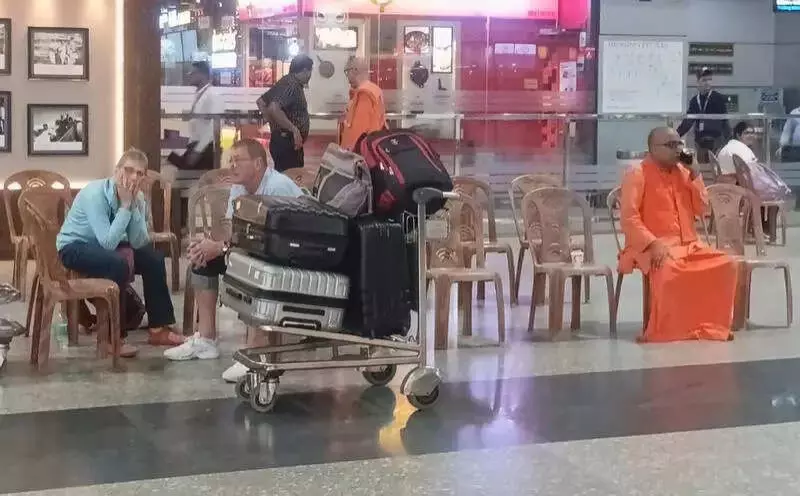
Kolkata's Netaji Subhas Chandra Bose International Airport, a normally busy hub of activity, was thrown into complete disarray on Friday. An unprecedented wave of flight cancellations left thousands of travelers stranded, tired, and angry, transforming the terminals into scenes of confusion.
Unprecedented Disruption Grounds Travel Plans
The scale of the disruption was massive, with a total of 89 departing flights being cancelled in a single day. The majority of these cancellations were operated by IndiGo, India's largest airline, which cited operational challenges. This left a huge number of passengers, who had often arrived hours early, trapped in a state of uncertainty with their travel plans in tatters.
The airport's usual organized flow broke down completely. Check-in counters were overwhelmed by long queues, security zones became clogged, and boarding gates turned into crowded waiting areas. Social media was quickly flooded with images and videos showing the pandemonium, with passengers huddled together amidst piles of luggage.

"This is not what we signed up for," posted Tanmay Chatterjee on X, a sentiment echoed by many who felt utterly abandoned by the airline system. The frustration among travelers was palpable and widespread.
Passenger Ordeal and Airport's Emergency Response
For the stranded passengers, the cancellations meant more than just an inconvenience; it was a major disruption to important plans. Arka Ghosh, who was heading to Mumbai for a vacation, had his flight cancelled after he had already completed check-in and security. "We were told to keep an eye on the display board, but there was no clear communication," he said, expressing deep frustration over the lack of transparency.
Similarly, Mustafa Ahmed, traveling back to Assam with his family, faced a cancelled flight and found airline staff unhelpful. "We were blamed for not keeping up with the news about the airline's issues," he recounted, feeling let down by the absence of empathy and proper assistance.
Komal Tiwari, booked on a flight to Patna, described the scene as "complete chaos", with no seats available and endless lines for food. "We were even asked to leave the airport and wait outside due to the delays," she revealed, highlighting the severe lack of passenger support and clear information.
In response to the escalating crisis, airport authorities scrambled to manage the situation. They implemented several emergency measures:
- Staff on morning shifts were asked to work extended hours.
- Additional CISF personnel were deployed to manage crowds, especially at IndiGo counters.
- 500 rented plastic chairs were brought in to create temporary seating for waiting passengers.
- Two control rooms were activated: one in the Airport Operations Control Centre (AOCC) for operational issues, and another in the airport manager's office to handle passenger complaints.
Aftermath and Lingering Questions
The chaos spilled beyond the terminal buildings, with the flow of passengers becoming chaotic as people entered and exited through the same gates. The event has raised serious questions about crisis management and passenger communication protocols for airlines and airports during large-scale operational failures.
While the immediate chaos from Friday's event has subsided, the experience has left a lasting impression on the affected travelers and exposed vulnerabilities in handling such mass disruptions. The incident underscores the need for more robust contingency plans and transparent communication from airlines to prevent a repeat of such scenes at one of India's key airports.