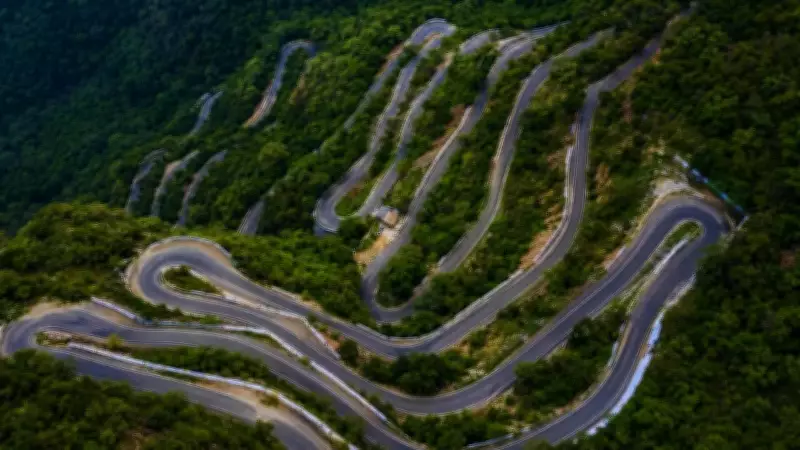
The Kolli Hills may not initially seem much different from other serene hills of South India, with their forest mists, village life, waterfalls, mountain roads, and cool air. However, tucked away within the Eastern Ghats range is one of the most challenging mountain roads in India, earning the area the ominous moniker: the 'Mountains of Death.'
Origin of the Name
Oddly enough, the name does not relate to any dangerous animals, mysterious disappearances, or elevation challenges. Instead, it comes from a single road that boasts an unforgiving 70-plus hairpin bends, all spiraling around the side of the mountain. The road that made Kolli Hills famous is a defining feature of the destination.
Kolli Hills, also known as Kolli Malai, is situated in the Namakkal district of Tamil Nadu, with an altitude of about 1,000 to 1,300 meters above sea level. Initially, the path may appear easy going, but soon the turns become tight, steep, and far more dramatic. As soon as one turn passes, another appears, marked by signboards at numbered spots on the uphill way. While some enjoy the journey, others find it exhausting. Suffering from motion sickness is not unusual here, due to the absence of straight roads between the corners.

Why 'Mountains of Death'?
The name Kolli Hills mostly stems from the dangers associated with the journey back in those days. While traveling through the area, one had to be careful because of sharp turns, steep drops, thick fog, and slippery mountain roads that often led to accidents. Even today, drivers unfamiliar with mountain roads need to be cautious, especially during monsoon season when visibility drops and the roads become slippery.
However, besides its recent dangers, the hill range has some history and folklore, which gives another explanation for its frightening name. According to some ancient folklores, the hills are connected to the legend of Kollipavai, an enigmatic maiden who lured travelers to death. There are also many legends connected to the Kolli Hills in ancient Tamil literature.
Despite the fearsome title, modern-day Kolli Hills is far more adventurous than dangerous, provided travelers drive responsibly.
Attractions Beyond the Road
Apart from the serpentine road winding in and out of the mountains, one can find a serene and verdant mountainous region full of woods, farms, waterfalls, and temples once at the top of the Kolli Hills. One prominent tourist destination is the Agaya Gangai Waterfalls, a majestic waterfall located amid the hills. Access to this place takes visitors through hundreds of stairs built into the greenery, leading to a beautiful waterfall flowing down to the valley below.
Other natural attractions found within the Kolli Hills include pepper plantations, jackfruit farms, medicinal herbs, and peaceful mountain settlements. Trekking, camping, and nature photography are some of the activities growing in popularity in the region. Another attraction worth mentioning is the historical Arappaleeswarar Temple.
Best Time to Visit
The best time to visit the Kolli Hills is from October to February, when the temperature is cool. The monsoons transform the hills to a verdant shade, but heavy rains may make the roads difficult to drive through. Travelers visiting via road should ensure that their brakes are in proper working condition due to the steep inclines and declines.
How to Reach Kolli Hills
Kolli Hills is situated about 60 kilometers from Namakkal. The closest railway station is Salem Junction, while the nearest airport is at Tiruchirappalli. Travelers usually arrive at Kolli Hills by road, passing through Namakkal or Rasipuram.
While for most people, traveling to Kolli Hills means an enjoyable drive, by the time they cover all the turns, they realize it has turned into a memorable journey.