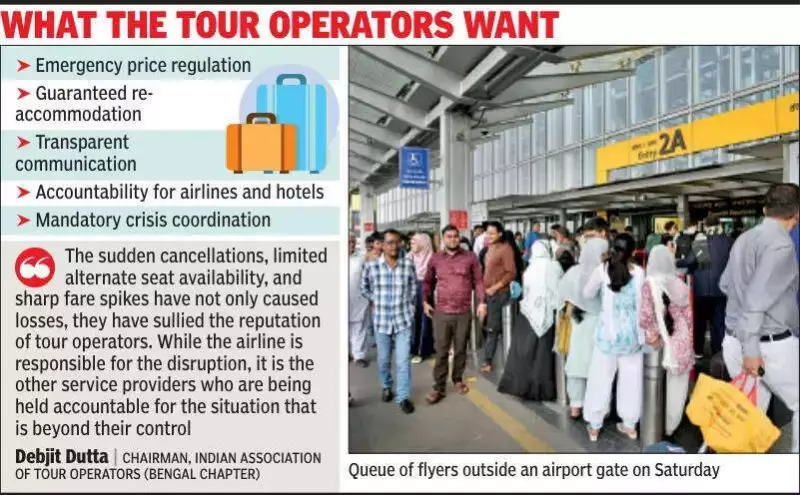
The Indian travel industry is reeling from an operational crisis triggered by the sudden cancellation of several thousand flights across the country over the past four to five days. For tour operators and destination management companies, particularly in Kolkata, the situation has escalated into a logistical nightmare, causing severe financial losses and reputational damage.
An Operational and Financial Quagmire
Teams are working tirelessly, around the clock, to manage the fallout. Their tasks are monumental: rebooking flight sectors, realigning intricate ground arrangements, and handling last-minute changes to pre-booked hotel stays, transport, and sightseeing itineraries for countless clients. The abrupt nature of the cancellations, coupled with severely limited alternate seat availability and sharp spikes in airfares, has created a perfect storm.
Debjit Dutta, Chairman of the Indian Association of Tour Operators (Bengal Chapter), highlighted the unfair burden. "While the airline is responsible for the disruption, it is the other service providers who are being held accountable for the situation that is beyond their control," he pointed out. This, he stated, has not only caused direct monetary losses but has also sullied the hard-earned reputation of tour operators.

The Domino Effect of Cancellations
The problems cascade through every element of a travel plan. Since flights were cancelled at the eleventh hour, hotels in cities where tourists could not arrive are often refusing to refund or relax their cancellation policies. This forces operators to absorb the cost of unused services while simultaneously arranging new, expensive last-minute bookings in locations where clients are stranded.
Nitin Sukunia of Kolkata-based Travel Bureau, which handles about 20,000 foreign tourists annually, explained the compounding losses. "Bookings in other cities have to be written off, and losses are compounded as fresh bookings are made for stranded tourists," he said. He described a domino effect impacting local transport and sightseeing, requiring a complete revision of subsequent itineraries.
Sukunia emphasized the financial double whammy: "With airlines charging anywhere between 4x to 10x the original fares and last-minute hotel tariffs also skyrocketing, the situation is dire." He estimated the immediate business loss for Kolkata's travel trade due to this chaos at a staggering Rs 60 to 70 crore.
Profiteering and a Call for Government Intervention
The crisis has exposed rampant profiteering, further victimizing travelers and operators. Chandra Prakash Bhattar, head of Neptune Holidays (which serves 30,000 domestic tourists yearly), cited egregious examples: hotels in Delhi's Aerocity hiking prices to Rs 30,000 per night and Air India fares on a Delhi-Bengaluru route reaching Rs 1 lakh compared to Akasa Air's Rs 39,000.
"Profiteering in chaos has become the norm. Everyone wants a bite of the flesh. When service providers become predators, travellers become the feast. This is systemic abandonment," Bhattar remarked. He urgently called for government action to end the harassment and prevent massive loss of face for both the industry and the country's image as a tourist-friendly destination.
The ongoing flight disruption underscores the fragile ecosystem of travel planning. It demonstrates how airline instability can trigger a widespread breakdown, imposing crippling costs on downstream businesses and eroding traveler trust, demanding immediate regulatory scrutiny and consumer protection measures.