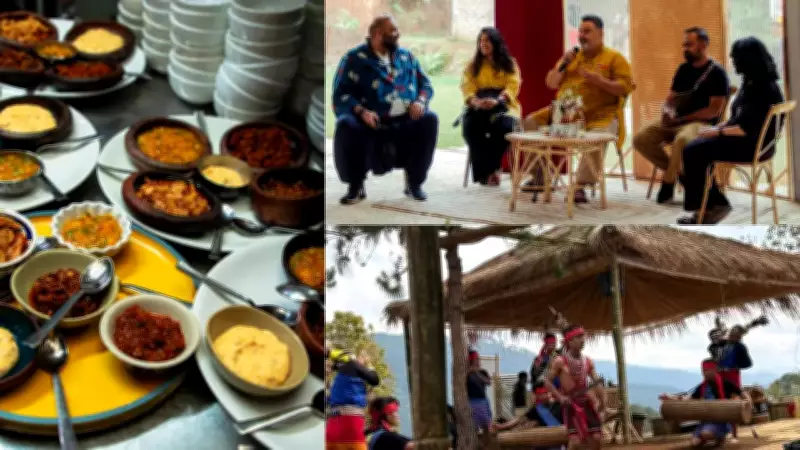
Culinary Cascades Festival Concludes, Highlighting Meghalaya's Rich Food Traditions
The two-day Culinary Cascades food festival, a vibrant celebration of Meghalaya's culinary diversity, successfully concluded on March 28. Organized by Meghalaya Tourism at the scenic Ward’s Lake, a popular tourist destination, the event attracted thousands of enthusiastic locals and tourists eager to immerse themselves in the state's unique regional flavors.
National Chefs and Interactive Sessions Enhance Festival Experience
This third edition of the festival gained significant visibility with the participation of over a dozen prominent chefs from across India, who gathered to explore Meghalaya's food and culture. Set against a picturesque backdrop of hills and clouds, the festival featured engaging live cooking demonstrations and hands-on sessions, allowing visitors to directly experience the distinctive tastes of the region.
Dr. Vijay Kumar D, Commissioner and Secretary, who also serves as the director of the sustainable tourism enhancement project, emphasized the state's strategic focus. "Meghalaya's growth strategy is centered on agriculture and the services sector, with increasing emphasis on value addition, food processing, and tourism-led employment," he stated. "We produce high-quality organic products such as Lakadong turmeric, pineapples, ginger, and strawberries, and are strengthening our farm-to-market linkages to cater to the growing domestic and international demand for such produce."

Seeti 2.0 and Tribal Culinary Insights
The festival coincided with Seeti 2.0, a five-day culinary heritage immersion program that brought together approximately 50 chefs, culinary experts, and storytellers from across the country to journey through Meghalaya. This initiative focuses on engaging with local communities, indigenous ingredients, and traditional food practices.
Sid Mewara, co-founder of Seeti, highlighted the surprising diversity within Meghalaya's cuisine. "Most people don’t realize how different the cuisines are until they eat them," he noted, explaining that Garo food is distinct, while Khasi and Jaintia cuisines have their own nuances. He added, "The simplicity of the food is often misunderstood. The ingredients here speak for themselves. They don’t need much masala, but there’s a lot of depth."
Focus on Mushroom Farming and Cultural Performances
A dedicated session on mushroom farming was led by Kitdorlang Kharpan, head of the Mushroom Development Centre in Shillong, aimed at encouraging agricultural activity among local communities and improving economic viability on limited land holdings. The festival's atmosphere was further enriched by live performances from artists such as PHP, Syntung, and Sur Na Nongyndong, under the Chief Minister’s grassroots music program.
Meghalaya's Tribal Culinary Identity
Home to 17 tribes, Meghalaya's cultural and culinary identity is largely shaped by three major communities: the Khasi, Garo, and Jaintia. Many of the state's most recognized dishes and food traditions originate from these groups, whose kitchens continue to define its evolving culinary landscape.
- Khasi: Often represented through yellow and black, the Khasi are the largest ethnic community in Meghalaya, known for their sacred groves and traditions shaped by land, language, and craft.
- Garo: Marked by red, black, and indigo hues, the Garo community shares a close relationship with nature, with cultural practices closely tied to forests, seasons, and the surrounding hills.
- Jaintia: Recognized through maroon, red, and black patterns, the Jaintia are known for their monoliths and strong community traditions, reflecting the legacy of the erstwhile Jaintia kingdom.
The Culinary Cascades festival not only showcased delicious food but also reinforced Meghalaya's commitment to promoting its agricultural products and cultural heritage through tourism, providing a platform for economic growth and community engagement.