

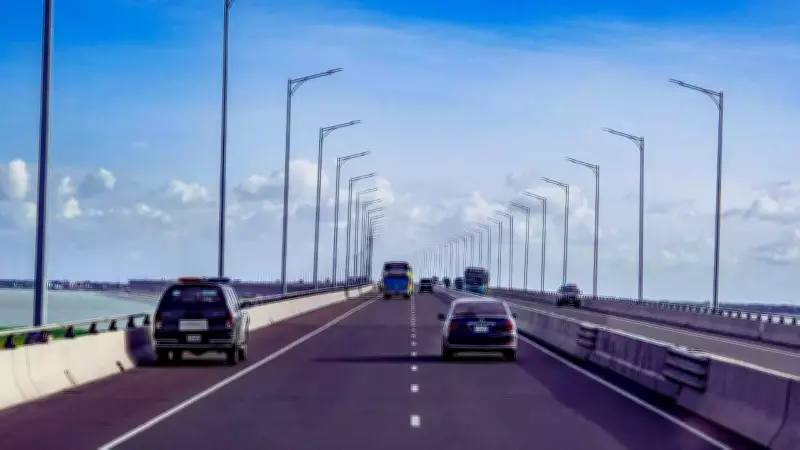
Naugaon's 90-Minute Transformation: How the Delhi-Mumbai Expressway Created a Weekend Getaway
Just a few years ago, a Friday evening drive from Delhi or Gurugram to Naugaon—a quiet settlement nestled at the foothills of the Aravallis in Rajasthan's Alwar district—meant enduring nearly four hours of punishing traffic and patchy roads. Today, that same journey takes a mere 90 minutes. The dramatic difference is the Delhi-Mumbai Expressway, India's most ambitious road infrastructure project under the Bharatmala Pariyojana, which has fundamentally redrawn the weekend travel map for millions of National Capital Region residents.
The Expressway Effect: From Rural Outpost to Weekend Hotspot
Naugaon, located over 100 kilometers from Gurgaon, sits right along the Delhi-Mumbai Expressway corridor. This 1,386-kilometre greenfield superhighway, when fully operational, will be the longest expressway in India. The stretch connecting NCR to the Alwar-Neemrana belt in Rajasthan has already been opened, transforming what was once a multi-hour ordeal into a smooth, high-speed run. As a result, commute times to Naugaon have dropped by over 60%, converting it from an overlooked rural outpost into a viable weekend destination.
The expressway effect is not unique to Naugaon. It mirrors patterns seen across India's expanding highway network, with similar corridors catalyzing weekend travel booms near Dehradun via the Delhi-Dehradun Expressway and along the Yamuna Expressway toward Agra. However, Naugaon's transformation stands out for its remarkable pace and scale. Five years ago, the region barely registered on the radar of travel planners, real estate investors, or weekend second-home seekers. Today, it has become one of the most closely watched micro-markets near the NCR.

Infrastructure Convergence: Multiple Projects Fueling Growth
The expressway is just one component of a larger infrastructure tapestry driving Naugaon's rise as a travel destination. Three other government-backed projects are significantly contributing to this transformation:
- Alwar Airport Development: When operational, this airport will not only reduce travel time to Naugaon but also attract more out-of-state visitors to the area.
- Sariska Tiger Reserve Connectivity: An expressway from Naugaon directly to Sariska Tiger Reserve—one of India's premier wildlife reserves—will lead to an influx of nature lovers and safari-style hospitality seekers.
- Aravalli Green Wall Initiative: Part of the central government's ambitious large-scale tree planting program in Haryana and Rajasthan, this environmental makeover is substantively enhancing the area's potential as an ecotourism destination, appealing to urbanites seeking nature escapes.
The timing of this infrastructure wave could not be better. India's domestic travel market is experiencing a generational shift, with a notable increase in weekend getaways indicating that Indians are moving away from traditional once-a-year travel to more frequent, shorter breaks. For Delhi's harried professional class with limited time, Naugaon—now reachable in 90 minutes—has become a preferred weekend destination.
Hospitality Boom and Real Estate Surge
On the ground, the travel surge is rapidly reshaping Naugaon's hospitality landscape. Luxury farmhouse developments, glamping retreats, wellness resorts, and boutique stays are rising across the region, with projects spanning over a thousand acres. What was once farmland is being reimagined as curated, nature-first living spaces—weekend sanctuaries offering swimming pools with Aravalli views, organic dining, and the rare silence that a 90-minute drive from Gurgaon can no longer guarantee in traditional hill stations.
Vijay Ram Rattan, Chairman of Ram Rattan Group, observes: "Hotels, farmhouse resorts, and glamping retreats around Naugaon are reporting a surge in bookings, and an increase in weekend travel from Delhi that hospitality and real estate analysts have attributed directly to improved expressway connectivity."

Real estate figures underscore the momentum. Land prices in the Naugaon belt have increased significantly over the last three years, with analysts projecting further gains as additional expressway exits, EV charging infrastructure, and service lanes come online. Early investors have already experienced substantial returns.
The Bigger Picture: Expressways as Tourism Accelerators
Naugaon's story reflects a wider national trend that urban planners and tourism policymakers are only beginning to fully appreciate. India's expressway network, which crossed 6,000 kilometres in December 2024 with another 11,000 kilometres under construction, is not merely a logistics corridor—it is a tourism accelerator. By reducing distance and eliminating travel friction, each new expressway effectively expands the weekend travel radius of every major city it touches.
For Naugaon, the 90-minute mark has become a psychological barrier, the moment a place shifts from "too far" to "why not?" This is the same reasoning that reshaped Lonavala into a quick getaway for Mumbai, or Rishikesh into Delhi's favored destination for a long weekend. Now, at the crossroads of nature, development, and desire, Naugaon is crafting its own narrative—one expressway exit at a time.
India's domestic travel sector, already buoyant after a strong post-pandemic rebound, is experiencing a structural shift: urban dwellers are no longer willing to spend their limited free time stuck on highways. Speed, comfort, and accessibility now determine where people go—and Naugaon has all three by its side.





