

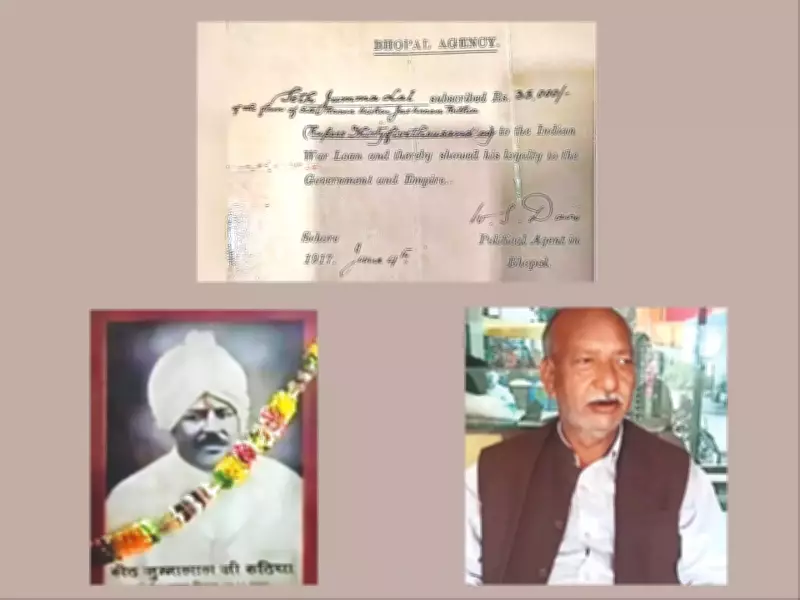
Century-Old Certificate Ignites Extraordinary Debt Recovery Effort Against British Government
A remarkable family document from 1917 has initiated what could become one of the most unusual debt-collection cases in recorded history. In Sehore, Madhya Pradesh, Vivek Ruthia uncovered a fragile certificate that documents his grandfather Seth Jumma Lal Ruthia lending Rs 35,000 to the British colonial administration during World War I – funds that were never repaid according to family records.
From Historical War Loan to Modern Crore Claim
The 109-year-old certificate, bearing the signature of British political agent WS Davis dated 4 June 1917, formally records the "Indian War Loan" subscription. Seth Jumma Lal Ruthia, a prominent businessman operating in both Bhopal and Sehore during that era, advanced these substantial funds to support the British Empire's military efforts during the global conflict.
Today, his grandson Vivek Ruthia maintains that international legal principles should recognize and honor this financial obligation, despite the passage of more than a century. The family calculates that when adjusted for compound interest and inflation over 107 years, the original Rs 35,000 could potentially be worth multiple crores of rupees in contemporary value.

Legal Complexities and Sovereign Immunity Challenges
Legal experts caution that pursuing such a claim presents significant challenges under current international law frameworks. The doctrines of sovereign immunity, which protect modern nation-states from certain types of litigation, combined with statutes of limitation that typically restrict legal actions after specific time periods, could create substantial obstacles to any recovery effort.
Nevertheless, the Ruthia family is proceeding with preparations to send a formal legal notice to the United Kingdom government, testing whether historical financial obligations can transcend generations and colonial transitions.
Public Reaction: Treasure Hunt or Legal Fantasy?
Online discourse surrounding this discovery has revealed a fascinating dichotomy between enthusiastic support and pragmatic skepticism. Some social media users have championed the family's cause with messages like "recover every single paisa" and humorous calculations suggesting compound interest might have multiplied the debt into tens of crores.
Other commentators have characterized the potential lawsuit as possibly "the strangest legal battle in history" – questioning whether pursuing a modern sovereign state over a century-old colonial-era bond represents a serious legal endeavor or merely an attention-grabbing viral phenomenon. The case raises profound questions about historical accountability, intergenerational financial responsibility, and the legal status of colonial-era obligations in post-colonial international relations.
This extraordinary situation continues to develop as the family consults with legal experts specializing in international law and historical claims, while simultaneously preserving the fragile 1917 document that serves as the foundation for their unprecedented financial demand against the British government.






