

The year 2025 marked a definitive end to an era of diplomatic niceties. Geopolitics stopped wearing a suit and tie, instead showing up in military fatigues, complex spreadsheets, and blunt executive orders. This was the year the world stopped performing diplomacy and started practising power—plainly, unapologetically, and across multiple fronts simultaneously.
The New Language of Global Power
The lexicon of international relations underwent a dramatic change. Euphemisms like "strategic patience" were discarded. In their place came harder, more transactional terms: leverage, resilience, exposure, and cost. Power was no longer just exercised; it was meticulously curated and displayed. Missile strikes and punitive tariffs became tools of equal weight. Borders hardened, but so did corporate balance sheets as markets transformed into battlefields and supply chains into critical security assets. The age of restraint faded not with a dramatic collapse, but simply because it ceased to be useful.
America's Unapologetic Return Under Trump
While Donald Trump's return to the White House was anticipated, the rapid translation of his worldview into concrete policy was striking. By early spring, tariffs were reinstated as doctrine, not bargaining chips. Punitive duties targeted Chinese electric vehicles and semiconductors, while a broad import levy swept across global supply chains with little regard for allied nations caught in the crossfire. Steel and aluminium tariffs hit Europe and Asia as heavily as they did China, sending an unmistakable message: globalization would now operate strictly on American terms.

This logic extended to security. Military commitments persisted but increasingly resembled contractual agreements. Allies faced nudges to increase defence spending, framed not as shared responsibility but as the price of admission for American protection. Diplomacy still existed, but it unequivocally took a back seat to demonstrations of raw economic and military might.
China's Strategy: Endure, Insulate, and Expand
China chose not to mirror Washington's confrontational theatrics. Instead, Beijing absorbed the initial blows. Its retaliatory tariffs were precise—targeting agriculture and select industrial goods—calibrated to register pain without provoking full-scale panic. Domestically, the nation accelerated the quiet work of strategic insulation in critical sectors like semiconductors, batteries, and AI hardware.
China's most significant move in 2025, however, was outward. It deepened relationships in Africa and Southeast Asia, fostering quieter but more substantial ties. Trade increasingly settled in yuan, and infrastructure finance adopted longer horizons with shared equity models. Beijing's wager was clear: Western pressure could be endured, and once economic gravity was established, it would become nearly impossible to escape.
India's Hard Reality: Security Takes Centre Stage
For India, 2025 was a year that stripped away geopolitical abstractions. The terror attack in Pahalgam early in the year served as a brutal reminder of enduring security threats. India's military response, Operation Sindoor, was deliberate and contained—a signal of deterrence and readiness framed diplomatically as proportional.
Simultaneously, New Delhi navigated a complex tightrope. It managed escalating tariff pressures from Washington, maintained crucial discounted energy flows from Russia, and worked to cautiously stabilise ties with China. The long-held slogan of strategic autonomy became an operational reality, tested daily across diplomatic, economic, and security domains.
A World in Suspension and Realignment
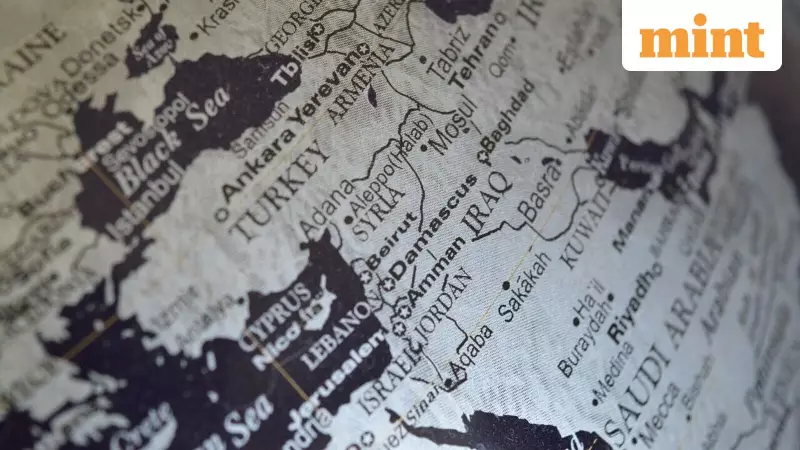
Other regions grappled with this new normal. The Israel-Gaza conflict pulsed through the year with ceasefires that repeatedly collapsed, leaving Gaza in a state of controlled devastation. A Trump-brokered ceasefire in October imposed a tense quiet, not peace, leaving fundamental questions of governance and borders unresolved.

Europe adjusted reluctantly, raising defence budgets and adopting industrial protections it once criticised. Africa became a quiet arena for great-power competition amid debt crises and political instability, with Western influence receding as Russian and Chinese footprints expanded. Southeast Asia maintained its practiced neutrality, though the weight of the US-China rivalry pressed down harder than ever.
By December, the transformation was complete. Trillions in trade had been rerouted, supply chains had fractured (not collapsed), and "friend-shoring" had replaced efficiency as a guiding principle. The world in 2025 did not fall apart; it recalibrated for endurance over elegance. Order survived conditionally, agreements were enforced selectively, and diplomacy became situational. The year taught that the rules were not gone—they were simply negotiable, daily and without guarantees. It was the year the world stopped pretending the global order was comfortable.





