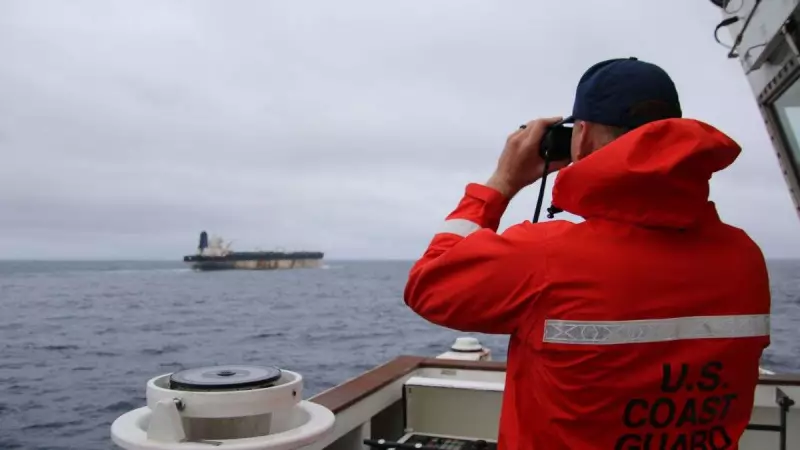
In a significant maritime enforcement action linked to international sanctions, United States authorities have seized a Russian-flagged oil tanker carrying a crew that includes three Indian nationals. The vessel, the NS Century, was intercepted off the coast of Venezuela, marking a dramatic escalation in efforts to enforce price caps on Russian oil.
The Seizure and Its Legal Basis
The US Department of Justice executed the seizure based on a warrant issued by a federal court in the District of Columbia. The core allegation is that the tanker's operators violated the price cap sanctions imposed on Russian crude oil by the G7 nations, the European Union, and Australia. This coalition had set a price limit of $60 per barrel to curb Moscow's revenue from oil exports following its invasion of Ukraine.
The NS Century was reportedly transporting crude oil priced above this mandated cap, thereby breaching the sanctions regime. The vessel, which is owned by a subsidiary of the Russian state-owned shipping giant Sovcomflot, was boarded and seized in international waters. A total of 24 crew members were on board at the time of the incident.

Indian Nationals Aboard and Government Response
Among the two dozen crew members, three are confirmed to be citizens of India. The Ministry of External Affairs (MEA) in New Delhi has acknowledged the situation and stated that its missions are in touch with the relevant authorities to ascertain further details and ensure the welfare of the Indian seafarers.
The Indian government is actively seeking consular access to its nationals to provide necessary assistance. The safety and legal rights of the Indian crew remain a priority for Indian diplomatic channels. The other crew members are reported to be of Russian and other nationalities.
Geopolitical Context and Implications
This seizure is not an isolated event but a direct consequence of the stringent enforcement of Western sanctions against Russia. The price cap mechanism was designed to allow Russian oil to flow to global markets to prevent a price shock, while simultaneously restricting the Kremlin's war finances. However, incidents like the NS Century seizure highlight the complex challenges of enforcement on the high seas.
The location of the seizure—off the coast of Venezuela—adds another layer of geopolitical nuance. Venezuela is a close ally of Russia and is itself under heavy US sanctions. The move signals Washington's willingness to take aggressive steps to uphold the sanctions regime, even in regions with hostile governments.
For the global shipping and insurance industries, this action serves as a stark warning. Vessels and companies involved in transporting Russian oil must scrupulously adhere to the price cap regulations or face severe legal and financial repercussions, including asset forfeiture.
What Happens Next?
The immediate focus is on the legal proceedings in the US court and the fate of the seized vessel and its cargo. The crew members, including the three Indians, will be key witnesses in the investigation. Their repatriation will depend on the progress of the case and the cooperation between the involved nations.
India, while not a participant in the Western sanctions coalition, finds its citizens caught in the crossfire of global economic statecraft. The incident underscores the risks faced by Indian seafarers who form the backbone of the global merchant navy and often crew ships involved in politically sensitive trade routes.
The broader consequence is a potential chilling effect on the shadow fleet of tankers used to transport sanctioned oil, forcing a recalculation of risks for ship owners, operators, and insurers worldwide.