

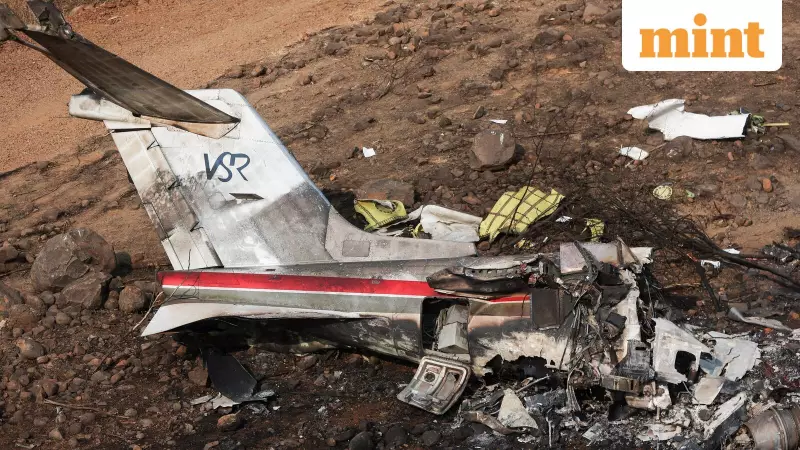
AAIB Launches Comprehensive Investigation into Fatal Baramati Learjet Crash
India's Aircraft Accident Investigation Bureau (AAIB) has initiated a detailed probe into the tragic crash of a Learjet 45 aircraft at Baramati on Wednesday morning, which resulted in the deaths of all five individuals on board. Among the victims was Maharashtra's deputy chief minister, Ajit Pawar, as confirmed by the civil aviation ministry. The aircraft, operated by non-scheduled carrier VSR Ventures Pvt Ltd, crashed during its landing approach at the uncontrolled airfield, prompting immediate emergency response and investigation efforts.
Investigation Team and Scope
The director general of the AAIB is personally en route to the accident site to oversee the investigation, according to ministry officials. The ministry has stated that additional details will be disclosed as the probe advances. Investigators are set to meticulously examine a range of factors to determine the cause of the accident, including operational procedures, weather conditions at the time, human performance elements, and technical aspects of the aircraft. This multi-faceted approach aims to provide a thorough understanding of the incident and prevent future occurrences.
Flight Details and Sequence of Events
The ministry has released available information regarding the aircraft and its crew. The Learjet 45, with registration VT-SSK, was operating a flight from Mumbai to Baramati on January 28 when the accident occurred during landing at the uncontrolled airfield. Preliminary reports indicate that the aircraft first established contact with Baramati at 8:18 am. The crew was instructed to descend under visual meteorological conditions at the pilot's discretion, meaning the pilot had to make decisions based on runway visibility.

Upon inquiring about weather conditions, the crew was informed that winds were calm and visibility was approximately 3,000 metres. During the initial approach to runway 11, the crew reported that the runway was not visible and executed a go-around maneuver. After this, the aircraft again reported being on final approach for runway 11. When asked to confirm runway visibility, the crew initially stated it was not in sight and would call back, but moments later, they reported sighting the runway.
The aircraft was cleared to land at 8:43 am; however, there was no response from the airline following this clearance. At 8:44 am, personnel at the airfield observed flames near the runway threshold, prompting the immediate dispatch of emergency services. The wreckage was subsequently located on the left side of the runway. Baramati is classified as an uncontrolled airfield, where traffic information is typically provided by instructors or pilots from local flying training organizations, adding a layer of complexity to air traffic management.
Aircraft and Operator Profile
According to the ministry, VSR Ventures is a non-scheduled operator whose air operator permit was initially issued in April 2014 and most recently renewed in April 2023, with validity extending until April 2028. The company maintains a fleet of 17 aircraft, comprising seven Learjet 45s, five Embraer 135BJ aircraft, four King Air B200s, and one Pilatus PC-12. The specific Learjet involved in the accident was manufactured in 2010 and had an air-worthiness review certificate issued on September 10, 2025, valid until September 14, 2026. Preliminary investigation data indicates the aircraft had accumulated approximately 4,916 flight hours.
The aircraft was powered by Honeywell TFE731-20BR turbofan engines. The left engine had logged about 4,916 hours, while the right engine had accrued approximately 4,527 hours. The commander held an airline transport pilot licence with over 15,000 hours of flying experience, and his last medical examination was conducted in November 2025, valid until May 2026. The co-pilot possessed a commercial pilot licence with around 1,500 hours of flying experience, as revealed by the ministry's initial probe.

Regulatory Oversight and Previous Incidents
The civil aviation regulator, the Directorate General of Civil Aviation (DGCA), last conducted a regulatory audit of VSR Ventures in February 2025, with no level-I findings issued. Level-I findings denote critical, immediate safety risks that necessitate instant corrective actions to avert potential accidents, often involving serious non-compliance such as unapproved procedures, inadequate training, or significant maintenance deficiencies, which can result in aircraft grounding or severe penalties.
In a related context, another Learjet 45 operated by the same company was involved in a landing accident at a Mumbai airport in September 2023. That incident, which fortunately resulted in no fatalities, remains under investigation by the probe bureau, highlighting ongoing scrutiny of the operator's safety record.





