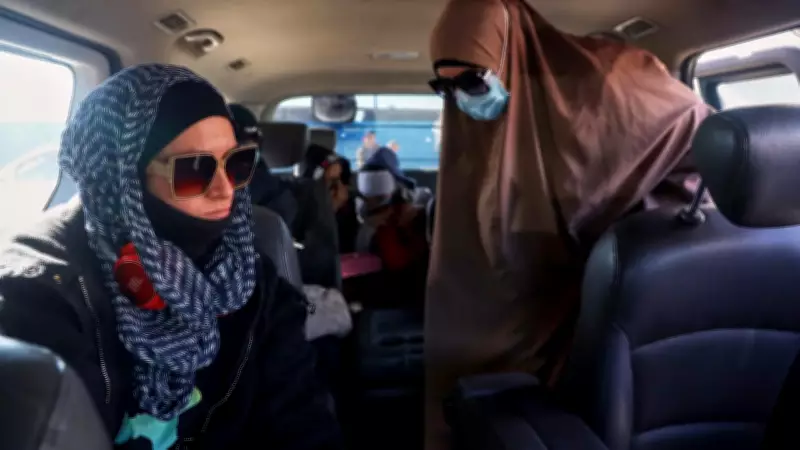
Australia Firmly Rejects Repatriation of 34 Women and Children with Alleged IS Links from Syria
In a definitive statement on Tuesday, Australian Prime Minister Anthony Albanese declared that the Australian government will not facilitate the repatriation of a group of 34 women and children from Syria who have alleged ties to the Islamic State group. The announcement comes after Syrian authorities turned back these individuals from Damascus to the Roj camp in northeast Syria due to procedural complications on Monday.
Procedural Halt and Government Stance
The group, comprising members from 11 families, was scheduled to fly from the Syrian capital to Australia but faced rejection by Syrian officials. Prime Minister Albanese, speaking in Melbourne, emphasized the government's unwavering position, stating, "We're providing absolutely no support and we are not repatriating people." He expressed no sympathy for those who traveled overseas to participate in activities aimed at undermining Australia's way of life, quoting his mother's adage: "You make your bed, you lie in it."
Legal and Moral Dimensions of the Repatriation Issue
Albanese highlighted that the international charity Save the Children had failed to establish in Australian courts that the government has a legal responsibility to repatriate citizens from Syrian camps. Following a federal court ruling in favor of the government in 2024, Save the Children Australia's chief executive, Mat Tinkler, argued that the government holds a moral obligation, if not a legal one, to assist these families.

The Prime Minister warned that if any members of this group manage to return to Australia without government assistance, they could face criminal charges. Under Australian law, traveling to the former Islamic State stronghold of al-Raqqa province without a legitimate reason between 2014 and 2017 is an offense punishable by up to 10 years in prison.
Albanese added, "It's unfortunate that children are impacted by this as well, but we are not providing any support. And if anyone does manage to find their way back to Australia, then they'll face the full force of the law, if any laws have been broken."
Historical Context and Recent Repatriations
Since the fall of the Islamic State group in 2019, only two groups of Australians have been repatriated with government assistance from Syrian camps. The most recent arrival occurred in October 2022, when four mothers—former partners of Islamic State supporters—and 13 children landed in Sydney. Australian officials had identified this group as the most vulnerable among 60 Australian women and children detained in the Roj camp.
Prior to that, in 2019, the conservative government preceding Albanese's center-left Labor Party administration repatriated eight offspring of two slain Australian Islamic State fighters from Syria. Other Australians have returned from Syria without government help, but the issue has gained renewed attention in Australia following the December 14 attacks at a Jewish festival in Bondi Beach, where 15 people were killed by attackers allegedly inspired by the Islamic State.
The Prime Minister refrained from commenting on reports that the latest group of women and children possess Australian passports, reinforcing the government's hardline approach amid ongoing security and ethical debates.