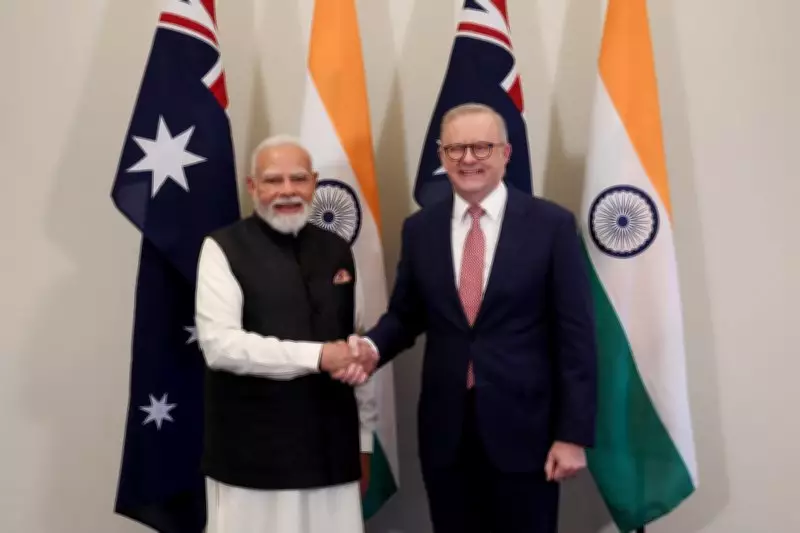
India and Australia are poised to significantly deepen their strategic partnership with a landmark understanding on long-term uranium supplies for India's civil nuclear programme, alongside a series of agreements on defence cooperation, critical minerals, energy security and emerging technologies, according to sources ahead of Prime Minister Narendra Modi's talks with his Australian counterpart Anthony Albanese.
Historic Uranium Supply Arrangement
According to official sources, the two countries are expected to announce a "historic" uranium arrangement aimed at ensuring reliable fuel supplies for India's expanding civilian nuclear energy programme. This marks a major step in strengthening New Delhi's long-term energy security. The deal is expected to provide a stable supply of uranium from Australia, which holds one of the world's largest uranium reserves, to fuel India's growing fleet of nuclear reactors.
Energy Partnership Expansion
The two sides are also expected to broaden their energy partnership through increased Australian exports of liquefied natural gas (LNG), coal and diesel to India, complementing New Delhi's efforts to diversify its energy basket amid growing geopolitical uncertainties. Australia is already a major supplier of coal and LNG to India, and the new agreements aim to enhance trade volumes and ensure long-term contracts. This will help India meet its rising energy demand while reducing dependence on traditional suppliers.

Defence Cooperation and Joint Declaration
Defence cooperation is expected to emerge as another key pillar of the summit, with both countries likely to unveil a Joint Defence Declaration that will pave the way for greater defence industrial collaboration, interoperability between their armed forces and closer cooperation between defence startups and manufacturers through a proposed India-Australia Defence Innovation Corridor. The declaration is expected to include provisions for joint exercises, technology sharing, and co-development of defence equipment. The roadmap also places strong emphasis on counter-terrorism cooperation and enhanced collaboration across the Indo-Pacific region.
Maritime Security Roadmap
As part of efforts to strengthen maritime security, India and Australia are expected to adopt a Maritime Security Roadmap focusing on greater maritime domain awareness, coastal surveillance and information sharing across the Indo-Pacific region. This initiative aligns with their shared interests in ensuring freedom of navigation and stability in the Indian Ocean and the broader Indo-Pacific. In another first, an Indian Army officer is expected to be posted to the Australian Defence College, reflecting the growing level of military-to-military engagement between the two strategic partners.
Critical Minerals and Technology Corridor
The summit is also likely to produce major outcomes in the critical minerals sector, with both sides expected to launch an India-Australia Critical Minerals Corridor aimed at securing resilient supply chains for minerals vital to clean energy technologies, electric vehicles and advanced manufacturing. Australia is a leading producer of critical minerals such as lithium, cobalt and rare earth elements, which are essential for India's transition to a green economy. The corridor will facilitate investment, processing and trade in these minerals.
The two countries are also expected to conclude the Australia-India Partnership for Advanced Critical Technology and Security (PACTS) agreement, providing a framework for cooperation in cyber security, critical technologies and resilient technology supply chains. This pact will cover areas like artificial intelligence, quantum computing, and 5G/6G networks, ensuring trusted sources for technology development.
Strategic Implications
Officials said the expected outcomes reflect the rapidly expanding Comprehensive Strategic Partnership between the two Quad members as they seek to strengthen regional security, economic resilience and trusted supply chains in the Indo-Pacific amid an increasingly uncertain global environment. The agreements are seen as a counterbalance to China's growing influence in the region and a step towards building a more diversified and secure partnership network for both countries.